
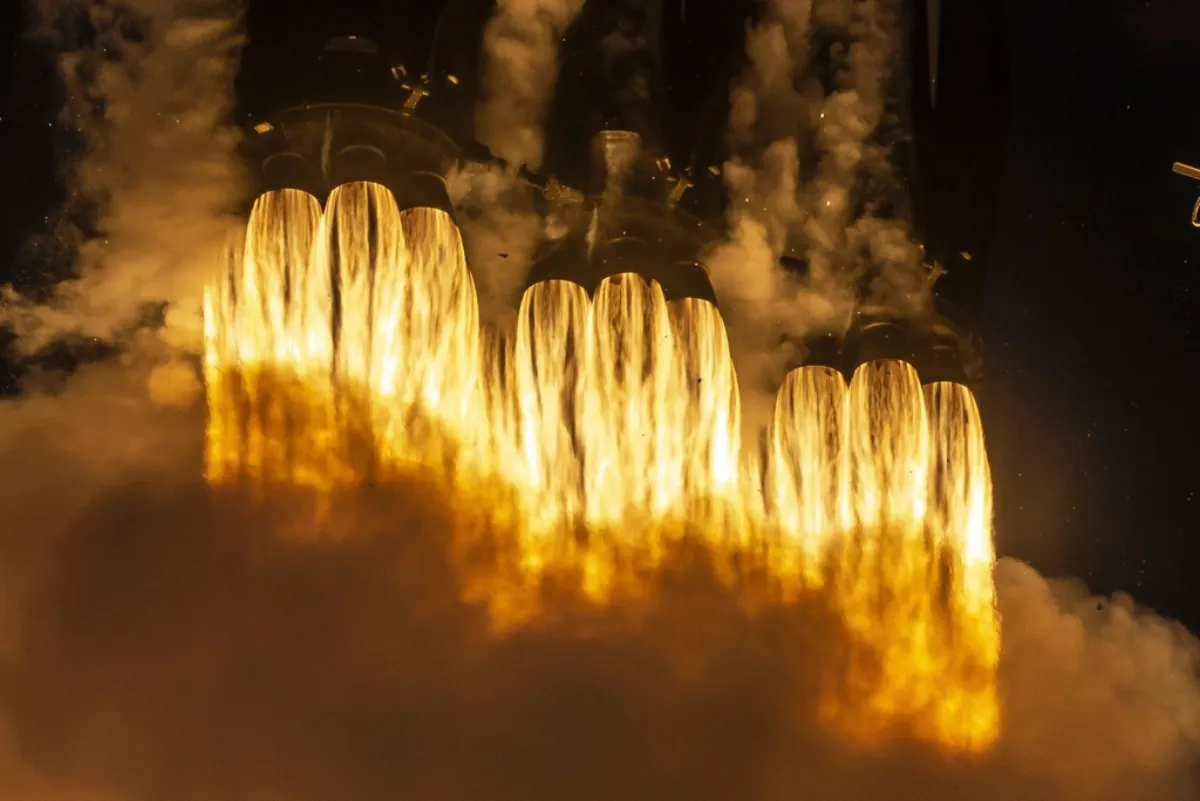
For decades, almost every Indian rocket has left the ground from one small island off the Andhra Pradesh coast. That is about to change. ISRO chairman V Narayanan says India will have four working launch pads by 2029, and the first uncrewed Gaganyaan test could fly within roughly two months.
Speaking at a graduation ceremony at a private university in Chennai on Saturday, Narayanan laid out the space agency’s near-term roadmap, as reported by PTI. He covered new launch infrastructure, the human spaceflight programme, a joint Moon mission with Japan, and a clear message on a question many ISRO employees have been asking: the agency is not being privatised.
Quick Facts
- Who: ISRO chairman V Narayanan
- What: India to have four functional launch pads by 2029; first uncrewed Gaganyaan test planned within about two months
- When: Remarks made on Saturday, reported on October 25, 2026
- Where: A graduation ceremony at a private university in Chennai
- Key numbers: 2,000-acre SSLV spaceport at Kulasekarapattinam; about 8,000 ground tests done for Gaganyaan; 350-kg rover for Chandrayaan-5
ISRO Launch Pads by 2029: What Narayanan Announced
“India will expand its space operations significantly with four functional launch pads by 2029,” Narayanan said, according to PTI.
The one site he described in detail is a dedicated complex for the Small Satellite Launch Vehicle (SSLV) at Kulasekarapattinam in Tamil Nadu’s Thoothukudi (Tuticorin) district. It is planned across 2,000 acres and will include integration buildings, launch pads, rail-track systems, and telemetry, tracking and command systems.
He did not spell out where all four pads will be, according to the reports. Today, ISRO’s launches happen from two pads at the Satish Dhawan Space Centre in Sriharikota. The first began operations in 1993 and is mainly used for PSLV; the second was commissioned in December 2003 and handles GSLV and LVM3.
The Third Launch Pad at Sriharikota
A third pad at Sriharikota is already in the works. In August 2025, the government told Parliament that this third launch pad was expected to be operational by March 2029, at a cost of about Rs 4,000 crore, with financial sanction received in March 2025.
That pad is meant to support the Next Generation Launch Vehicle (NGLV) and LVM3 with a semi-cryogenic stage. It is also pitched as a backup for the existing pads and a base for future human spaceflight missions, including the planned Bharatiya Antariksh Station.
Why does a pad count matter so much? Think of it like a busy railway station with only two platforms. Every rocket needs days or weeks of stacking, checks and clean-up on its pad. With only two, a delay on one mission can hold up the next. More pads mean more launches a year and less waiting for satellite customers.
Gaganyaan Uncrewed Test: What Happens Next
For most people, the bigger headline is Gaganyaan, India’s first human spaceflight programme. Narayanan said the first uncrewed test is planned within the next two months, and two more uncrewed flights will follow before astronauts climb aboard.
These test flights will check the crew module’s environmental control, safety systems and crew escape mechanism, and how the cabin holds up under changing pressure, temperature and humidity. ISRO has finished about 8,000 ground-based experiments for the mission so far, and four astronaut-designates are in specialised training, he said.
Some caution is fair here. The first uncrewed flight, often called G1, has been rescheduled several times over the past two years. A new target is welcome, but it is still a target until the rocket actually lifts off.
Chandrayaan-5 and the Japan Partnership
Narayanan also mentioned Chandrayaan-5, a joint lunar mission with Japan’s space agency. It will carry a 350-kg rover designed to run surface experiments for 100 days. For comparison, the Pragyan rover on Chandrayaan-3 was built to work for about one lunar day, roughly 14 Earth days.
“ISRO Will Not Be Privatised”
Narayanan repeated that ISRO will not be privatised. He has made the same point before: in September, after employee associations sought clarity over plans to shift some manufacturing and operations to industry, he said ISRO would remain a government organisation.
On Saturday he framed private companies as partners rather than replacements. Working with industry is essential, he said, to meet domestic and global demand for thousands of satellites. ISRO plans to “handhold” startups and private firms and transfer technology to them, which he said would create thousands of high-tech jobs.
What We Don’t Know Yet
- Exactly which four pads make up the 2029 target. Narayanan’s reported remarks did not list them.
- A firm date for the first uncrewed Gaganyaan flight. “Within two months” is the latest guidance.
- When the Kulasekarapattinam spaceport will host its first SSLV launch.
- A launch date for Chandrayaan-5.
What This Means for You
If you are a student thinking about aerospace or electronics, the talk of startups, technology transfer and new spaceports points to more jobs outside ISRO itself, including in Tamil Nadu. If you simply love watching launches, more pads should mean more frequent missions to follow. And for India’s space startups, a dedicated small-rocket port could cut the wait to get satellites into orbit.
Our Take
Infrastructure rarely makes headlines, but it decides how fast a space programme can actually move. Two pads have held ISRO back for years. If the third Sriharikota pad and the Kulasekarapattinam spaceport arrive on time, India can launch more often and with less risk of one delay stalling everything. The real test of this roadmap, though, is Gaganyaan. A clean uncrewed flight in the next few months would do more for confidence than any number of announcements.
FAQs
How many launch pads will ISRO have by 2029?
ISRO chairman V Narayanan said India will have four functional launch pads by 2029. Today, ISRO launches from two pads at Sriharikota.
Where is ISRO’s new spaceport in Tamil Nadu?
It is at Kulasekarapattinam in Thoothukudi (Tuticorin) district. The 2,000-acre complex is dedicated to the Small Satellite Launch Vehicle (SSLV).
When is the first Gaganyaan uncrewed flight?
Narayanan said it is planned within the next two months. Two more uncrewed flights will follow before the crewed mission. No exact date has been announced.
Is ISRO being privatised?
No. Narayanan said ISRO will not be privatised, though it will work more closely with private companies and startups and transfer technology to them.
What is Chandrayaan-5?
Chandrayaan-5 is a planned joint Moon mission with Japan’s space agency. It will carry a 350-kg rover meant to carry out experiments for 100 days.
For official mission updates, see ISRO’s website and the Gaganyaan programme page.
Based on reporting by PTI (via The Tribune and Telangana Today), The Tribune and Outlook.

Leave a Reply