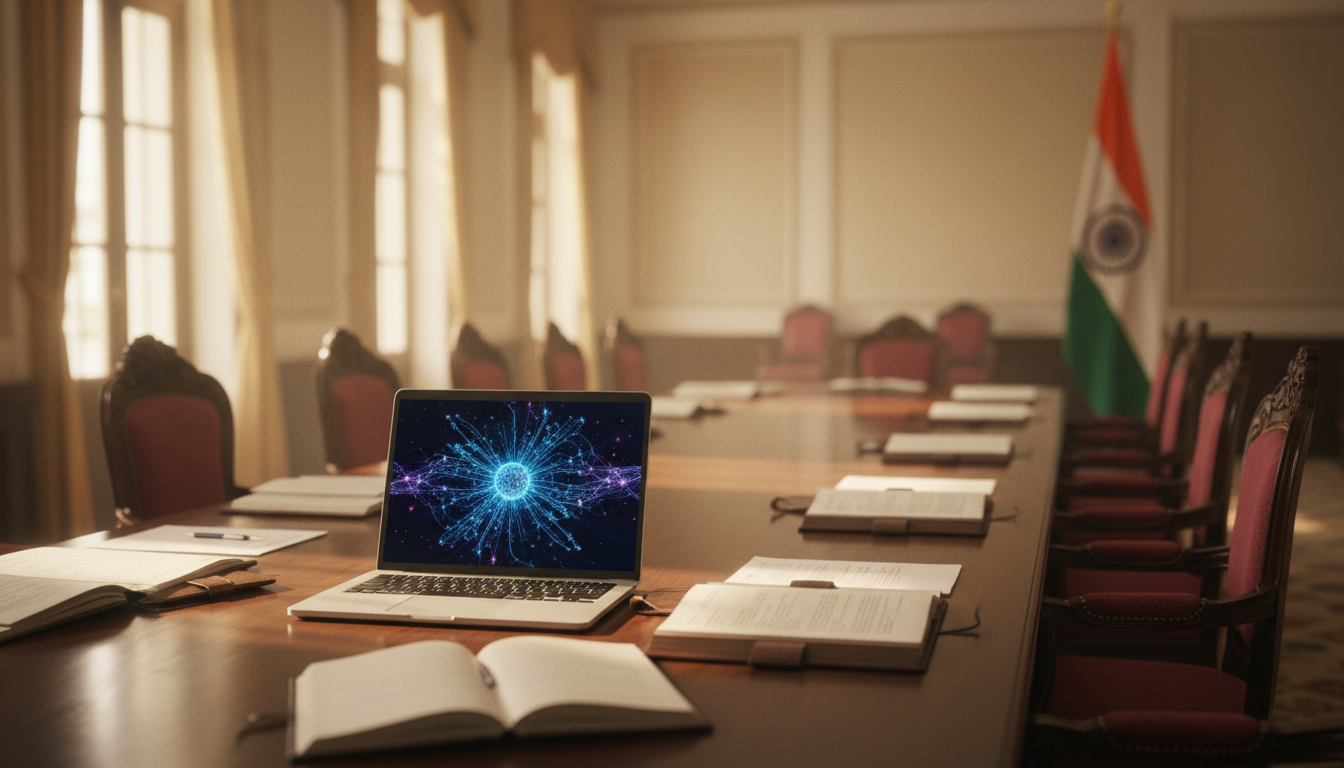
If you have ever received a forwarded video of a politician saying something outrageous and wondered whether it was real, this story is about you. India is getting closer to writing its first proper law for artificial intelligence, and the government says ordinary people will get a chance to weigh in before it is drafted.
Union Electronics and IT Minister Ashwini Vaishnaw said on Friday, October 23, that the Centre will put out a consultation paper on AI legislation “in the coming weeks.” Speaking at an NDTV event in New Delhi, he said the risks from AI have grown to a point where a law and fresh rules are now needed, and that the paper will collect views from citizens, industry and the wider public.
Quick Facts
- Who: Ashwini Vaishnaw, Union Minister for Electronics and IT
- What: A public consultation paper on a new AI law
- When: Announced October 23, 2026; paper expected “in the coming weeks”
- Where: NDTV event, New Delhi
- Who gets a say: Citizens, industry, experts and other stakeholders
- Current law: The IT Act dates back to 2000, long before today’s AI tools
What Vaishnaw Said About the AI Law
The minister’s message was fairly direct. AI harms are real, they can be regulated, and the government is already working on it. A draft consultation paper is being prepared, and once it is out, people and companies will be able to send in their views.
He also pointed out that Indian industry has taken up AI “very aggressively,” which is one reason the government wants to hear from the people actually using these tools. On the global side, he said the top three or four AI ecosystems in the world should work together on the basic principles of the technology.
This is not the first time the timeline has been floated. Earlier in October, Vaishnaw had said the paper would arrive within a month, with safety, deepfakes, human-centric use of AI, skilling and inclusion among the focus areas, according to reports at the time.
Why India Needs a New AI Law Now
India’s main technology law, the Information Technology Act, was passed in 2000. Back then, the big worry was email fraud and hacked websites. Nobody was thinking about software that can clone your voice in seconds or produce a realistic video of you doing something you never did.
In June, Vaishnaw told PTI that some AI issues were being handled under the IT Act, but that the act predates modern AI and a new law is required. So far, the government has mostly tackled AI problems by tweaking existing rules rather than writing a dedicated law.
That patchwork approach has limits. Rules can tell platforms to remove harmful content, but they do not easily answer bigger questions. Who is responsible when an AI system gives a loan applicant a wrong rejection? What happens if a chatbot hands out dangerous medical advice?
Deepfakes and the Rules Already in Place
Deepfakes have been the government’s biggest AI headache. Earlier this year, India amended its IT rules so that platforms must identify and remove AI-generated content such as deepfakes. If a court or a competent authority orders a takedown, platforms have three hours to comply.
The government has also proposed mandatory labels on AI-generated content, so users can tell at a glance whether a photo or clip was made by a machine. Vaishnaw has called removing misleading deepfakes a duty of the government, and has rejected claims that the takedown powers are being used to silence legitimate posts.
How the Plan Has Shifted Over Time
The road to an AI law has been a bit winding. In December 2024, Vaishnaw said the government was ready to bring a law if there was consensus in Parliament. In December 2025, MeitY Secretary S Krishnan said there were no plans for a dedicated AI law. By mid-2026, the minister was openly saying a new law was needed.
Friday’s announcement suggests the debate inside government is mostly settled. The question now is what kind of law India wants: strict rules like Europe’s, or a lighter approach that leaves more room for startups.
What We Don’t Know Yet
- The exact release date of the consultation paper
- Whether it will propose penalties, and how big they could be
- Which AI systems would count as “high risk”
- How long the public comment window will stay open
- When a final bill could reach Parliament
What This Means for You
For now, nothing changes in your daily use of ChatGPT, Gemini or any AI app. But the consultation is a rare chance to be heard. A few practical steps:
- Keep an eye on the MeitY website, where draft papers are usually posted for public comment.
- If you run a business that uses AI for hiring, lending or customer support, start noting how your tools make decisions. Transparency rules are likely to come up.
- Students and developers can follow updates on the IndiaAI portal.
- Until the law arrives, be careful with viral clips. If a video seems too shocking to be true, check a trusted news source before forwarding it.
Our Take
Asking citizens before writing the law is the right move, and it has been a long time coming. The real test will be whether the paper gets into specifics, like who is accountable when AI gets things wrong, instead of staying at the level of broad principles. A law that only handles deepfakes would be a missed opportunity.
FAQs
Does India have an AI law right now?
No. AI is currently handled under the IT Act, 2000 and the IT rules, which were amended this year to cover deepfakes and AI-generated content.
When will the AI consultation paper be released?
The minister said “in the coming weeks.” No exact date has been announced yet.
Can ordinary citizens give feedback on India’s AI law?
Yes. Vaishnaw said the paper will seek inputs from society and citizens, along with industry and experts.
How fast must platforms remove deepfakes in India?
Under the amended IT rules, platforms must take down flagged AI-generated content within three hours when directed by a court or competent authority.
Will the AI law ban apps like ChatGPT in India?
Nothing announced so far points to a ban. The government’s stated focus is on safety and managing harms, not blocking AI tools.
Based on reporting by PTI (via ETV Bharat), Inc42, NewsBytes and ET Government.
Leave a Reply