
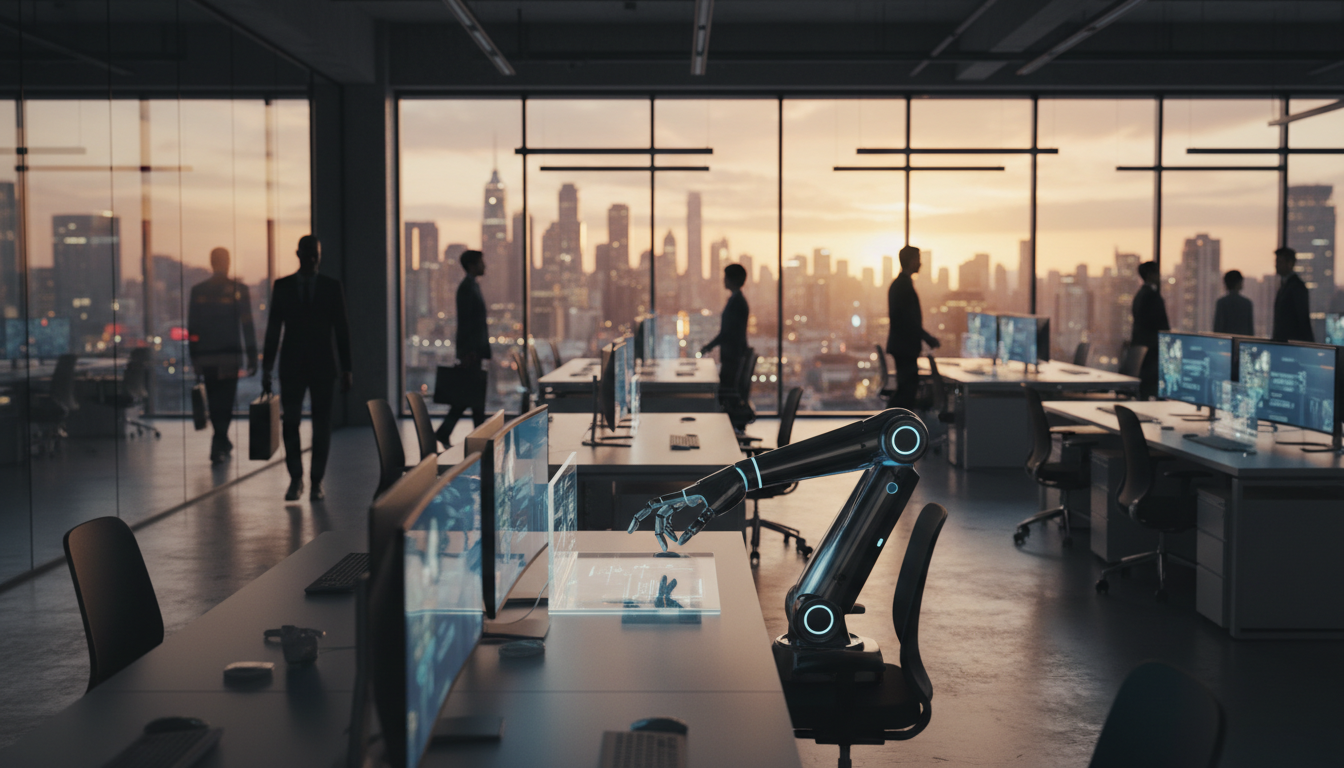
Most tech billionaires sell artificial intelligence as a shortcut to a better future. Bill Gates just told the world to expect a long, bumpy road first. And he says that is the good scenario.
If you work in an office, run a small business, or are a student picking a career right now, his warning is worth five minutes of your time.
Speaking on The Verge’s Decoder podcast with host Nilay Patel, in an episode released on Thursday, October 22, 2026, the Microsoft co-founder said humanity should prepare for roughly 20 years of upheaval as AI spreads through work and daily life. He expects winners, losers and plenty of disruption along the way, and he wants governments, not just tech companies, to step in with real safety rules.
Quick Facts
- Who: Bill Gates, Microsoft co-founder and philanthropist
- What: Warned that AI could bring about two decades of economic and social disruption
- When: Decoder podcast episode released October 22, 2026
- Where: The Verge’s Decoder podcast, hosted by Nilay Patel
- Key number: 20 years, which Gates called an estimate that could run shorter or longer
What Bill Gates Actually Said About AI
The headline line from the interview is simple. “My big concern is this 20-year transition period, where they’ll have winners and losers and a lot of disruption,” Gates said, according to multiple reports.
He was clear that the 20-year figure is a rough guess, not a prophecy. It could move faster or slower depending on how quickly the technology improves and whether the world chooses to slow some of it down.
He also pushed back on being called a doomer. Gates still believes AI could speed up drug discovery, improve healthcare and help farmers. His point is that the journey to those benefits will not be smooth, even if everyone behaves responsibly.
Some reports quote him describing today’s AI as having crossed a threshold that makes it “by far the most dangerous technology ever invented,” though the exact phrasing varies a little between outlets.
Which Jobs Could AI Disrupt First?
Gates pointed to white-collar work as the early pressure point. Reports on the interview mention roles like customer support, telesales and accounting administration, where AI can already do parts of the job faster or cheaper.
Think of the person who answers your bank’s helpline, or the junior accountant who reconciles invoices every month. Those are exactly the kinds of tasks AI tools are getting good at.
Longer term, he said AI combined with humanoid robots could take on a lot of physical work too, from construction and farming to surgery. That could ease shortages of essential goods and services. But it also raises a bigger question about what people do all day.
His answer is interesting: societies might deliberately keep some activities for humans, even when machines could do them. He named childcare, cooking, the arts and sports as examples. Jobs, he noted, give people structure and a sense of purpose, not just a salary.
AI Cyberattacks and the Safety Problem
Jobs were only half the worry. Gates said today’s models can write code, spot security weaknesses and reason about biology. In the wrong hands, that makes cyberattacks and biological threats easier to scale.
He flagged models whose safety guardrails can be stripped out as the biggest near-term risk, since an attacker can simply run one themselves. In his framing, the real test is not whether AI is “conscious” but whether a tool could knock out banks or power grids.
He expects some of the negative effects on jobs and cybersecurity to become visible within the next few years, not decades.
Why Gates Wants Government AI Regulation
Gates said voluntary promises from tech companies are not enough. He compared the situation to cars and aeroplanes, which go through mandatory safety checks before reaching the public, and argued AI needs something similar, with the stakes being far larger.
“We have choices as humans to make about how we shape it,” he said. He also stressed that safeguards should be built alongside the technology, not bolted on later, while avoiding rules that block useful research.
The India Angle: Jobs, Students and Policy
For India, this lands close to home. A large share of the country’s IT and outsourcing workforce does exactly the kind of support, back-office and process work Gates mentioned.
The timing is notable too. The Indian government has said it will soon release a consultation paper on an AI law, and NCERT has just added AI and computational thinking to the syllabus for Classes 9 to 12. The debate Gates is describing is already happening here.
What We Don’t Know Yet
- Gates did not give firm numbers on how many jobs could be lost or created.
- He did not lay out a detailed blueprint for what a mandatory AI review system should look like.
- Whether governments will act on calls like his remains an open question.
What This Means for You
- Learn the tools: If your job involves repetitive screen work, get comfortable using AI assistants now rather than competing with them later.
- Build human skills: Judgement, client relationships, teaching and hands-on care are harder to automate.
- Students: Pair any degree with practical AI literacy. It is quickly becoming a baseline skill.
- Stay alert to scams: AI-powered phishing and fake calls are rising. Double-check any urgent request for money or OTPs.
Our Take
What makes this warning stand out is who it comes from. Gates helped build the software era and is not known for panic. When someone that bullish says even the best case involves two rough decades, it is a sign that planning for retraining and safety rules should start now, not after the layoffs and hacks pile up.
FAQs
What did Bill Gates say about AI?
He said AI could bring about 20 years of disruption to jobs and society, even if it is managed well, before its benefits fully arrive.
Where did Bill Gates make this AI warning?
On The Verge’s Decoder podcast with Nilay Patel, in an episode released on October 22, 2026.
Which jobs does Bill Gates think AI will affect?
Reports point to white-collar roles such as customer support, telesales and accounting administration first, with robots later affecting physical work.
Is Bill Gates against AI?
No. He rejects the doomer label and still sees big gains in healthcare, agriculture and science, but wants stronger safeguards.
Does Bill Gates want AI to be regulated?
Yes. He said voluntary industry efforts are not enough and called for government oversight and technical safety standards.
You can find the full conversation on The Verge’s Decoder podcast page, and Gates often expands on his views at Gates Notes.
Based on reporting by The Verge (Decoder), Anadolu Agency and StartupHub.ai.

Leave a Reply