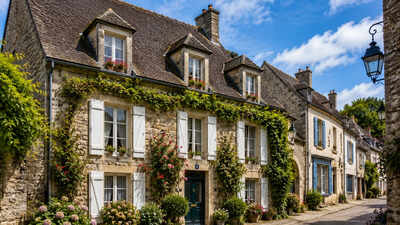
Europe is currently under the influence of one of the deadliest heat waves, with the World Health Organisation estimating nearly 1,300 excess deaths since June 21. The continent, predominantly known for low temperatures, is now facing spikes beyond 40 degrees Celsius, and the design of its homes is worsening the situation.Traditional European homes, especially in northern and central Europe, were designed to retain heat during long, cold winters. As a result, many are built using materials and features that minimise heat loss.Materials such as stone, brick, or concrete have high thermal mass. They absorb heat and release it slowly, helping keep homes warm in winter. Walls, roofs, and floors are often insulated with materials such as fibreglass, cellulose, or rigid foam boards to reduce heat from escaping.For trapping heat, windows mostly contain more than one pane of glass, and doors are often solid timber. Pitched roofs shed snow efficiently while thick roof insulation prevents heat loss through the attic.However, with the wrath of heatwaves and the lack of air conditioners, these homes are increasingly turning into heat traps.According to the International Energy Agency, only 20 per cent of European homes have air conditioners, compared to 90 per cent of American homes. Only seven per cent of British homes have ACs, though twice the number as three years ago.According to the World Meteorological Organisation and Copernicus Climate Change Service, Europe is the fastest-warming continent on Earth, with a rate twice the global average.In such a situation, a change in the architecture and material composition of homes to suit the newer climate patterns becomes a necessity. This includes green and heat-reflective roofs, along with proper ventilation channels.
Leave a Reply