UPDATE: 9:30 AM CEST

Recent disruptions of clandestine Iranian cells across Europe, the Gulf, and North America have drawn attention to Tehran’s covert action capabilities beyond its country’s borders.* Against the backdrop of this environment, this article examines the role of Unit 840, the Islamic Revolutionary Guards Corps (IRGC) Quds Force’s dedicated covert operations unit for assassination, abduction, and surveillance operations against dissidents, opposition figures, and Western and Israeli targets outside of Iran, including its recruitment of foreign operatives and mercenaries to conduct attacks.
*Background: In May 2026, Kuwait arrested four IRGC-affiliated individuals who were trying to enter the country by sea, and Bahrain sentenced three individuals to life in prison over links to the Corps. In March, the UAE dismantled the second of two Iran-linked groups accused of covert activities and sabotage since the outbreak of regional hostilities in late February, and Qatar arrested members of two IRGC-cells within its borders. Meanwhile, US prosecutors charged an Iran-backed Kataib Hezbollah suspect involved with attacks in the United States, Canada, and Europe. Publicly available information has not tied these operatives to Unit 840, but they reflect a wider pattern of Iranian covert action that aligns with Unit 840’s mission and capabilities.
Read more
According to a report published by Amnesty International on May 18, the Islamic Republic of Iran executed at least 2,159 people in 2025. This unprecedented figure pushed the global number of executions to its highest level since 1981.
The organization stated that 2,707 executions were recorded worldwide in 2025. In other words, nearly 80 percent of all documented executions around the world took place in a single country: Iran.
Under these circumstances, the Islamic Republic no longer appears merely as one state among others violating human rights. It has become the principal driver behind the worldwide increase in executions.
In Iran, the death penalty is not simply a judicial instrument. It constitutes a central pillar of the system of governance: a tool for social control, the production of fear, and the prevention of future uprisings.
Read more
UPDATE: 8:30 AM CEST
24 Days to go 100,000 Free Iran Rally
14:00 CEST – Paris, France – June 20, 2026#100KFreeIranRally
🛑Stop Executions In Iran
⛔️No to Shah No to Mullahs
✅Yes to a Democratic Republic
…
Video by @4FreedominIran — All rights reserved. pic.twitter.com/AacylPj6Cd
— Iran Freedom (@4FreedominIran) May 27, 2026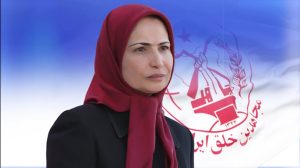
May 25 marks the 54th anniversary of the martyrdom of the founders of the People’s Mojahedin Organization of Iran (PMOI/MEK): Mohammad Hanifnejad, Saeed Mohsen, and Asghar Badizadegan, along with two Central Committee members, Mahmoud Asgarizadeh and Rasoul Meshkinfam. In honor of this historic day, PMOI Secretary General Zahra Merrikhi issued a profound message reflecting on the legacy of these visionary leaders. Ms. Merrikhi described the anniversary of their martyrdom as “a heavy, and of course, meaningful and lasting moment in the 120-year history of the struggle after the Constitutional Revolution, and an inspiring moment for the Mojahedin who originated from there.”
For the PMOI, May 25 is not merely a day of remembrance, but an occasion to reaffirm their core principles. In her message, Ms. Merrikhi emphasized that this day is meant for the Mojahedin to renew their vows with Hanifnejad and his companions, pledging “to not take a step except on the path of honesty and sacrifice,” and to ultimately bring the revolutionary ideals of the founders to victory.
Read more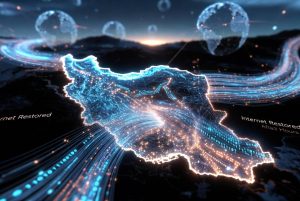
Iran partially restored international internet access on 26 May 2026 after 88 days and 2,093 hours of near-total blackout
Read more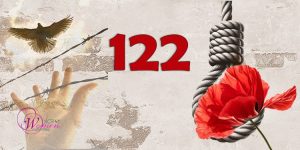
The protest took place amid escalating pressure from security agencies and prison authorities in recent weeks, including threats, punitive measures, and disciplinary restrictions aimed particularly at female political prisoners in an effort to halt the campaign. Despite these measures, prisoners participating in the movement stated that they will not remain silent in the face of the growing wave of executions in Iran.
Among those participating in the campaign are female political prisoners held in the women’s ward of Evin Prison, who chant anti-execution slogans every Tuesday in protest against executions. In response to their participation, prison authorities have imposed visitation bans and denied them phone contact with their families.
Read more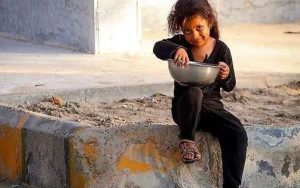
For years, poverty in Iran has no longer been merely the consequence of economic mismanagement or corruption. It has evolved into something deeper and more dangerous: a governing instrument. Under the rule of the clerical establishment, deprivation has increasingly become a strategic mechanism for weakening society, exhausting resistance, and reshaping the psychological fabric of the nation itself.
What is particularly revealing is that this reality is no longer exposed only by critics or opposition voices. Increasingly, warnings are emerging from within the regime’s own media ecosystem and affiliated experts. These admissions paint a devastating portrait of a society being systematically driven toward psychological exhaustion and social fragmentation.
A report published on May 25, 2026, by the regime-affiliated newspaper Tose’e Irani, citing remarks made by psychiatrist Mohammad Ghadiri Vasfi in an interview with the state-linked ILNA news agency, acknowledged that nearly 50 percent of Iranian society now lives below the poverty line. Even within the tightly controlled framework of official discourse, such an admission is staggering.
Read more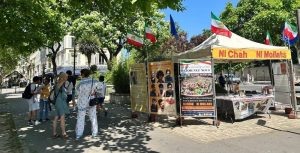
Paris, France – May 26, 2026 – Supporters of the People’s Mojahedin Organization of Iran (PMOI/MEK) held an exhibition to protest the execution of political prisoners and demonstrators in the wake of the January 2026 uprising. The event underscored renewed demands for freedom, justice, and the protection of human rights in Iran.
The exhibition honored victims of the Iranian regime’s executions, showcasing powerful images and personal stories that highlighted their sacrifice. It underscored the Iranian people’s ongoing resistance and their demand for a democratic republic.
Organizers also issued a clear call to action, urging freedom-loving Iranians and international supporters to join the major rally scheduled for June 20 in Paris under the slogan “A Democratic Republic for Iran.” The rally rejects both monarchical and theocratic dictatorships, emphasizing a third alternative rooted in democracy and popular sovereignty.
Addressing the French public and the international community, organizers stressed that the Iranian people reject all forms of dictatorship and called for global solidarity with their struggle. They warned against supporting any authoritarian alternative and instead urged support for the Iranian people’s demand for a free and democratic republic.
Read more
Also, read Iran News in Brief – May 26, 2026
Copyright © 2026 NCRI National Council of Resistance of Iran All Rights Reserved.
This website uses cookies so that we can provide you with the best user experience possible. Cookie information is stored in your browser and performs functions such as recognising you when you return to our website and helping our team to understand which sections of the website you find most interesting and useful.
Strictly Necessary Cookie should be enabled at all times so that we can save your preferences for cookie settings.
Leave a Reply