UPDATE: 7:30 AM CEST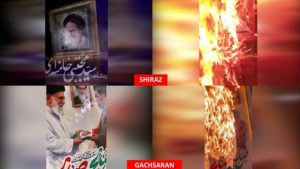
As the Iranian regime attempts to subdue the nation’s rebellious youth through a massive wave of executions, the PMOI/MEK Resistance Units are actively striking back with daring operations across the country. Defying the intense climate of repression and the threats from promoters of the shah’s brutal SAVAK police, these units are targeting centers and symbols of the regime’s apparatus.
On June 1, Resistance Units set fire to large banners and posters featuring regime founder Ruhollah Khomeini, former supreme leader Ali Khamenei, and current supreme leader Mojtaba Khamenei in major cities, including Tehran, Hamedan, Shiraz, Karaj, Mashhad, and Dehloran. In Zahedan, they targeted an IRGC Basij base tasked with suppressing students, while in Dehdasht and Ramhormoz, they struck regime centers for fundamentalism and terrorism. These operations were guided by the slogan, “Down with the oppressor, be it the shah or the supreme leader,” unequivocally rejecting all forms of dictatorship.
The mullahs find themselves in an impasse, unable to return to the status quo that preceded the mass uprisings and massacres of January 2026. Exploiting recent wartime conditions, the regime has implemented a “strategy of the noose” to violently purge its prisons. Since the start of the war, authorities have arrested 6,500 people—including 567 connected to the PMOI—and have executed eight PMOI members alongside more than 20 young protesters who fought against the Revolutionary Guards.
Read more
A coalition of athletes, including several Olympians, have signed a letter advocating against Iran for its history and plans to execute star athletes, as the planned execution of Iranian boxing champion Mohammad Javad Vafaei Sani looms. Sani is a boxing champion, coach and political prisoner who is currently facing an imminent risk of execution in Iran by the Ayatollah. He was arrested by the Islamic Revolutionary Guard Corps (IRGC) in March 2020 following his participation in the November 2019 nationwide protests, which were initially sparked by a sudden hike in gas prices.
The Iranian judiciary charged him with “corruption on earth,” which is a capital offense in the country.
The Olympians, headlined by women’s tennis legend Martina Navratilova and British swimming gold medalist Sharron Davies, call on world governing powers and sports bodies to intervene to prevent the execution.
“Currently, Mohammad Javad Vafaei Sani, a 31-year-old boxing champion and coach, remains on death row,” the letter states.
Read more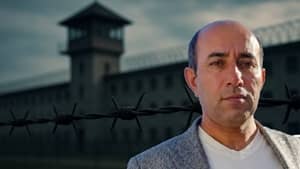
The Iranian regime has once again demonstrated its reliance on executions to maintain power, recently reconfirming the death sentence of political prisoner and People’s Mojahedin Organization of Iran (PMOI/MEK) supporter Yaghoub Derakhshan.
Currently held in Lakan Prison in Rasht, the 51-year-old faces imminent execution after a blatantly rigged judicial process. Derakhshan was arrested in April 2025 and initially sentenced to death for “Baghi” (armed rebellion) in August 2025 by judge Ahmad Darvish-Goftar following an online trial.
In November 2025, the Supreme Court ordered a theatrical retrial, handing the case to the Second Branch of the Revolutionary Court in Rasht. In a stark display of the judiciary’s corruption, this branch is presided over by Mohammad Ali Darvish-Goftar—the son of the original judge. He reconfirmed the death sentence in another online show trial conducted without a defense lawyer present.
Derakhshan’s case is part of a broader, systematic wave of death sentences targeting dissidents in Rasht. Recently, the same Revolutionary Court reconfirmed the death sentence of Zahra Tabari, a 68-year-old electrical engineer and PMOI supporter arrested during an April 2025 home raid.
Read more
Marjane Satrapi, the prominent Iranian-French author and filmmaker, passed away in Paris at the age of 56. She was the creator of the renowned masterpiece Persepolis.
The French Presidency and the French Academy of Fine Arts paid tribute to this exceptional artist and passionate advocate for freedom in official statements.
Marjane Satrapi achieved global acclaim with her Persepolis series. This work depicted her childhood in Iran, the regime’s oppression of the people, and her forced migration to Europe. Published in three volumes between 2000 and 2003, the work went on to achieve worldwide success.
The Persepolis animated feature film won the Jury Prize at the Cannes Film Festival in 2007. She dedicated this award to all Iranians.
In subsequent years, she repeatedly supported Iranian freedom seekers, women, and protesting youths. Living in France since 1994, she was a vocal critic of the mullahs’ regime’s policies and took a stand multiple times against the suppression of the Iranian people, particularly women and youth.
Read more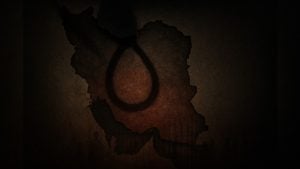
According to recently surfaced reports, a 22-year-old woman named Afsaneh Zandabadi was executed on May 17, 2026, in the Central Prison of Tabriz. To date, state-run media in Iran have not announced her execution.
Afsaneh Zandabadi had been a victim of rape and abuse by her stepfather since childhood. At just 19 years old, she was sentenced to death on drug-related charges by the courts of the clerical regime. She spent three years on death row before her sentence was carried out. With the execution of Afsaneh Zandabadi in the Central Prison of Tabriz, the number of women executed in the 2026 calendar year has risen to thirteen.
Afsaneh Zandabadi lost her father years ago. When she was 15, her mother married a tire merchant, forcing Afsaneh to move into his home. Her stepfather immediately halted her education. When she turned 17, he bought her a Peugeot 206 as a birthday gift—but his motives were entirely predatory. Luring her with promises of wealth and buying her a villa, he coerced her into trafficking drugs.
Read more
The question of regime change in Iran is no longer a theoretical debate. It has evolved into a tangible political reality that increasingly shapes the calculations of both the ruling establishment and Iranian society.
At the heart of this confrontation stand two opposing forces. On one side is the ruling clerical regime, together with its various political and security factions. On the other stands a population exhausted by decades of repression, economic decline, corruption, and political exclusion.
In the aftermath of the recent war, the regime has sought to maintain control through intensified repression. Executions have increased, cities have become heavily securitized, and an undeclared state of emergency has effectively been imposed across large parts of the country. The primary objective has been clear: prevent the emergence of another nationwide uprising.
Yet beneath the surface, a different reality appears to be taking shape.
Read more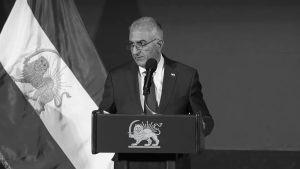
Periods of profound political crisis often inspire societies to look backward in search of certainty. When the present appears unstable and the future uncertain, memories of previous eras can acquire renewed appeal. It is therefore understandable that discussions surrounding Iran’s future occasionally revive debates about the monarchy and whether a return to pre-1979 political structures could offer a solution to the country’s current crisis.
Yet once the emotional dimension of nostalgia is set aside, a more fundamental question emerges: does the monarchist project represent a convincing political alternative for contemporary Iran?
The answer depends not on history alone, but on whether such a project can address the realities, aspirations, and challenges of today’s Iranian society.
Nostalgia may be a powerful emotional force, but it is rarely sufficient as a foundation for political transformation.
Successful political movements are built not only on memories of what once existed, but on a compelling vision of what can be achieved in the future. Citizens facing economic collapse, political repression, corruption, and social uncertainty are ultimately searching for solutions to present-day problems rather than a restoration of historical symbols.
Read more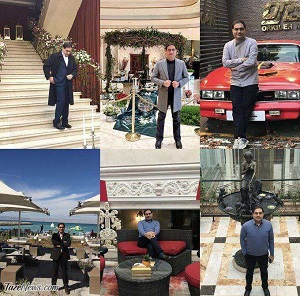
Class inequality in Iran is no longer a reality hidden beneath official narratives. It has become impossible to ignore, even within state-controlled media. While millions of Iranian families struggle under the weight of inflation, rising prices, and an unrelenting cost-of-living crisis, reports highlighting the unrestricted presence of luxury vehicles worth billions of tomans on the country’s streets have once again ignited public outrage.
What increasingly frustrates ordinary citizens is not merely economic hardship itself. It is the stark contrast between the daily struggles of the majority and the privileged lifestyle enjoyed by a small minority closely connected to political and economic power. This widening gap has become one of the most visible manifestations of inequality in contemporary Iran. A report published by the state-run newspaper Tosee Irani on June 2 highlighted a reality familiar to many Iranians. While purchasing power continues to collapse and many households struggle to afford basic necessities, luxury vehicles valued at extraordinary sums continue to move freely throughout the country.
According to the report, some imported vehicles have reached prices that are unimaginable for ordinary citizens. Models such as the Honda Civic, Mercedes-Benz E300, BMW X7, and Porsche Panamera now command prices equivalent to several billion tomans.
Read more
Existing indicators suggest that a large portion of Iranian society is facing not an absolute shortage of goods, but a severe decline in economic access to essential food items. The removal of dairy products, meat, chicken, and many basic commodities from the consumption baskets of low-income households is a serious warning sign for the country’s food security.
Inflation and economic stagnation in Iran have now reached a stage where their effects are clearly visible in people’s consumption patterns. Labor reports indicate that per capita dairy consumption in Iran has fallen to about one-fifth of the global average.
The price of raw milk has more than tripled in a short period, and dairy products have experienced price increases exceeding 100%. The first victims of this trend are working-class families and low-income groups.
At the same time, economic stagnation has limited income opportunities. Many small and medium-sized businesses have faced reduced activity, declining sales, or closure. The result of this dual trend is clear: living costs are rising rapidly while incomes are unable to keep pace.
Read more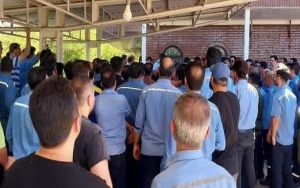
While economic crises and production stagnation have placed heavy pressure on workers’ lives, new reports from Sistan and Baluchestan Province indicate the continued uncertainty facing dozens of dismissed workers from Pars Sistan Steel Company. These workers say that following their dismissal, neither their legal claims have been paid nor has the process of receiving unemployment insurance been completed. According to them, this situation has pushed their families’ livelihood problems to a critical stage.
According to reports published by local sources, a significant number of employees at Pars Sistan Steel Company have been dismissed since mid-March. Workers were instructed to apply to the relevant authorities to receive unemployment insurance. However, nearly three months after this decision, many workers are still waiting for their status to be determined.
The dismissed workers say that when their employment was terminated, their job status was recorded as suspended. According to them, this has created uncertainty and delays in the payment of seniority benefits, severance pay, and other worker claims. Some of these workers state that their repeated efforts to pursue their claims have yielded no results, and they have received no clear response from company officials.
Read more
Soheil Arabi, a former political prisoner who was recently released from Ghezel Hesar Prison in Karaj, described the conditions under which opponents of Iran’s regime are held in “Suite 35, Unit Three” of the prison in a letter titled “Imprisonment During War; Struggling to Survive in Ghezel Hesar Prison.”
In the letter, he wrote about the presence of prisoners sentenced to death, the death-centered atmosphere dominating the ward, severe communication restrictions including deprivation of phone calls and visits, and the violent and torturous behavior of prison officials. Arabi wrote that he observed several young cellmates, born in the second half of the 2000s and under the age of 20, moving their necks up and down and from side to side in order to prepare their muscles for the hangman’s noose.
He also referred to the executions of Hamzeh, Saeed, Pouya Ghobadi, and several of his other cellmates in March and April of this year, adding: “This is not just a prison; it is a place where people are broken before they are executed. The sound of water pipes striking prisoners’ bodies, the laughter of guards, and phrases such as: ‘Guys, get ready to welcome an opponent of the regime,’ are part of everyday life.”
Read more
Also, read Iran News in Brief – June 5, 2026
Copyright © 2026 NCRI National Council of Resistance of Iran All Rights Reserved.
This website uses cookies so that we can provide you with the best user experience possible. Cookie information is stored in your browser and performs functions such as recognising you when you return to our website and helping our team to understand which sections of the website you find most interesting and useful.
Strictly Necessary Cookie should be enabled at all times so that we can save your preferences for cookie settings.
Leave a Reply