UPDATE: 7:00 AM CEST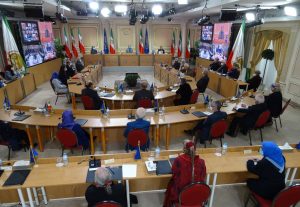
The National Council of Resistance of Iran held it session on Friday and Saturday, June 26 and 27, 2026, with the participation of Mrs. Maryam Rajavi, the NCRI President-elect for the transitional period of transferring sovereignty to the people of Iran. A number of representatives of Iranian communities in various countries attended the first day of the session as observers.
In her opening remarks, Mrs. Rajavi congratulated the Council on the 45th anniversary of its founding and said: The 57-year dictatorship of Reza Shah and his son continued through three coups, foreign intervention, suppression of freedoms, and injustice, until it was overthrown by the Iranian people’s anti-monarchic revolution. Khomeini and Khamenei, too, seized power by hijacking the leadership of the 1979 revolution, monopolizing power, and resorting to repression. But despite 48 years of executions, massacres, and warmongering, this medieval regime is today crumbling in confrontation with the people and the Iranian Resistance, and under the weight of its major defeats.
Mrs. Rajavi emphasized: The declaration of a Provisional Government, backed by 45 years of experience and the slogan of Peace and Freedom, means that the people of Iran have attained the capacity and strength to transfer power democratically and peacefully, after the regime’s overthrow, to their true elected representatives.
Read more
For months, Iran has found itself caught between military confrontation and diplomatic bargaining. The conflict between the United States and the regime, alongside renewed negotiations over Tehran’s nuclear program, has once again fueled speculation that Iran’s future could be shaped by decisions made outside its borders.
That assumption has repeatedly proven misguided. The past several months have reinforced a political reality that many Iranians have long understood. Neither military escalation nor diplomatic engagement has delivered greater freedom, accountability, or political rights to the Iranian people.
The fundamental question facing Iran has never been whether foreign governments will change the country. It is whether the Iranian people themselves possess the organized political capacity to do so.
The recent Free Iran 2026 conference in Paris reflected a growing international recognition of this reality. Speakers from across the political spectrum argued that sustainable democratic change cannot be imported through foreign intervention but must emerge from an organized domestic movement capable of challenging authoritarian rule.
Read more
Amid the continued arbitrary arrests following the nationwide protests of January 2026, new reports indicate prison sentences, ongoing detentions, prolonged legal uncertainty, denial of medical care, and the enforcement of prison terms against a number of detained women.
Zahra Jamali (Mahsa), who was arrested during the January 2026 nationwide protests and is currently held in the women’s ward of Evin Prison, has been sentenced by the Revolutionary Court to six months of imprisonment.
On January 9, 2026, she was transferred from Qarchak Prison to the women’s ward of Evin Prison.
Mahsa Nouri (Masoumeh), another detainee from the January 2026 nationwide protests, is serving a five-year prison sentence in Evin Prison. She was arrested on December 30, 2025, during nationwide protests.
Parastoo Jamalzai, another woman arrested during the January 2026 protests, was transferred to Arak Prison in late June this year to begin serving a one-year prison sentence.
Read more
A commentary published by Fars News Agency, a media outlet affiliated with Iran’s Islamic Revolutionary Guard Corps (IRGC), has reignited concerns about Tehran’s long-term nuclear ambitions by arguing that the regime has “no choice” but to build a nuclear weapon.
Although the agency later attempted to distance itself from the article by describing it as an opinion piece published in its interactive section, the publication reflects an increasingly visible trend within Iran’s political establishment: the public normalization of arguments in favor of nuclear weapons as an instrument of state policy.
The article also highlights a broader reality. For years, senior officials and influential figures within the regime have increasingly suggested that acquiring nuclear weapons would provide the regime with strategic security and deter external pressure. Such rhetoric raises important questions about regional stability, international security, and the future direction of Iran’s nuclear program.
Read more
Iran’s inflation crisis continues to intensify, with new official statistics showing unprecedented price increases across food, housing, transportation, healthcare, and other essential goods. The latest figures highlight the growing economic burden facing Iranian households, particularly those in rural areas, where inflation has exceeded 100 percent.
The data, released by the Statistical Center of Iran for the month of Khordad (May–June), paint a picture of an economy struggling under the weight of prolonged structural weaknesses, government intervention, and declining purchasing power.
While officials continue to attribute inflation to external pressures and sanctions, the breadth and persistence of price increases point to deeper domestic problems rooted in decades of fiscal mismanagement, monetary instability, corruption, and the expansion of monopolistic economic networks.
According to the report, Iran’s point-to-point inflation rate reached nearly 89 percent nationwide compared to the same month last year.
Conditions are considerably worse in rural regions, where annual inflation climbed to 108.1 percent, meaning the average cost of goods has more than doubled within a single year.
Read more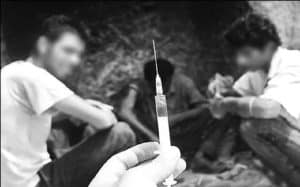
Iran’s growing addiction epidemic has become one of the country’s most alarming social crises, exposing the deep consequences of decades of economic decline, social instability, and ineffective public policy under the ruling regime.
According to the Director General of Treatment at Iran’s Drug Control Headquarters, approximately 3.8 million people in the country are now affected by addiction. Even more concerning, officials warn that new generations of synthetic narcotics and psychoactive substances are entering the market faster than medical experts can develop effective treatment protocols.
Rather than representing an isolated public health challenge, the figures illustrate the cumulative effects of policies that have left millions of Iranians facing economic hardship, unemployment, psychological stress, and diminishing social prospects.
Read more
As signs of divisions and rivalry at the highest levels of the Iranian regime have become increasingly apparent, 62 of the 88 members of the Assembly of Experts, the body responsible for appointing and overseeing the supreme leader, issued an unprecedented statement calling for the continuation of confrontational policies, including keeping the Strait of Hormuz closed and the assassination of U.S. President Donald Trump and Israeli Prime Minister Benjamin Netanyahu.
In the 10-point statement, the signatories described U.S. President Donald Trump and Israeli Prime Minister Benjamin Netanyahu as “Mahdur al-Dam” (one whose blood may be shed with immunity) and claimed that killing them “is obligatory for every obligated Muslim who gains access to them.”
The signatories also referred to Israel’s continuing military operations in Lebanon and the presence of Israeli forces in southern Lebanon, claiming that this constitutes a violation of understandings between Iran and the United States. On that basis, they described reopening the Strait of Hormuz as “a strategic mistake,” arguing that doing so would make “the enemy even bolder.”
Read more
In recent years, child rights violations in Iran have escalated into deeply alarming dimensions. These violations span from intense psychological pressures triggered by economic, social, and security crises, to ideological indoctrination in child-rearing, and a severe shortage of specialized mental health services. Official data published in domestic media reveals that within the national anxiety screening program, out of 899,793 children aged 5 to 6, a staggering 186,772 children were identified as suspected of having anxiety disorders, and 141,293 were referred to counseling centers. Furthermore, out of a total of 2,903 active counseling and psychological service centers across the country, only 91 centers specialize in children and adolescents—representing a mere 3% of all available facilities (Hamshahri Online – June 27, 2026).
The Convention on the Rights of the Child (CRC) mandates state parties to prioritize the “best interests of the child” in all actions concerning children. It obligates governments to guarantee the child’s right to survival and development; protect them from all forms of violence, injury, exploitation, discrimination, and psychological distress; and recognize their rights to freedom of thought, conscience, religion, expression, and participation in accordance with their age and maturity. Consequently, any educational, cultural, or security policy that weaponizes a child as a tool for political, ideological, or military indoctrination directly contradicts the spirit and provisions of this Convention.
Read more
While diplomatic developments have temporarily restored calm to Iran’s foreign exchange market, newly released official statistics from the Islamic Republic’s statistical agencies reveal deep structural imbalances, banking vulnerabilities, and a multi-layered inflation crisis.
In the final days of June 2026, the signing of a preliminary understanding between Tehran and Washington triggered a sudden 30,000-toman drop in the exchange rate, bringing months of uncertainty caused by the naval blockade and regional tensions to an end.
Yet the release of Khordad 1405 (June 2026) data by the Statistical Center of Iran, including an unprecedented year-on-year inflation rate of 88.6 percent—the highest recorded since the Second World War—showed that the country’s structural economic crisis cannot be cured by political stopgaps. Economists warn that while diplomatic openings may calm exchange-rate volatility, they can never substitute for deep structural reforms.
Read more
Paris, France – June 27, 2026 – Supporters of the People’s Mojahedin Organization of Iran (PMOI/MEK) held a book table and photo exhibition to condemn the executions of PMOI political prisoners and protesters from the January 2026 uprising carried out by the Iranian regime, as well as to denounce the policy of appeasement toward the mullahs’ regime. The event highlighted the Iranian people’s demand for a democratic republic led by the Iranian Resistance as a path toward peace and freedom.
Organizers called on the French public and the international community to recognize the suffering of the Iranian people and their firm rejection of all forms of dictatorship—whether monarchical or theocratic. Through powerful images and personal testimonies, the exhibition showcased the courage and sacrifices of Iranian protesters during the Iran protests 2026, while strongly condemning ongoing human rights violations, including the execution of political prisoners.
Read more
Also, read Iran News in Brief – June 29, 2026
Copyright © 2026 NCRI National Council of Resistance of Iran All Rights Reserved.
This website uses cookies so that we can provide you with the best user experience possible. Cookie information is stored in your browser and performs functions such as recognising you when you return to our website and helping our team to understand which sections of the website you find most interesting and useful.
Strictly Necessary Cookie should be enabled at all times so that we can save your preferences for cookie settings.
Leave a Reply