UPDATE: 8:00 PM CEST KUWAIT CITY — Kuwait declared two members of Iran’s diplomatic mission persona non grata and summoned Iranian Chargé d’Affaires Hamed Hamid Yaqoubi Far on Tuesday, hours after an IRGC barrage of 30 ballistic missiles and drones struck Kuwait International Airport’s Terminal 1, killing one Indian national and injuring 63. Deputy Foreign Minister Hamad Sulaiman Al-Mashaan handed Yaqoubi Far an official protest note and ordered the two diplomats to leave the country within 24 hours, citing “continued and blatant” attacks violating Kuwait’s sovereignty.
The move makes Kuwait the second GCC capital to formally reduce Iran’s diplomatic presence since the war began, 94 days after the UAE closed its Tehran embassy on March 1. Kuwait also shuttered Iran’s cultural mission, according to the Times of Israel — a broader diplomatic reduction than the persona non grata declarations alone. Saudi Arabia, which chairs the GCC and expelled five Iranian diplomatic staff 74 days ago, condemned the Terminal 1 strike and voiced “full support for any measures Kuwait takes” but announced no parallel action of its own.
Read more
U.S. forces have disabled another tanker near the Strait of Hormuz, according to U.S. Central Command, bringing the total tally to six vessels.
On June 2, Centcom forces observed the stateless tanker Lexie transiting towards Kharg Island, one of Iran’s primary loading terminals for oil exports. Empty tankers provide the potential for Iran to extend its production capacity through floating storage, and Centcom has attempted to prevent this by blocking inbound traffic, with substantial success.
According to the command, U.S. forces repeatedly ordered Lexie’s crew to halt their transit, but the tanker ignored the warnings for 24 hours. To bring the vessel to a stop, a U.S. aircraft launched a small Hellfire guided missile at the Lexie’s engine room, disabling the vessel and preventing her from reaching Iran. As in several previous Centcom blockade-enforcement strikes, official video footage shows no sign that the tanker was making way towards a destination at the time of recorded impact.
Read more
ROME, June 2 (Reuters) – MSC, the world’s largest shipping group, said on Tuesday its Sariska V vessel was struck by two projectiles while in Iraq’s Umm Qasr port on Monday, adding that all crew members were safe and unharmed.
The company said Iran’s Revolutionary Guard had claimed responsibility. MSC described the incident as an unprovoked attack on a neutral commercial carrier with no affiliation to the United States or Israel.
“MSC is deeply concerned by these unprovoked attacks and the risk they create for its innocent seafarers and essential maritime trade in the region,” the group said in a statement.
Iran’s Revolutionary Guards said they had targeted the MSC Sariska V container ship with a cruise missile, according to Iranian state media, describing the strike as retaliation for what Tehran said was an earlier attack on an Iranian vessel.
Read more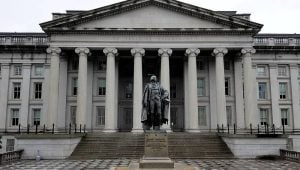
WASHINGTON—Today, the U.S. Department of the Treasury’s Office of Foreign Assets Control (OFAC) designated Nobitex, Iran’s largest digital asset exchange, along with three other Iranian digital asset exchanges, as part of Economic Fury and the Trump Administration’s efforts to eliminate the threat posed by the Iranian regime.
“While Iran’s economy is in free fall, the regime has chosen to co-opt digital asset technologies for its own corrupt agenda, including evading sanctions and transferring wealth out of the country. Iran’s current economic chaos is proof that President Trump’s maximum pressure campaign has been a success,” said Secretary of the Treasury Scott Bessent. “As promised, Treasury will continue to follow the money in support of Economic Fury, whether it is through the banking system or through digital assets, to prevent the regime from developing a nuclear weapon.”
Nobitex has provided significant support to the regime, processing more than 50 percent of all Iranian digital asset inflows in 2025 and facilitating payments tied to Iran’s terrorist activities, sanctions evasion efforts, and Islamic Revolutionary Guard Corps (IRGC)-linked transactions, including activity associated with IRGC-affiliated ransomware actors.
Read more
Authoritarian regimes often assume they can survive crisis by controlling information. The Islamic Republic of Iran has relied on that logic: censoring the internet, criminalizing dissent, intimidating families of political prisoners, silencing journalists and concealing repression from the outside world.
But one reality cannot be filtered, throttled or erased: hunger.
Recent warnings in Iran’s state-affiliated media point to a crisis that can no longer be dismissed as temporary hardship. The regime’s own economists warn of a looming “poverty explosion,” with roughly 4.5 million more Iranians at risk of falling below the poverty line this year. They also estimate Iran’s direct and indirect economic losses at about $12 billion, excluding longer-term damage.
These figures measure national ruin under a regime that has diverted the country’s resources toward repression, proxy warfare, nuclear expansion, missiles, corruption and ideological survival. Iran is not poor for lack of resources. It is poor because its rulers have plundered the nation and treated its people as subjects to be controlled.
Read more
UPDATE: 7:00 AM CEST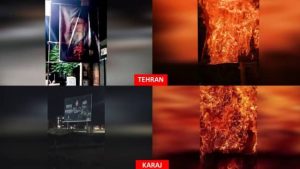
On May 30, 2026, the PMOI/MEK Resistance Units carried out coordinated operations across Iran to defy the regime’s escalation of executions. The operations also served as a direct response to proponents of the former Shah’s secret police, SAVAK, who have threatened Iranian freedom fighters.
Demonstrating a clear stance against authoritarianism, the Resistance Units targeted state centers and symbols of repression under the unifying slogan, “Down with the oppressor, be it the shah or the supreme leader.” This message reflects a complete rejection of both the past monarchical system and the current religious dictatorship.
The activities spanned major cities and towns throughout the country. In Tehran, Karaj, Mashhad, Ilam, and Baghmalek, Resistance Units set fire to large posters of the former Supreme Leader Ali Khamenei. In Shiraz, a poster of regime founder Ruhollah Khomeini was set on fire, while in Zahedan, a poster featuring both Ali Khamenei and the new Supreme Leader Mojtaba Khamenei was torched.
Read more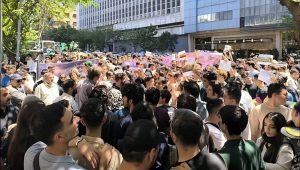
Iranian students in Tehran, Mashhad, and Hamadan staged protests on Tuesday, June 2, 2026. Gathering outside the Ministry of Education, they protested recent changes to the Konkur (university entrance exam) regulations, academic records, and the methodology of factoring in GPA context. They subsequently marched toward the Supreme Council of the Cultural Revolution.
The students are protesting the new educational policies. They announced that they will continue their protests until they receive a clear response to their demands.
Schoolgirls, along with their classmates, chanted slogans such as: ‘Students are awake, they loathe discrimination!’ ‘We’ve heard plenty of promises but seen no justice!’ and ‘Students will die but will not accept humiliation!’.
Some of the students at the rally declared: “We are waiting for results; we are not going anywhere, and we will stay right here. This generation is not one to back down with empty promises and repetitive rhetoric; it will pursue its rights.”
Read more
Iran is passing through one of the most consequential political periods in its modern history. Beneath the daily headlines, a deeper confrontation is unfolding between a ruling establishment trapped in structural crises and a society increasingly determined to pursue fundamental change. The regime’s strategy for survival has become increasingly clear: divert public attention through regional tensions and external conflicts while simultaneously escalating repression at home.
Recent developments suggest that this strategy is not a sign of confidence or strength. Rather, it reflects a growing fear within the state apparatus about the potential for widespread social unrest and the possibility of a political transformation that it can no longer easily control.
The sharp rise in executions, arrests, and security crackdowns over recent months reveals a regime attempting to contain a crisis rather than resolve it. Iranian regime authorities have accelerated the implementation of death sentences against political prisoners and individuals accused of involvement in anti-government protests. Numerous young Iranians have been sentenced or executed on charges ranging from participation in uprisings to alleged links with organized opposition networks.
Read more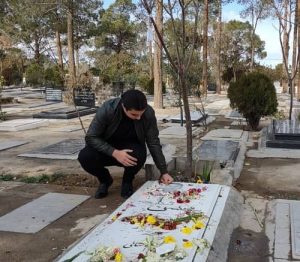
For years, Iranians have struggled with rising prices in nearly every aspect of life. Housing, food, healthcare, transportation, and education have all become significantly more expensive as inflation continues to undermine household purchasing power.
Now, another essential service has been added to the growing list of financial concerns facing Iranian families: the cost of burial and funeral services.
According to a June 2026 report published by the state-affiliated economic outlet Donya-e-Eghtesad, new rates approved for Tehran’s Behesht-e Zahra cemetery indicate substantial increases in the cost of funeral-related services. The report stated that fees for a wide range of services—from transportation of the deceased and ritual washing to burial arrangements and funeral ceremonies—have risen by an average of approximately 40 percent, while some services have seen increases of as much as 50 percent.
The sharp increase has drawn public attention not only because of its scale, but because it affects families at one of the most difficult moments of their lives.
Read more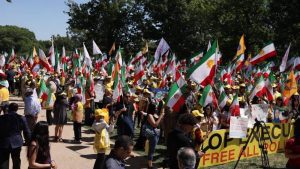
The upcoming Free Iran Rally in Paris on June 20, 2026, is shaping up to be one of the most significant political events related to Iran this year. Organized by the Iranian Resistance, the gathering comes at a time when Iran is experiencing profound political tensions, growing social unrest, and intensified state repression.
Supporters of the event describe it as more than a political gathering. They view it as an opportunity to present a clear vision for Iran’s future and to draw a sharp distinction between the forces advocating democracy and those seeking to preserve various forms of dictatorship.
According to organizers and supporters, the rally reflects lessons learned from years of nationwide protests and popular uprisings. It aims to highlight the Iranian people’s demand for freedom, democratic governance, and fundamental political change while rejecting both the current theocratic system and any return to authoritarian models of the past.
The annual gathering of the Iranian Resistance has become a well-known international event that attracts political figures, lawmakers, human rights advocates, and members of the Iranian diaspora from around the world.
Read more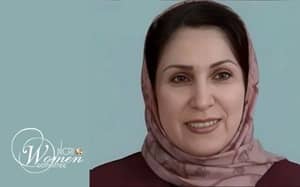
Zahra Shahbaz Tabari, a political prisoner held in Lakan Prison in Rasht, was once again sentenced to death by the Revolutionary Court of Rasht on charges of baghi (armed rebellion against the state) through membership and activity in the People’s Mojahedin Organization of Iran (PMOI/MEK), after her previous sentence was overturned by the Supreme Court.
The sentence was issued on April 14 and was recently served to Shahbaz Tabari in Lakan Prison in Rasht. The death sentence was issued by Mohammad Ali Darvish-Goftar, head of Branch Two of the Revolutionary Court of Rasht.
In January 2026, more than 400 prominent women from around the world and a group of United Nations experts called in separate statements for a halt to the execution of Shahbaz Tabari.
The 68-year-old political prisoner was sentenced to death by Branch One of the Revolutionary Court of Rasht in late October 2025, but the Supreme Court overturned the ruling and referred the case to Branch Two of the Revolutionary Court of Rasht for retrial.
Read more
With dairy prices rising again and consumption declining in Iran, experts have warned about the spread of anemia, osteoporosis, malnutrition, and short stature in future generations.
The state-run Khabar Online news website reported on May 31 that rising dairy prices, combined with the declining purchasing power of households, have reduced dairy consumption in Iran to levels below recommended standards.
Khabar Online wrote that estimates indicate per capita dairy consumption in Iran has fallen to about 50 kilograms, while the global average exceeds 250 kilograms.
According to the report, the chairman of the board of the National Union of Dairy Industry Cooperatives said that raw milk prices have increased by about 40% to 43%, a development that could further reduce dairy consumption.
Read more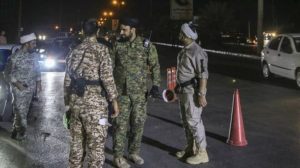
As ninth-grade students are recruited into police high schools, independent professors are being pushed out of the institutions that train Iran’s future teachers.
At a time when international public attention is primarily centered on Iran’s geopolitical tensions and foreign policy, a fundamental and alarming shift is taking place inside the country’s educational structure.
Two recent news developments represent the two blades of a pair of scissors cutting through the roots of free thought and the humanities in Iran: on one side, the launch of admissions for teenage students into “Police High Schools,” and on the other, the widespread and systematic dismissal of independent-minded professors from Farhangian University.
Taken together, these two developments paint a disturbing picture of Iran’s sociological future and the fate of its scientific and human capital.
Read more
On June 1st, the very first news was the grim announcement of the execution of two more political prisoners; two protesters of the January 2026 uprisings, named Mehrdad Mohammadi-Nia and Ashkan Maleki. Just the day before, human rights organizations had issued urgent warnings regarding the imminent execution of these two protesters in a case known as the “Koy-e Nasr Case.” Yet, the deafening silence of the international community and their lack of any tangible, material intervention claimed the lives of these two young individuals as well. We are left to ponder: why does this ongoing onslaught on humanity, which the Iranian regime has unleashed against political prisoners for decades, remain unaddressed by the international community and human rights bodies, completely devoid of any practical action for accountability and containment?
If we mark our calculations from March 19, 2026 onward, a staggering 37 political prisoners have been executed, including members of the People’s Mojahedin Organization of Iran (PMOI/MEK) Resistance Units and protesters of the January uprisings.
This unprecedented figure translates to the execution of one political prisoner every 49 hours; in other words, approximately one human being hanged every two days. These unprecedented figures represent real people whose lives have been taken. These were individuals who sought nothing but freedom and the realization of human rights for themselves and their fellow compatriots. By executing them, the regime has not only violated their fundamental human rights, but this relentless onslaught on humanity has systematically crushed and traumatized their families, friends, and consequently, the entire fabric of society.
Read more
Documented and deeply concerning reports recently leaked from the corridors of security wards in Hormozgan Province reveal a severe humanitarian crisis. According to verified accounts, political prisoner Omid Hamzeh has been subjected to horrific physical torture in a premeditated operation orchestrated under the direct orders of security apparatuses and executed by the hands of Minab Prison authorities. Civil rights activists view this persistent, overt violence as a systematic tool designed to crush the detainee’s resistance and coerce him into accepting the interrogators’ fabricated scenarios. The fundamental question remains: why does this method of gradual elimination and assault on the life of political prisoner Omid Hamzeh continue to lack a deterrent and material response to halt this machinery of repression, unfolding under the diplomatic silence of international bodies that claim to champion human rights?
The case of this prisoner has been shrouded in absolute censorship and blackout; consequently, precise information regarding the exact date, manner, and underlying pretext of the arrest of this political prisoner remains entirely unavailable.
Read more
Malmö, Sweden – May 30, 2026: Supporters of the People’s Mojahedin Organization of Iran (PMOI/MEK) held a rally to protest the execution of political prisoners in Iran, including PMOI members and individuals detained during the January 2026 uprising. They also called on freedom-loving Iranians to join the June 20 Paris Free Iran Rally, urging a unified stand against both the clerical dictatorship currently ruling Iran and the legacy of monarchical autocracy.
Demonstrators urged the Swedish government to take firm action against the Iranian regime over its ongoing executions and alleged terrorist activities. They called for the closure of the regime’s embassy in Stockholm, which they described as a hub for espionage and terrorism, and demanded the immediate and unconditional release of all political prisoners in Iran.
Read more
Gothenburg, Sweden — May 30, 2026 — Supporters of the People’s Mojahedin Organization of Iran (PMOI/MEK) gathered to protest the execution of political prisoners in Iran, including PMOI members and individuals detained during the January 2026 uprising. They also called on freedom-loving Iranians to join the June 20 Paris Free Iran Rally, urging a unified stand against both the clerical dictatorship currently ruling Iran and the legacy of monarchical autocracy.
Demonstrators urged the Swedish government to take firm action against the Iranian regime over its ongoing executions and alleged terrorist activities. They called for the closure of the regime’s embassy in Stockholm, which they described as a hub for espionage and terrorism, and demanded the immediate and unconditional release of all political prisoners in Iran.
Read more
Toronto, Canada – May 30, 2026: Supporters of the People’s Mojahedin Organization of Iran (PMOI/MEK) held a rally to condemn the execution of political prisoners in Iran, including members of the PMOI and protesters detained during the January 2026 uprising.
Demonstrators strongly condemned the actions of the mullahs’ regime, describing the executions as a blatant violation of human rights. Participants paid tribute to the victims by holding their photos and reaffirmed their commitment to continue the struggle until the overthrow of the regime and the establishment of peace, freedom, and justice in a democratic republic.
Read more
Also, read Iran News in Brief – June 2, 2026
Copyright © 2026 NCRI National Council of Resistance of Iran All Rights Reserved.
This website uses cookies so that we can provide you with the best user experience possible. Cookie information is stored in your browser and performs functions such as recognising you when you return to our website and helping our team to understand which sections of the website you find most interesting and useful.
Strictly Necessary Cookie should be enabled at all times so that we can save your preferences for cookie settings.
Leave a Reply