UPDATE: 6:30 PM CEST
An Australian citizen working as a senior intelligence officer for Iran “orchestrated” a firebombing in Bondi, the country’s top spy has claimed, while a former Australian resident in Iraq allegedly directed an attack on a Melbourne synagogue. The alleged homegrown ties to Australia’s “summer of antisemitism” were contained in a wide-ranging speech given by the Australian Security Intelligence Organisation (Asio) director general, Mike Burgess, on Wednesday night. He said in the address that the “hatred of Jews is one thing virtually all the violent extremist cohorts have in common”.
Burgess warned that intelligence officials must contend with security threats from everywhere and all at once. The Asio boss said Australians who wanted a safer country should be more tolerant and give others a “fair go” to turn down the temperature.
Read more
UPDATE: 2:30 PM CEST
Iran’s future must necessarily be built upon the establishment of a democratic, secular republic that respects fundamental human rights, bringing an end once and for all to the failed and controversial Western policy of accommodation toward Tehran’s theocracy. This was the clear and unanimous message that emerged from the Free Iran World Summit 2026, held in the French capital to mark the forty-fifth anniversary of the beginning of the organized resistance against the mullahs’ religious dictatorship. This year’s event brought together in Paris hundreds of prominent international political figures, parliamentarians from across the political spectrum, distinguished jurists, and human rights activists from more than fifty countries, all united in recognizing the National Council of Resistance of Iran (NCRI) as the only genuine and organized democratic alternative to the current theocratic regime.
The summit opened amid a climate of heightened tension and international controversy following the disputed decision by the Paris authorities to impose severe restrictions and a last-minute ban—less than forty-eight hours before the event—on the mass rally that was expected to bring more than 100,000 Iranian exiles and supporters from across Europe to Place Vauban. This restrictive decision was sharply criticized by international delegates, including prominent and experienced British and European political figures, who described it as an unacceptable capitulation to the intense pressure and ongoing diplomatic blackmail exerted by Tehran. Nevertheless, the measure did not prevent the conference from taking place, as it was swiftly reorganized and held at the secured headquarters in Auvers-sur-Oise.
Read more
UPDATE: 8:30 AM CEST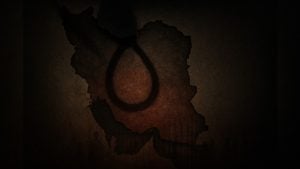
Fearing the eruption of another nationwide uprising, Iran’s ruling religious dictatorship has drastically accelerated its machinery of execution and death. Rather than a display of power, this relentless wave of state-sanctioned killings exposes a fractured regime deeply terrified of the people, particularly a rebellious generation determined to overthrow it. The daily acceleration of these killings is a desperate attempt to prevent the explosion of public anger.
The sheer volume of recent hangings reveals the regime’s desperation. In the Iranian month of Khordad (May 22 – June 21, 2026), the regime executed at least 134 prisoners. The killing spree reached horrific peaks: over a four-day span from Saturday, June 13 to Tuesday, June 16, at least 31 prisoners were sent to the gallows, averaging one execution every three hours. Among those executed during this four-day period were several compatriots from the Baluch people, who are suffering extra suppression and violence from the regime.
The state’s killing machine did not stop there. Over just two days—Wednesday, June 17, and Sunday, June 21—another 20 prisoners were hanged by the regime’s henchmen. These executions were systematically carried out in prisons across the country in cities such as Zahedan, Shiraz, Zabol, Yazd, Shirvan, Maragheh, Borujerd, Gorgan, Hamedan, Sanandaj, Isfahan, Tabriz, Amol, Kashan, Ahvaz, Sari, Birjand, and the notorious Qezelhessar prison.
Read more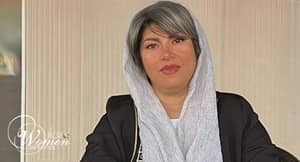
Kowkab Badaghi Pegah, a history teacher, a teachers’ rights activist, and a prominent member of the Khuzestan Teachers’ Trade Association, has been sentenced to one year of imprisonment by Branch One of the Revolutionary Court of Izeh.
Kowkab Badaghi, an ethnic Lor from Izeh, was charged with “propaganda against the state.” The sentence is reported to be linked to her trade union activities in defense of the rights of teachers and students.
In a statement condemning the ruling, the Khuzestan Teachers’ Trade Association stressed that teachers have consistently pursued their professional demands through peaceful and lawful channels. The organization also reaffirmed the right to free, high-quality education and emphasized the need to eliminate discrimination within the education system.
The Khuzestan Teachers’ Trade Association further warned that restricting legal avenues for protest and the pursuit of legitimate demands could deepen social divisions and contribute to broader societal crises.
Read more
The feverish days of June 1981 in Tehran were among the most turbulent in Iran’s modern history. The growing popularity of the People’s Mojahedin deeply alarmed the Islamic regime, which was still in the process of consolidating its power and was determined to stabilize itself through harsh repression. That June, the regime’s Majles approved the ghesas decree—the law of retaliation (an eye for an eye)—sparking widespread protests. Remaining silent was not an option. The principal opposition movement to the regime, the People’s Mojahedin, described it as “an indelible stain” and “an affront to humanity.”
The Khomeini regime was preparing to eliminate the last remaining openings for political activity. Regime-backed vigilante squads were already violently suppressing all forms of dissent: more than fifty supporters of the People’s Mojahedin were killed, and thousands of young people were beaten, some to death, simply for distributing Mojahed, the movement’s newspaper. Printed semi-clandestinely, it had a circulation exceeding 600,000 copies, compared with only a few tens of thousands for the regime’s newspapers. The passage of the blood-retaliation decree was a clear sign of the institutionalization of the Islamic state in Iran.
The National Front and Bazargan’s Freedom Movement called for a demonstration against the law. In a harsh and aggressive speech broadcast on radio on June 15, Khomeini fiercely attacked his former prime minister—without naming him—equating dissent with blasphemy. Tehran’s streets were filled with crowds of Hezbollahis, and the demonstration was canceled. No one was allowed to speak out.
Read more
For generations, Paris has stood as a symbol of liberty. The French Revolution inspired oppressed peoples across the world. The words Liberté, Égalité, Fraternité became a beacon for those struggling against tyranny and injustice. That proud legacy suffered a grievous blow this weekend when French authorities blocked a peaceful gathering of more than 100,000 Iranians who had traveled from across Europe to raise their voices against one of the world’s most brutal dictatorships. What occurred in Paris was a stain upon the reputation of France and a shocking assault on democratic freedoms.
For months, preparations had been underway for the annual gathering of Iranian supporters of democracy and human rights. Organizers worked closely with the authorities. Travel arrangements were made. Hotels were booked. Families journeyed from every corner of Europe. Thousands invested considerable time and expense to participate in a peaceful demonstration against the clerical regime in Tehran and its escalating campaign of executions, torture, and repression. Then, at the eleventh hour, everything changed.
Following reports of a conversation between French Foreign Minister Jean-Noël Barrot and Iranian Foreign Minister Abbas Araghchi, permission for the rally suddenly disappeared. Whether coincidence or consequence, the result was unmistakable.
Read more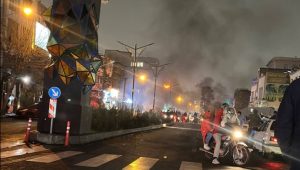
The recent convergence of war and diplomacy has brought an important chapter in Iran’s political crisis to a close. A period of uncertainty—suspended between military confrontation and negotiations—has ended. What lies ahead will reveal the calculations of regional powers, international actors, and competing Iranian political currents.
Yet one conclusion is already becoming clear. Just as the war altered political and social dynamics inside Iran, the subsequent diplomatic developments may prove equally consequential. The implications extend beyond the ruling establishment and touch the future aspirations of millions of Iranians seeking freedom, democracy, and national sovereignty.
Among the clearest political losers of this period are those who viewed war as a vehicle for regime change.
For months, some voices promoted the notion that freedom could arrive in Iran through foreign military action. This argument was particularly embraced by monarchist circles surrounding Reza Pahlavi, many of whom openly encouraged a military confrontation that they believed would create a pathway back to political relevance.
The premise was always flawed.
Read more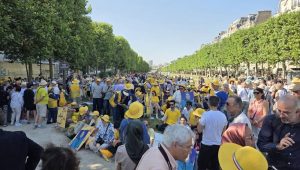
The sudden decision to block the Iranian Resistance’s planned June 20 gathering in Paris was supposed to silence a growing movement for democratic change in Iran. Instead, it produced the opposite result. What was intended as a security measure became an international scandal that exposed uncomfortable truths about the forces aligned against Iran’s democratic alternative.
The controversy surrounding the Paris gathering revealed more than a bureaucratic dispute. It exposed the extent to which the Iranian regime, remnants of the former monarchy, and advocates of Western appeasement share a common objective: preventing the emergence of a credible, organized, and independent democratic opposition.
Questions began to emerge when the timing of the French authorities’ decision came under scrutiny.
According to Reuters, the prohibition was imposed only hours after a telephone conversation between French Foreign Minister Jean-Noël Barrot and his Iranian counterpart Abbas Araghchi. The sequence of events inevitably raised concerns about political pressure and the influence of Tehran over decisions affecting Iranian dissidents in Europe.
More troubling revelations followed.
Read more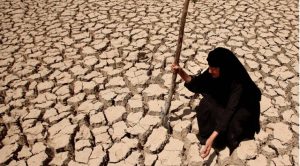
Every year on June 17, the World Day to Combat Desertification serves as an opportunity to focus on one of the world’s greatest environmental threats. For Iran, however, this day is not merely an international observance; it is a reminder of a crisis whose effects are visible every day in the lives of millions of people, from dust storms and the drying of farmland to rural migration and threats to the country’s food security.
Iran has long been located within the world’s arid belt, but what is being witnessed today is not merely the result of climatic conditions. Many experts believe that a significant part of the current crisis is the product of decades of mismanagement, unscientific decision-making, and the Iranian regime’s destructive policies in the fields of water and the environment.
According to official statistics, of Iran’s 164 million hectares of land area, about 32 million hectares consist of desert lands, and half of that area is in a critical condition and has become a source of dust storms.
Studies by the University of Tehran and Iran’s Ministry of Energy also show that about 88% of the country’s territory has been affected by desertification.
Read more
Reports from Iranian regime government institutions show that the “renewable water per capita” indicator for each Iranian citizen has declined from about 7,000 cubic meters in past decades to less than 1,200 cubic meters.
Iran’s water industry spokesperson announced this on Friday, June 19, adding that population growth alongside declining rainfall and the consequences of climate change has placed unprecedented pressure on the country’s water resources. Issa Bozorgzadeh, Iran’s water industry spokesperson, said regarding the status of this indicator in Iran compared with global standards: “This figure in earlier years, when the country received more rainfall, was about 130 billion cubic meters per year and has now fallen to less than 103 billion cubic meters per year.”
According to him, in the 1950s and 1960s, each Iranian had access to nearly 7,000 cubic meters of water per year, but this figure has now declined significantly.
Renewable water per capita, measured in cubic meters per person per year, represents each citizen’s share of the country’s natural water resources and is considered one of the most important global indicators for assessing national water security.
Read more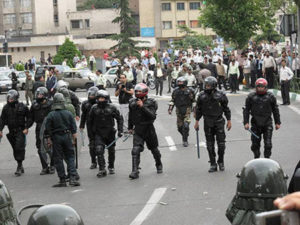
Human creativity is always commendable, up to the point where it is weaponized to engineer new methods of suppression within an authoritarian regime—and in this specific case, within Iran’s religious dictatorship. The containment and eradication of freedoms, especially the freedom of thought through advanced technological, educational, and biometric structures have enabled the regime to exploit accountability vacuums in the international arena, reproducing despotic behavior with impunity. The backdrop to this sinister innovation lies within a global community that has repeatedly failed to hold the Islamic Republic accountable for thousands of human rights violations, leaving it fully aware that its actions face no real consequences.
On June 22, 2026, the Rokna News Agency published a report on the Faculty of Natural Resources at the University of Tehran, headlined: “Look into the camera so we can give you food”?!
The article summary states: Students at the University of Tehran’s Faculty of Natural Resources condemn the cafeteria’s new policy as a coercive measure mandating facial recognition to receive meals. This procedure, enforced through rigid biometric authentication and mandatory physical presence at specific hours, effectively deprives numerous students—particularly those engaged in off-site field research or laboratory experiments—of meals they have already paid for in advance.
Read more
TEHRAN — A review of recent reports in Iran’s official media indicates that the issue of a possible return of International Atomic Energy Agency (IAEA) inspectors has once again activated differing viewpoints among the country’s political factions. The ongoing Iran nuclear inspectors dispute has brought into view contrasting positions held by executive institutions and conservative currents regarding how Tehran should engage with the agency.
Following standard journalistic practice, this fact-based report seeks to document this multi-voiced environment through official statements and published positions.
The starting point for these exchanges was a report published by the Tasnim News Agency, which challenged, from a legal perspective, any agreement allowing the return of IAEA inspectors. Referring to existing oversight frameworks, the agency argued that such a move would conflict with current legislation, writing: “The entry of IAEA inspectors into Iran, outside the framework of the agreement, is contrary to the Strategic Action Law passed by Parliament and would be damaging.”
Read more
Paris – June 20, 2026: New footage from June 20 captures the determination of freedom-loving Iranians who gathered at multiple locations across Paris after the planned “Free Iran 2026 – Onward to a Democratic Republic” rally was canceled.
Despite the last-minute cancellation, Iranian Resistance supporters came together at Trocadéro Square, Place Vauban, Place de la Bastille, Place de la République, and other locations across the French capital to protest the escalating wave of executions in Iran and call for a democratic republic.
Read more
Also, read Iran News in Brief – June 24, 2026
Copyright © 2026 NCRI National Council of Resistance of Iran All Rights Reserved.
This website uses cookies so that we can provide you with the best user experience possible. Cookie information is stored in your browser and performs functions such as recognising you when you return to our website and helping our team to understand which sections of the website you find most interesting and useful.
Strictly Necessary Cookie should be enabled at all times so that we can save your preferences for cookie settings.
Leave a Reply