UPDATE: 7:30 AM CEST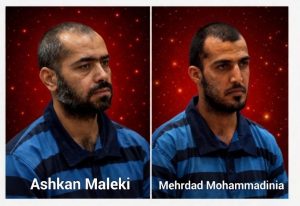
On Monday morning, June 1, 2026, the mullahs’ regime executed two brave protesters, Mehrdad Mohammadinia and Ashkan Maleki. The regime labeled these rebellious youths as leaders of the recent January uprising. They were sentenced to death by Branch 15 of the Tehran Revolutionary Court, presided over by the notorious “hanging judge” Abolqasem Salavati. The judiciary cited heavily fabricated charges against them, including acting against national security, confronting the system, destroying public property, and clashing with State Security Force (SSF) agents.
Furthermore, they were accused of setting fire to a so-called seminary named ‘Imam Hadi’ and the Basij center at the Jafari Mosque in Kuy-e Nasr (Gisha), western Tehran. This mosque has long been a key center for suppression; according to state media, Ebrahim Raisi, the henchman of the 1988 massacre, controlled it for 20 years starting in 1996.
In response to these heinous acts, Mrs. Maryam Rajavi, President-elect of the National Council of Resistance of Iran (NCRI), emphasized that the Iranian people will not be intimidated. She stated that executing honorable youth will not save the crisis-ridden regime but will “double the resolve of rebellious youths in fighting this illegitimate regime.”
Read more In a striking demonstration of resilience that highlights the failure of the Iranian regime’s systematic intimidation campaigns, political prisoner Parisa Kamali has smuggled a powerful message of defiance from her cell in Yazd Prison. Timed to coincide with the anniversary of the May 25, 1972, executions of the founders of the People’s Mojahedin Organization of Iran (PMOI/MEK) by the shah dictatorship, Kamali’s message emphasizes that physical elimination cannot eradicate revolutionary thought. She vowed to continue the struggle for democratic change despite her heavy sentence and the ongoing brutal crackdown on dissent.
Kamali is currently serving an arduous sentence of 8 years and 6 months on charges of membership in the opposition PMOI/MEK and “insulting the Iranian regime’s leader.”
In her letter, the political prisoner explicitly renews her oath to the organized resistance: “I swear that as long as a dictator and oppressor exists, I will continue your path, hand in hand with Massoud and Maryam [Rajavi], until our ideals are realized. The star-studded galaxy of the path to freedom is our witness.”
Reflecting on the historical continuity of tyranny in Iran, she added: “May 25, 1972, demonstrates that a dictator—whoever they are and in whatever clothes they wear—attempts to survive through elimination and execution. They are oblivious to the fact that physical death does not destroy an ideology or a struggle.”
Read more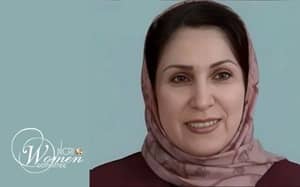 A court in Rasht, capital of Gilan Province in northern Iran, has again sentenced political prisoner Zahra Tabari to death, months after Iran’s Supreme Court ordered a review of her case following international condemnation of the original ruling.
Zahra Tabari, a 68-year-old political prisoner held in Iran, was again sentenced to death by a Revolutionary Court in Rasht, according to reports released this week. The ruling was recently communicated to Tabari after a retrial ordered by the Supreme Court. Tabari was first sentenced to death in November 2025 by Branch One of the Revolutionary Court in Rasht, presided over by Judge Ahmad Darvish-Goftar. According to reports, she was convicted on charges of baghi (“rebellion”) for membership and activity in the People’s Mojahedin Organization of Iran (PMOI/MEK). The proceedings lasted only ten minutes, were conducted by video conference, and took place without her chosen lawyer present.
Following international condemnation of the sentence, Iran’s Supreme Court referred the case for review to Branch Two of the Revolutionary Court in Rasht, headed by Mohammad Ali Darvish-Goftar, the son of Ahmad Darvish-Goftar.
Read more
Ghazal Marzban, a Christian convert imprisoned in Evin Prison, has entered the seventh day of a hunger strike in protest to the lengthy prison sentence imposed on her.
Her physical condition has significantly deteriorated after a week without food.
Ghazal Marzban began her hunger strike on May 25, protesting the verdict issued against her. She was previously sentenced by Tehran’s Revolutionary Court to nine years and eight months in prison. The charges brought against her include “propaganda against the state” and “assembly and collusion against national security.”
Ghazal Marzban was arrested on January 15, 2026, by security agents at her home in Tehran and was transferred to Evin Prison following interrogation procedures. The arrest and conviction of the Christian convert come even though she had previously served prison time due to activities related to her religious beliefs.
Read more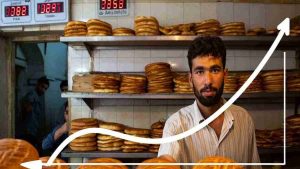
A field report published by the state-affiliated Shargh newspaper on May 30 paints a stark picture of the expanding poverty and economic hardship affecting broad segments of Iranian society. What was once largely confined to marginalized and low-income neighborhoods has now spread into urban middle-class communities. The return of credit purchases, growing household debt, food-related theft, and dramatic changes in consumption patterns all point to a deepening economic crisis that is reshaping everyday life across the country.
The testimonies collected in the report suggest that buying essential goods on credit is no longer an exception. Instead, it has become an increasingly common survival strategy for employees, university students, and educated young professionals struggling to cope with soaring living costs.
One of the most striking stories highlighted in the report concerns three educated young women who moved to Tehran seeking work and independence. Sharing a rented apartment, they now find themselves unable to cover even the most basic food expenses without relying on credit.
One of them, identified as Maryam, explained that she had recently been forced to purchase tomato paste and cooking oil on credit for the first time in her life. To avoid accumulating excessive debt with a single shopkeeper, the roommates divide their purchases among several stores. One buys bread and cheese on credit, another obtains legumes, while the third purchases oil and other necessities.
Read more
Months after the sweeping arrests that followed both the January 2026 protests and the aftermath of the 12-day war, a fundamental question remains unanswered: How many people are actually behind bars in Iran?
The Iranian regime has offered no comprehensive, transparent, or verifiable accounting of those arrested, where they are being held, what charges they face, or what legal processes await them. This silence is not merely an administrative failure. It is a political strategy—one that leaves families in anguish, shields security agencies from scrutiny, and creates an atmosphere of fear across society.
The absence of reliable information has become one of the most alarming aspects of the current repression campaign. Human rights organizations, civil society activists, and relatives of detainees are increasingly warning that Iran may be witnessing one of the largest waves of politically motivated arrests in decades.
Even the limited figures released by government officials reveal troubling inconsistencies.
In May 2026, Iran’s police chief Ahmadreza Radan announced that more than 6,500 individuals had been arrested since the outbreak of the war on accusations ranging from espionage and collaboration with hostile actors to cooperation with opposition groups. According to Radan, hundreds of those detained were linked to what authorities described as “special security cases.”
Read more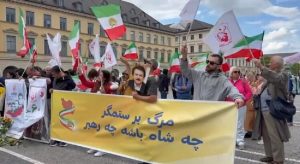
As Iran faces mounting social and economic crises, authorities have intensified their campaign of repression against political prisoners, supporters of the Iranian opposition, and their families. According to statements issued by the National Council of Resistance of Iran (NCRI), the regime has expanded its use of intimidation, arbitrary summonses, psychological pressure, and death sentences in an apparent attempt to prevent social unrest and future nationwide uprisings.
The latest measures come amid an ongoing wave of executions and increasing concerns among human rights organizations about the deteriorating situation inside Iranian prisons.
According to the NCRI, the Ministry of Intelligence has recently increased pressure on relatives of political prisoners and supporters of the Iranian opposition movement, particularly families associated with the People’s Mojahedin Organization of Iran (PMOI/MEK).
On May 24, intelligence agents summoned family members of political prisoner Marzieh Farsi, who is currently imprisoned in Tehran’s Evin Prison. They were reportedly subjected to hours of interrogation, threats, insults, and psychological pressure.
Read more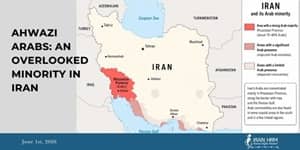
Ahwazi Arabs are one of Iran’s largest ethnic minorities, concentrated primarily in the southwestern province of Khuzestan. Despite living in one of the country’s richest regions in terms of oil, gas and natural resources, many Ahwazi Arab communities experience persistent poverty, unemployment, environmental degradation and political marginalization.
Over the past two years, concerns regarding executions, death sentences, arbitrary detention, deaths in custody, restrictions on cultural rights and economic discrimination have intensified. Human rights organizations, United Nations experts and local documentation have highlighted patterns of repression affecting Arab activists, prisoners, writers, poets, journalists and ordinary citizens.
The cases documented in this report illustrate broader concerns regarding the protection of fundamental rights, including the right to life, freedom from torture, fair trial guarantees, cultural rights and equal access to economic and environmental resources.
Read more
Bern, Switzerland — May 30, 2026 — Supporters of the Iranian Resistance, along with members of the Baluch community and other Iranian communities, gathered in front of the Iranian regime’s embassy in Bern to protest the execution of political prisoners and demonstrators detained during the January 2026 uprising.
The demonstrators strongly condemned the regime’s actions, describing the executions as blatant violations of human rights. During the rally, participants paid tribute to those who lost their lives by displaying their photographs and reaffirmed their commitment to continuing the struggle against the regime until its overthrow and the establishment of peace, freedom, and justice in a democratic republic.
Read more
Oslo, Norway – May 30, 2026: Supporters of the Iranian Resistance gathered outside the Iranian regime’s embassy in Oslo to condemn the execution of political prisoners in Iran, including members of the PMOI and protesters detained during the January 2026 uprising.
Demonstrators highlighted the ongoing struggle of the Iranian people against the ruling regime. They called on the Norwegian government to take immediate action to halt executions in Iran and strongly condemned the mullahs’ regime, describing the executions as a blatant violation of human rights.
Read more
Also, read Iran News in Brief – June 1, 2026
Copyright © 2026 NCRI National Council of Resistance of Iran All Rights Reserved.
This website uses cookies so that we can provide you with the best user experience possible. Cookie information is stored in your browser and performs functions such as recognising you when you return to our website and helping our team to understand which sections of the website you find most interesting and useful.
Strictly Necessary Cookie should be enabled at all times so that we can save your preferences for cookie settings.
Leave a Reply