UPDATE: 4:00 AM CEST
Over the past four decades, Western policy toward Iran has almost always oscillated between two options: either attempting to change the regime’s behavior through negotiations, concessions and appeasement, or resorting to war. After the recent war, this cycle is repeating itself. On the one hand, global concern is growing over the security of the Strait of Hormuz, the nuclear program and regional instability. On the other, there is renewed talk of negotiations and “crisis management.” Yet the reality is this: both approaches have failed the test of time. Neither has the policy of appeasement moderated the Iranian regime, nor has war been able – or can it ever be able – to resolve the Iran question. This is precisely the point at which Europe must rethink its strategy.
Today, the Islamic Republic is not only holding the Iranian people and the rule of law hostage inside the country; in effect, it is also holding the security of the region and parts of the global economy hostage. The threat to close the Strait of Hormuz is not merely a temporary tactic. It is part of the survival logic of a regime that uses external crises to compensate for its internal crisis.
Read more
UPDATE: 10:30 AM CEST
Paris will host one of the largest gatherings of the Iranian diaspora ever held outside Iran on June 20, organized by the People’s Mojahedin Organization of Iran. Under the slogan “Free Iran 2026: Toward a Democratic Republic,” thousands of participants from Europe, North America, and the Middle East are expected to gather in the French capital to call for a stronger international response to repression in Iran and to support a democratic transition led by the Iranian people themselves.
The event comes at a particularly sensitive moment for Iran. Alongside tensions surrounding its nuclear program and regional instability, concerns have grown over a sharp increase in political executions. Organizers say that dozens of political prisoners have been executed in recent weeks and warn that many others remain on death row, describing the executions as part of a strategy aimed at suppressing dissent and preventing new waves of popular protest.
Beyond condemning human rights violations, the rally seeks to deliver a clear political message: rejection of both the former Shah’s monarchy and the current theocratic regime, while advocating a democratic alternative based on popular sovereignty. Organizers argue that neither a policy of appeasement nor foreign military intervention has provided a solution to Iran’s crisis and instead support change driven from within the country.
Read more
Three former chairs of the Council of the Evangelical Church in Germany (EKD) have joined an international statement by thirty church leaders and rabbis opposing the current wave of political executions in Iran. According to a statement issued Wednesday by the office of the former Bishop of Hanover, Heinrich Bedford-Strohm, theologian Wolfgang Huber, and theologian Margot Käßmann have signed the appeal. The statement comes ahead of a large international rally organized by Iranian associations in Paris on Saturday.
The declaration was initiated by Rowan Williams. He wrote that there can be no doubt that political executions in Iran are increasing. According to the statement, the Iranian authorities are using the atmosphere of war as a cover to intensify repression, with religious minorities being particularly affected.
The declaration also highlights that Christians are among the victims of human rights violations in the Islamic Republic of Iran, citing a report by the Secretary-General of the United Nations. It notes that, over the years, many Christian pastors in Iran have been arrested or even killed for preaching Christianity or insisting on the free practice of Christian worship.
Read more
UPDATE: 8:00 AM CEST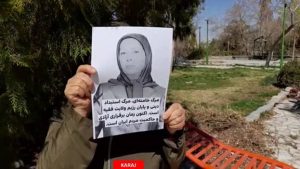
As the 45th anniversary of the June 20, 1981, uprising arrives, the world is once again witnessing the renewed vows of a new generation of Iranian fighters. June 20, recognized as the Day of Martyrs and Political Prisoners, also marks the anniversary of the founding of the National Liberation Army (NLA) of Iran in 198.
This historic date has sparked a nationwide surge across dozens of Iranian cities, proving that the flames of organized resistance against the ruling system are burning brighter and more defiantly than ever. While the bankrupt regime of the mullahs attempts to prevent a popular uprising by executing political prisoners, PMOI Resistance Units have turned cities across Iran into theaters of defiance against the regime.
Coordinated, symbolic, and promotional operations swept the country, starting from major metropolises like Tehran, Mashhad, Isfahan, Tabriz, and Shiraz, and extending to deprived border cities such as Saravan, Zahak, Baneh, and Sardasht.
Read more
Parvin Mirasan, an elderly political prisoner held in Evin Prison, is facing serious health complications and multiple medical conditions. Despite having approximately three months remaining from her prison sentence, her requests for conditional release and furlough leading to release have been denied.
Her physical condition is described as deeply concerning.
Ms. Mirasan suffers from Parkinson’s disease, and her cardiac problems have worsened in recent months. Severe joint pain, persistent tremors, and balance disorders have significantly limited her ability to walk and carry out daily activities.
She also suffers from diabetes and intestinal adhesion. Despite her deteriorating health and advanced age, authorities have not approved her requests for conditional release or furlough that would lead to her release.
Read more
Coordinated operations in more than 30 cities target IRGC, Basij, judiciary, propaganda centers, and regime symbols as Resistance Units commemorate the 45th anniversary of June 20, 1981 and the founding of the National Liberation Army of Iran.
In the days leading up to June 20, 1981—the 45th anniversary of Iran’s nationwide revolutionary resistance, the Day of Political Prisoners and Martyrs, and the anniversary of the founding of the National Liberation Army of Iran—Resistance Units carried out an extensive series of operations across the country.
The activities, reported from dozens of cities, targeted institutions associated with repression, ideological control, and security enforcement, while also promoting messages supporting democratic change and organized resistance against the ruling clerical establishment.
The operations ranged from attacks on Basij and IRGC facilities to actions against regime propaganda centers, the burning of symbols of the Supreme Leader, and widespread public displays of resistance slogans.
Read more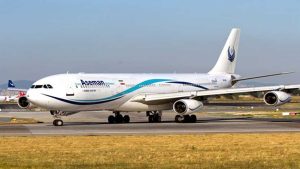
The Iranian regime’s decision to relocate 133 aircraft to what officials described as “safe airports” during the recent conflict has provided an unprecedented glimpse into the vulnerability of the country’s civil aviation sector.
While Iranian authorities have portrayed the operation as a successful emergency response, aviation experts argue that it instead reveals the extent to which decades of mismanagement, international isolation, and chronic underinvestment have left one of the country’s most critical transportation industries exposed to crisis.
The latest admissions by senior aviation officials suggest that the recent war did not simply damage airports and aircraft—it exposed structural weaknesses that had been accumulating for years beneath the surface.
Abolfazl Shiroudi, head of Iran’s Civil Aviation Organization, announced that authorities carried out 133 aircraft relocations from Tehran’s Imam Khomeini and Mehrabad airports after the outbreak of hostilities.
He also confirmed that 36 permits were issued allowing aircraft to be transferred and stationed at foreign airports, with part of the evacuation plan successfully implemented.
Read more
Tehran, home to more than 15 million people in its greater metropolitan area, is facing one of the most severe water crises in its history. While officials blame declining rainfall and climate change, experts increasingly point to decades of poor governance, unsustainable development, and failed water management policies by the Iranian regime as the primary drivers of a disaster that now threatens the country’s political, economic, and environmental stability.
The warning signs have been visible for years. Yet instead of addressing the structural causes of water scarcity, authorities have relied on temporary measures, expensive water-transfer projects, and repeated calls for public conservation. Today, six consecutive years of drought have exposed the limits of those policies.
Hossein Akbariyan, managing director of Tehran Water and Wastewater Company Region One, announced that Tehran is experiencing its sixth consecutive year of drought.
Although rainfall during the current year has improved compared to the previous year, precipitation remains below long-term averages. More importantly, last year was reportedly the driest water year in more than six decades, leaving the reservoirs supplying Tehran with critically low reserves at the beginning of the current cycle.
Read more
Bremen, Germany – June 2026: In the lead-up to the major June 20 rally in Paris, supporters of the People’s Mojahedin Organization of Iran (PMOI/MEK) have launched activities in Bremen, urging freedom-loving Iranians to join the June 20 Free Iran Rally, where 100,000 participants are expected to assemble at Place Vauban in Paris’s 7th arrondissement, calling for an end to executions and expressing support for a democratic republic in Iran.
The June 20 Free Iran rally in Paris, to be held under the slogan “A Democratic Republic for Iran,” will reject both monarchical and theocratic dictatorships, emphasizing a third alternative based on democracy and popular sovereignty.
Read more
Gothenburg, Sweden — June 16, 2026: Supporters of the People’s Mojahedin Organization of Iran (PMOI/MEK) held a rally to mark the 125th consecutive week of the “No to Execution Tuesdays” campaign, a movement protesting the Iranian regime’s escalating executions and systemic repression. Protesters condemned the recent execution of political prisoners and demonstrators arrested during the January 2026 uprising.
Participants also highlighted the regime’s intensifying crackdown, the rising number of executions, and broader repressive measures, including nationwide internet shutdowns. They chanted slogans such as “Down with the executioner regime” and called for the immediate release of all political prisoners.
Freedom-loving Iranians in Gothenburg expressed support for Mrs. Maryam Rajavi, President-elect of the National Council of Resistance of Iran (NCRI), and her call to expand the “No to Executions” campaign globally.
Read more
Also, read Iran News in Brief – June 18, 2026
Copyright © 2026 NCRI National Council of Resistance of Iran All Rights Reserved.
This website uses cookies so that we can provide you with the best user experience possible. Cookie information is stored in your browser and performs functions such as recognising you when you return to our website and helping our team to understand which sections of the website you find most interesting and useful.
Strictly Necessary Cookie should be enabled at all times so that we can save your preferences for cookie settings.
Leave a Reply