English news in Spain for expats, residents and visitors
It is often said that knowledge is power, and this is never more accurate than when you establish yourself as a foreign resident in a new country, like Spain. Being able to quickly familiarise yourself with the culture, rules, events, and customs can help ease the transition during a challenging time.
This is why Euro Weekly News makes it our mission to provide you with a free news resource in English that covers both regional and national Spanish news – anything that we feel you will benefit from knowing as you integrate into your new community and live your best life in Spain. In this way, you can forget about translating articles from Spanish into awkward English that probably don’t make much sense. Let us be your convenient and essential guide to all things that will likely affect you as a foreign resident living in Spain.
Almeria
It is often said that knowledge is power, and this is never more accurate than when you establish yourself as a foreign resident in a new country, like Spain. Being able to quickly familiarise yourself with the culture, rules, events, and customs can help ease the transition during a challenging time.
This is why Euro Weekly News makes it our mission to provide you with a free news resource in English that covers both regional and national Spanish news – anything that we feel you will benefit from knowing as you integrate into your new community and live your best life in Spain. In this way, you can forget about translating articles from Spanish into awkward English that probably don’t make much sense. Let us be your convenient and essential guide to all things that will likely affect you as a foreign resident living in Spain.
Almeria
By Penny • Published: 16 Mar 2026 • 12:46 • 4 minutes read
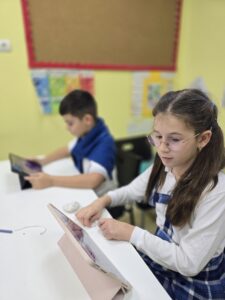
For today’s students, digital technology is part of everyday life. Credit: International School Estepona
Artificial intelligence is quietly entering classrooms around the world, and not everyone is comfortable with it. At International School Estepona, a leading British school on the Costa del Sol for children aged 2–12, technology is being embraced thoughtfully to prepare pupils for the digital future.
Across the globe, schools are experimenting with AI in education, introducing AI tools for students, digital classrooms, and coding lessons that would have been unimaginable just a decade ago. Supporters argue these technologies represent the future of learning, preparing children for a world driven by data, automation, and innovation.
But critics are asking a far more unsettling question: are we moving too quickly?
As artificial intelligence becomes more powerful and accessible, parents and educators are debating whether technology is enhancing education or slowly replacing the very foundations of learning.
In the past two years, searches for AI tools for students and homework assistants have surged worldwide. Pupils can now generate essays, solve complex maths problems, and summarise entire textbooks with just a few typed instructions.
To some educators, this represents a breakthrough in learning support. To others, it raises a serious concern: if technology can do the work, are pupils still learning how to think?
At a British school for children aged 2–12 in Estepona, traditionalists argue that education is about developing discipline, critical thinking, and creativity. These skills that cannot simply be outsourced to an algorithm.
However, when used correctly, AI can actually help pupils develop problem solving skills. For example, when a child gets stuck on a tricky homework question, AI tools can guide them through the reasoning process step by step, helping them understand why an answer works rather than just giving it to them. This encourages independent thinking and reinforces learning, making AI a supportive tool rather than a shortcut.
For many parents, the rise of artificial intelligence in schools feels unsettling. Education has always been rooted in human interaction: a teacher guiding discussion, challenging ideas, and inspiring curiosity.
The fear is that too much reliance on technology could reduce learning to a series of automated tasks.
Yet for today’s pupils, digital technology is not foreign; it is simply part of everyday life. This generational divide has created one of the biggest debates in modern education: whether schools should resist artificial intelligence or embrace it.
Increasingly, leading institutions, including The International School Estepona, are choosing the latter.
Rather than banning AI, forward-thinking schools are focusing on something far more important: teaching pupils how the technology actually works. Understanding artificial intelligence is quickly becoming as fundamental as learning mathematics or science.
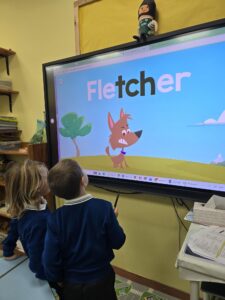
At this international primary school on the Costa del Sol, the goal is not to replace traditional learning but to expand it. Technology is integrated carefully into lessons so pupils can explore the tools shaping the modern world.
This includes introducing:
By learning how AI systems function, pupils develop the ability to question, evaluate, and use technology intelligently rather than relying on it blindly.
The modern classroom is also evolving.
Interactive platforms, data-driven learning tools, and online collaboration systems are transforming how teachers monitor pupil progress. These digital classrooms allow educators at British schools in Estepona to personalise lessons, identify learning gaps, and provide tailored support for each child.
For pupils, this makes learning more engaging and interactive. AI can even help children work through tricky homework questions, guiding them step by step so they develop problem-solving skills rather than just copying answers.
For teachers, technology frees up valuable time, allowing them to focus on mentoring, discussion, and deeper learning rather than repetitive administrative tasks.
Perhaps the most compelling argument for embracing technology lies in the reality of the modern economy. Many experts believe that a significant proportion of the careers today’s children will pursue have not yet been invented. Artificial intelligence, robotics, and automation are already transforming industries from healthcare and finance to engineering and creative media.
Preparing pupils for this environment means equipping them with more than academic knowledge. They must develop digital literacy, adaptability, and confidence in navigating complex technologies. At The International School Estepona, a British curriculum school in Spain, pupils are taught to understand the future of learning because it will shape the future of work.
Technology alone cannot define education. The most successful schools continue to emphasise creativity, emotional intelligence, teamwork, sport, and face-to-face communication.
Artificial intelligence may support learning, but it cannot replace the human connection at the heart of excellent teaching. For schools embracing innovation, the aim is not a classroom run by machines. It is a classroom where technology supports curiosity, encourages exploration, and prepares pupils for a rapidly changing world.
The debate surrounding artificial intelligence in education is unlikely to disappear any time soon. But as technology continues to reshape society, one reality is becoming clear: the classroom cannot remain frozen in the past.
The real challenge for parents is not whether children should use technology. It is whether they will understand it well enough to shape the world it creates, and at a British school for children aged 2–12 on the Costa del Sol, that is exactly what pupils are learning.
Visit www.marbellaschool.com to learn more about how The International School Estepona is navigating the changes.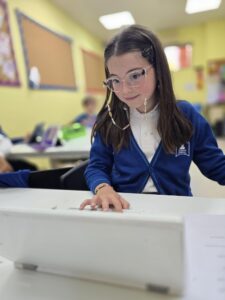
Share this story
Get breaking news from Spain, travel updates, and expat stories directly on your Google News feed.
Subscribe to our Euro Weekly News alerts to get the latest stories into your inbox!
By signing up, you will create a Euro Weekly News account if you don’t already have one. Review our Privacy Policy for more information about our privacy practices.
Penny has been a writer and a key member of the editorial department at Euro Weekly News, Europe’s largest free English-language newspaper in Spain, for many years. Specialising in cultural commentary, community features, and regional lifestyle trends, Penny crafts engaging stories that matter to the expatriate community. From local events to lifestyle insights across the Costa del Sol and beyond, her work connects readers with the heartbeat of Spain.
Known as the PEOPLE’S PAPER, Euro Weekly News is the leading English language newspaper in Spain. And it’s FREE!
Covering the Almeria, Axarquia, Costa Blanca North, Costa Blanca South, Costa del Sol , Costa Calida, Mallorca and beyond, EWN supports and inspires the individuals, neighbourhoods, and communities we serve, by delivering news with a social conscience. Whether it’s local news in Spain, UK news or international stories, we are proud to be the voice for the expat communities who now call Spain home.
With around half a million print readers a week and over 1.5 million web views per month, EWN has the biggest readership of any English language newspaper in Spain. The paper prints over 150 news stories a week with many hundreds more on the web – no one else even comes close.
Our publication has won numerous awards over the last 25 years including Best Free Newspaper of the Year (Premios AEEPP), Company of the Year (Costa del Sol Business Awards) and Collaboration with Foreigners honours (Mijas Town Hall). All of this comes at ZERO cost to our readers. All our print and online content always has been and always will be FREE OF CHARGE.
© 2026 EWN Media. No part of this website may be reproduced without written permission from the publishers. All rights reserved. Supported by WP Advisor.
Subscribe to our Euro Weekly News alerts to get the latest stories into your inbox!
By signing up, you will create a Euro Weekly News account if you don’t already have one. Review our Privacy Policy for more information about our privacy practices.
Leave a Reply