
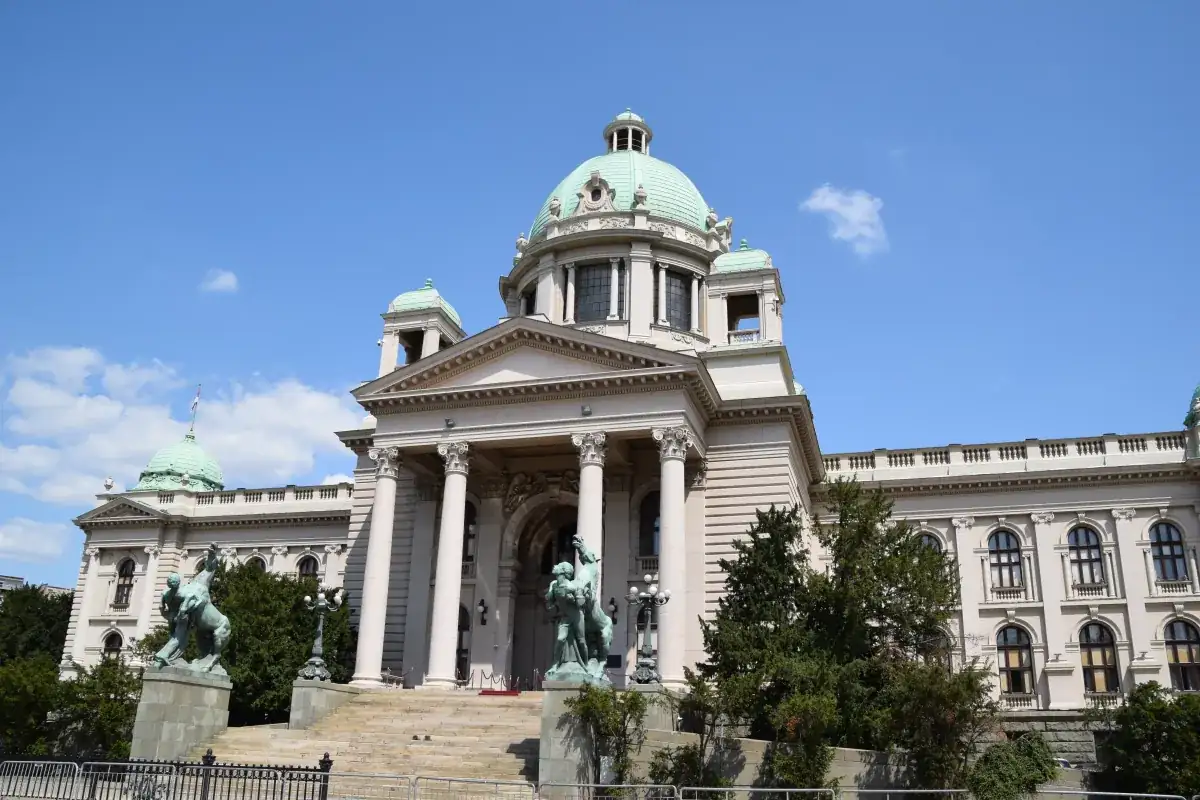
Serbians queued outside polling stations from seven in the morning on Sunday, and by evening it was clear something unusual was happening. Turnout in the snap parliamentary election climbed past every figure recorded in recent years, in a vote widely seen as the toughest test yet for Aleksandar Vucic, the man who has dominated Serbian politics for more than a decade.
The election, held on October 25, 2026, pits Vucic’s Serbian Progressive Party (SNS) against the Student List, a movement born out of nearly two years of anti-corruption protests. Polls closed at 8 pm local time, and counting is now under way. Election monitors put turnout at close to 68 percent an hour before closing, well above the last parliamentary vote in December 2023. No official results had been announced at the time of writing.
Quick Facts
- Who: Aleksandar Vucic’s SNS vs the Student List, led by cardiologist Ilija Srdanovic
- What: Snap parliamentary election for Serbia’s 250-seat National Assembly
- When: Sunday, October 25, 2026 (polls open 7 am to 8 pm local time)
- Where: Across Serbia
- Key number: 67.8% turnout by 7 pm, per monitoring group CRTA, against 55.5% at the same point in 2023
- Majority needed: 126 seats
Serbia Election Turnout Breaks Records
The turnout story started early. By 10 am, Serbia’s Republic Electoral Commission (REC) reported 19.7 percent of voters had cast ballots, roughly double the pace of 2023 according to independent monitors.
By 6 pm, the REC figure stood at 64.89 percent. That was already more than five points above the final turnout of the entire 2023 election, which was 59.3 percent, with two hours of voting still left.
Independent estimates for 7 pm went higher still. The Belgrade-based monitoring group CRTA put turnout at 67.8 percent, while pollsters Ipsos and CeSID estimated 67.6 percent. Business outlet bne IntelliNews reported that these figures would make it the highest turnout for a Serbian parliamentary election since 1992. The final official number will come from the REC.
Why does this matter so much? Before the vote, analysts said a big turnout would likely help the Student List, because the movement needed people who usually stay home on election day to show up. Whether that reading holds will only be clear once the count is done.
Vucic vs the Student List: Who Is Running
Vucic has led Serbia as prime minister and then president, and his SNS has governed since 2012. He called this early election in September and, according to Al Jazeera, stepped down as president that month so he could run for prime minister.
His campaign has focused on bread-and-butter promises: higher pensions and public sector salaries, more money for healthcare and subsidies for young couples. Many voters credit him with modernising the country. Before polls opened, he said his side would accept defeat if it lost, adding that if it won, no one would take that victory away.
The Student List is a very different kind of challenger. It fielded around 250 candidates, most of them unfamiliar names: university professors, actors, farmers and other professionals rather than career politicians. It is campaigning on ending graft, restoring the rule of law and fixing education.
Polls before the vote gave mixed signals. An Ipsos survey published on Thursday had SNS on 47 percent and the students on 40 percent, while other surveys put the students ahead. Both camps claimed to be in front.
Irregularities and Incidents Reported on Polling Day
The day was not calm everywhere. CRTA, which deployed observers to a sample of polling stations, reported pressure on voters or polling board members at about a third of the stations it watched. In a later update it said voters were seen photographing their ballots at about half of polling stations, and at 80 percent in Belgrade. Photographing a ballot is often linked to vote-buying, since it can be used as proof of how someone voted.
Media reports described an attack on Student List polling board members in Pancevo, a clash in Novi Sad and an interruption in Leskovac after a polling committee member reportedly broke a ballot box. The EU ambassador to Serbia expressed deep concern over violent incidents at several polling stations. AFP reported that police had not confirmed any major election-related violence.
After polls closed, riot police were seen outside the electoral commission in Belgrade, and students urged supporters to avoid gathering near police lines. CRTA warned that counting could be slow.
How the Novi Sad Tragedy Led to This Vote
The road to this election began in November 2024, when a concrete canopy at the railway station in Novi Sad collapsed and killed 16 people. Grief quickly turned into anger, with many Serbians blaming corruption and poor oversight of public construction.
University students led the protests that followed, and the movement grew into one of the largest in Serbia’s recent history. On the Thursday before the vote, around 150,000 supporters rallied in central Belgrade. Vucic and his party deny accusations of corruption and repression, and Vucic has claimed the students are funded from abroad, which they reject.
Why the Serbia Election Matters Beyond the Balkans
Serbia is an EU candidate country, but it has also kept close ties with Russia and China. Relations with Brussels have frayed over judicial reform, the rule of law and corruption. Whoever forms the next government will shape which way Belgrade leans.
Some observers have compared the stakes to Hungary, where Viktor Orban lost power in April. A change in Serbia would be watched closely across Europe as another sign of whether long-serving leaders can be voted out by new movements.
What We Don’t Know Yet
- The result. First indications were expected about two hours after polls closed, but no official count had been published when this article went live.
- The final official turnout, which the REC will confirm.
- Whether either side will clear the 126 seats needed for a majority, or whether coalition talks will follow.
- How both camps will respond if the margin is narrow or the count is disputed.
FAQs
When will Serbia election results be announced?
Preliminary indications were expected late on election night, about two hours after polls closed at 8 pm local time. Official results come from the Republic Electoral Commission and may take longer if counting is slow.
What was the turnout in the Serbia election 2026?
The electoral commission reported 64.89% by 6 pm. CRTA estimated 67.8% and Ipsos/CeSID 67.6% by 7 pm, which would be a record for a parliamentary election since 1992.
What is the Student List in Serbia?
It is an electoral list that grew out of the student-led protests after the 2024 Novi Sad canopy collapse. It has about 250 candidates, is led by cardiologist Ilija Srdanovic, and campaigns against corruption.
Is Aleksandar Vucic still president of Serbia?
According to Al Jazeera, Vucic resigned as president in September 2026 to run for prime minister in this election.
How many seats are needed to win?
Serbia’s National Assembly has 250 seats, so a party or coalition needs at least 126 for a majority.
Official turnout and results will be posted by Serbia’s Republic Electoral Commission, and independent monitoring updates are published by CRTA.
Based on reporting by Al Jazeera, European Western Balkans, BBC, AP, AFP and bne IntelliNews.



Leave a Reply