UPDATE: 9:00 AM CEST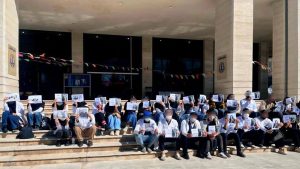
On Tuesday, June 30, 2026, simultaneous protest rallies erupted at Azad University campuses in Tehran, Karaj, and Ahvaz. Strikingly, these demonstrations took place right in the middle of students’ final exams. This ongoing wave of protests demonstrates the undeniable dynamism of a social layer in Iran that refuses to compromise with the regime’s structural blockades and the grim status quo. In Tehran, students gathered in front of the central organization of Azad University on Hesarak Boulevard, marking their sixth consecutive day of protests. The courageous protesters chanted slogans such as: “Virtual education, virtual exam,” “Student, shout, cry out for your rights,” and “Until we get our rights, we won’t leave.”
Meanwhile, graduate and doctoral students in Karaj and Ahvaz rallied to protest sudden decisions forcing in-person exams, compressed schedules, and the university’s blatant disregard for poor educational infrastructure. The fact that a spark in Tehran is simultaneously reproduced in cities like Karaj and Ahvaz proves that the potential for nationwide ignition remains equally high across the entire geography of Iran.
Read more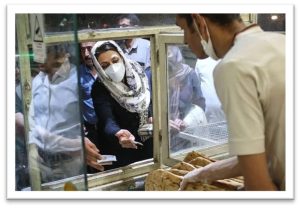
The headlines appearing across Iran’s own state-controlled newspapers increasingly tell a story the authorities can no longer conceal. Even when reported separately, they reveal interconnected crises that have merged into a single national emergency.
On one day alone, July 1, state-affiliated newspapers highlighted a series of alarming developments:
Each headline reflects a different dimension of the regime’s failures. Together, they expose a country caught in overlapping political, social, and economic crises. Yet among these, one crisis has become the center of gravity: the accelerating collapse of Iran’s economy.
Economic catastrophe, however, did not emerge in isolation. It is the direct consequence of decades of political dysfunction. Corruption, deception, ideological priorities, institutionalized theft, and empty promises have produced an economic system incapable of meeting even the most basic needs of the Iranian people.
Read more
In an interview with Simay Azadi on the sidelines of the Free Iran World Summit in Paris, former U.S. Under Secretary of State for Arms Control and International Security Robert Joseph discussed the recent wave of executions in Iran, the regime’s response to growing internal pressure, the alternative to the current political system, international policy toward Tehran, and the cancellation of the Free Iran rally in Paris.
During the interview, Joseph argued that the recent executions reflect the regime’s growing weakness rather than strength. He said the Iranian people reject both religious dictatorship and a return to monarchy, endorsed the National Council of Resistance of Iran’s (NCRI) Ten-Point Plan, criticized policies of appeasement toward Tehran, and emphasized that democratic change must come from the Iranian people themselves rather than through foreign intervention.
Read more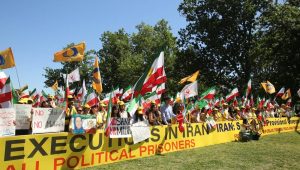
For decades, debates about Iran’s future have revolved around a single question: what makes a political alternative truly credible? Removing a dictatorship is only the beginning of political transformation. The far more difficult challenge is presenting a movement capable of replacing authoritarian rule with a democratic system that enjoys both domestic legitimacy and international confidence.
History demonstrates that successful democratic transitions do not emerge from slogans or spontaneous protests alone. They require organized leadership, a coherent political strategy, a practical roadmap for governing after dictatorship, and recognition from the international community that such an alternative is capable of delivering stability, democracy, and respect for human rights.
These are the standards by which any opposition movement must ultimately be judged.
Three elements have consistently defined every successful political alternative. First is a disciplined and organized movement capable of sustaining resistance under prolonged repression. Second is the existence of both objective and subjective conditions within society that make political change possible. Third is international legitimacy—an increasingly indispensable factor in an interconnected world where political transitions are influenced not only by domestic dynamics but also by global diplomacy and public opinion.
Read more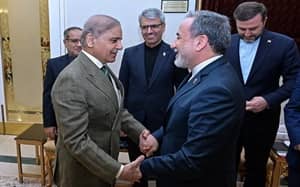
For years, the Iranian regime has sought to project an image of absolute unity, portraying itself as an unshakable political and ideological system. Yet beneath the carefully orchestrated displays of strength, a different reality is emerging. Public statements by senior officials, state-controlled media, and even members of the ruling establishment increasingly expose a government struggling with internal divisions, institutional paralysis, and an overriding fear of its own people.
These are no longer observations made solely by outside analysts or opposition figures. The regime’s own representatives are openly acknowledging that its decision-making apparatus has become fractured and increasingly incapable of governing effectively.
One striking example came from cleric Lotfollah Dezhkam, who recently urged regime loyalists to follow Supreme Leader Mojtaba Khamenei’s position on negotiations “without moving ahead of him or falling behind him.” Dezhkam reminded supporters that Khamenei himself had authorized negotiations and insisted that no one claiming loyalty to the Supreme Leader should publicly oppose that decision.
Read more
As Washington and Tehran move toward broader negotiations following their preliminary ceasefire agreement, the United Nations’ top independent expert on Iran has issued a stark warning: any diplomatic breakthrough that ignores the human rights crisis inside Iran risks reinforcing the very conditions that have fueled years of repression.
In an interview published by Geneva Solutions, Mai Sato said the recently signed memorandum of understanding (MoU) between the United States and the Iranian regime places strategic and security concerns above the rights and welfare of the Iranian people.
“The Iranian people are barely visible in the framework,” Sato said. “It serves geopolitical interests while leaving the Iranian people behind.”
The preliminary agreement, designed to reduce military tensions and establish a framework for future negotiations, focuses primarily on military disengagement, reopening maritime trade routes, and nuclear-related commitments.
According to Sato, however, it fails to address the country’s worsening human rights situation.
Read more
Mohammad Bagher Ghalibaf, the speaker of the Iranian regime’s Majlis (parliament) and head of the Iranian regime’s negotiating team, claimed that inspectors from the International Atomic Energy Agency (IAEA) will not be allowed access to nuclear facilities that were bombed by the United States.
The Fordow, Natanz, and Isfahan nuclear sites were targeted in U.S. and Israeli strikes against the Iranian regime last year and this year.
Since last year’s 12-day war, the Iranian regime has denied the IAEA access to enrichment sites, where it is believed the regime has stored enough highly enriched uranium to produce as many as 10 nuclear weapons if it decided to move rapidly toward building an atomic bomb.
Earlier, U.S. President Donald Trump said, “With the cooperation of the Iranian regime and by entering Iran, we will collect the enriched uranium and then transfer all of it to the United States.”
Earlier, Rafael Grossi, Director General of the International Atomic Energy Agency, said during a press conference in Japan that an agreement exists and that, in order to implement it, the IAEA must have access to the sites and conduct inspections.
Read more
Maritime monitoring firm TankerTrackers responded to Iranian regime media claims that a vessel had “run aground” after sailing outside a route designated by the Islamic Revolutionary Guard Corps (IRGC), stating that the ship is part of the “Shamkhani smuggling network” fleet.
The company, which monitors maritime traffic, particularly the so-called “shadow fleet,” wrote on X on July 1: “This is ARISTA (9348493). She is Comoros-flagged (as far as being “foreign” goes) but is part of Iran’s Shamkhani network. ARISTA has been under US OFAC sanctions since last summer.”
According to TankerTrackers, the ARISTA has been under sanctions by the U.S. Office of Foreign Assets Control (OFAC) since last summer and has effectively been stranded and grounded in Iranian territorial waters north of Hormuz Island since early April 2026.
Iranian regime state television claimed in a report on Wednesday, July 1, that a vessel traveling outside the designated route in the Strait of Hormuz had run aground.
Read more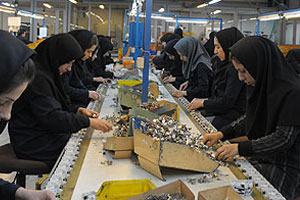
The economic status of women in Iran extends far beyond mere statistical indicators or labor market metrics. It vividly demonstrates how economic crises, structural discrimination, restrictive laws and practices, and social repression are deeply intertwined—ultimately depriving women of their right to employment, financial independence, and equal participation in development. Official data and domestic press reports reveal that the decline in women’s economic participation, the drop in the employment-to-population ratio, the surging numbers of young women classified as NEET (Not in Education, Employment, or Training), and the statistical reclassification of unemployed women as “housewives” are all indicators of a gradual yet profound purging of women from the formal economy.[1][2][3]
By the end of 1404 (early 2026), reports indicated a decline in the country’s overall economic participation rate to approximately 40.6%, with some accounts putting it closer to 38%. This implies that a massive portion of the working-age population is completely absent from formal production and the labor market.[2][3] Furthermore, this rate places Iran among the countries with the lowest economic participation rates globally. Within this framework, domestic accounts show that the female economic participation rate has plummeted from roughly 17% to between 12% and 13.4%, while the female employment-to-population ratio is reported at around 11.4%.[1][3] These figures underscore a deep structural and gender gap within the Iranian economy: while male economic participation was reported at approximately 67.9% in 1404, female participation stood at a mere 13.4%—a staggering gap of over 54 percentage points.[3]
Read more
Iranian Parliament Speaker Mohammad Bagher Ghalibaf fiercely defended a 14-clause agreement, revealing deep domestic disputes after state television abruptly cut off his broadcast.
The sudden censorship of Iran’s Parliament Speaker and chief negotiator, Mohammad Bagher Ghalibaf, during a live broadcast on State TV Channel News has exposed growing factional rifts within the Islamic Republic. Speaking about the recent Iran-US memorandum, Ghalibaf defended the diplomatic progress, asserting that while Iran remains prepared for military confrontation, the current 14-clause agreement marks a strategic victory for Tehran. However, the state broadcaster’s decision to cut at least 20 minutes of his interview mid-explanation underscores intense domestic resistance from hardline factions.
“We do not negotiate with America as a friend, but as an untrustworthy enemy,” Ghalibaf stated during the broadcast. “An effective negotiator must also be fully prepared for war.”
Read more
Irvine, California | June 30, 2026: Members of the Iranian-American community, including supporters of the People’s Mojahedin Organization of Iran (PMOI/MEK) held a rally in support of the “No to Execution Tuesdays” campaign. They condemned the Iranian regime’s use of executions and called for an end to repression, for regime change, and for the establishment of a democratic republic in Iran. Participants highlighted the ongoing campaign against executions and expressed solidarity with political prisoners and those facing the threat of execution.
Alongside the rally, supporters organized a photo exhibition honoring victims of Iran’s uprisings, political prisoners, and protesters executed by the Iranian regime. The exhibition presented images and stories of those who lost their lives in the struggle for freedom and human rights, drawing attention to the continued impact of executions and repression in Iran.
Read more
Gothenburg, Sweden — June 30, 2026: Supporters of the People’s Mojahedin Organization of Iran (PMOI/MEK) held a rally to mark the 126th consecutive week of the “No to Execution Tuesdays” campaign, a movement protesting the Iranian regime’s escalating executions and systemic repression. Protesters condemned the recent execution of political prisoners and demonstrators arrested during the January 2026 uprising.
Participants also highlighted the regime’s intensifying crackdown, the rising number of executions, and broader repressive measures, including nationwide internet shutdowns. They chanted slogans such as “Down with the executioner regime” and called for the immediate release of all political prisoners.
Read more
Also, read Iran News in Brief – July 2, 2026
Copyright © 2026 NCRI National Council of Resistance of Iran All Rights Reserved.
This website uses cookies so that we can provide you with the best user experience possible. Cookie information is stored in your browser and performs functions such as recognising you when you return to our website and helping our team to understand which sections of the website you find most interesting and useful.
Strictly Necessary Cookie should be enabled at all times so that we can save your preferences for cookie settings.
Leave a Reply