We encourage you to review our Terms of Service, and Privacy Policy.
By continuing, you agree to the Terms listed here. In case you want to opt out, please click “Do Not Sell or Share My Personal Information” link in the footer of this page.
We won’t sell or share your personal information to inform the ads you see. You may still see interest-based ads if your information is sold or shared by other companies or was sold or shared previously.
Interested in blogging for timesofindia.com? We will be happy to have you on board as a blogger, if you have the knack for writing. Just drop in a mail at toiblogs@timesinternet.in with a brief bio and we will get in touch with you.
Uma Nair has been writing for the past 36 years on art and culture She has written as critic for Times of India and Economic Times. She believes that art is a progressive sojo LESS … MORE
Raj Kishore Gupta was discovered by sculptor/architect Nimesh Pilla more than a year ago. His show Indigenous Accents that opens at Bikaner House on 2nd July 2026 is a delightful mix of magic and caprice all created on live edge wooden tree trunks and slabs from Sheesham and Kikar trees in Chandigarh.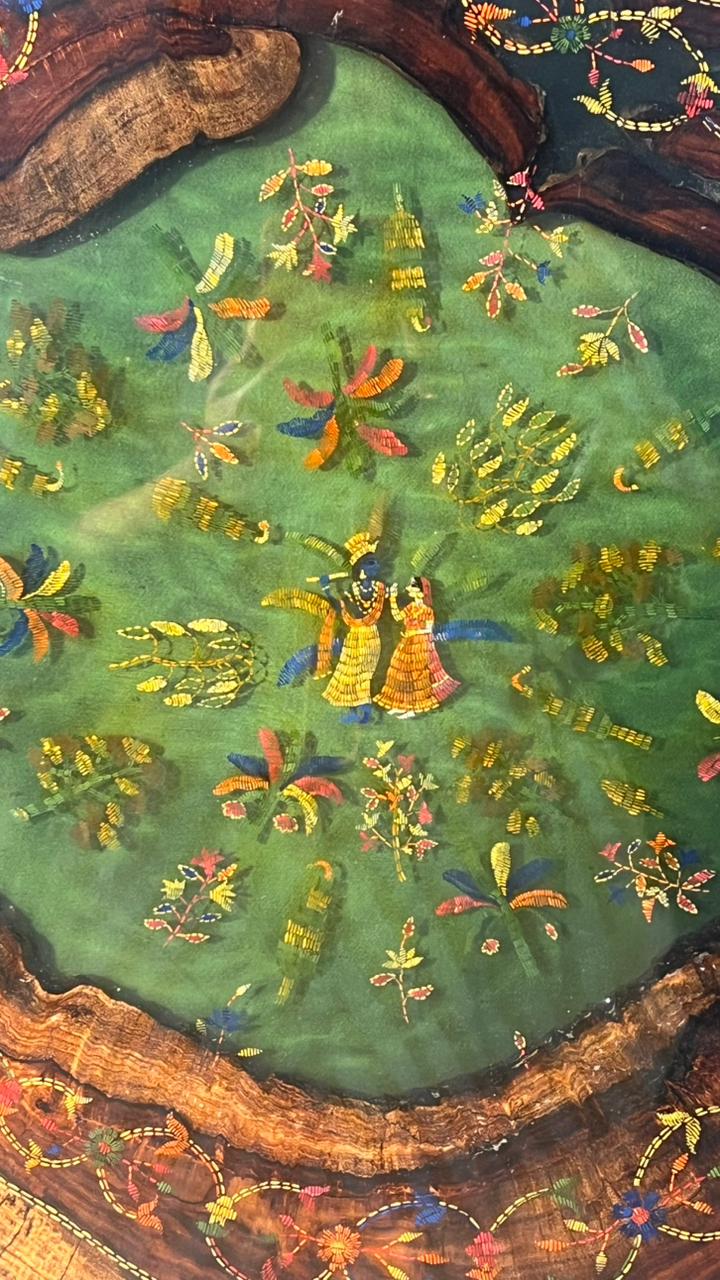
Step into Bikaner House’s LTC galleries and you are greeted by a quartet of prints by this brilliant printmaker who submitted these 4 prints for his final examination at Chandigarh College of fine Arts.Two woodcuts and a pair of linocuts are the language of a seasoned eye and expertise in the process of printmaking. Compositional clarity and cohesive creativity both come into play as you gaze at these set of beauties.
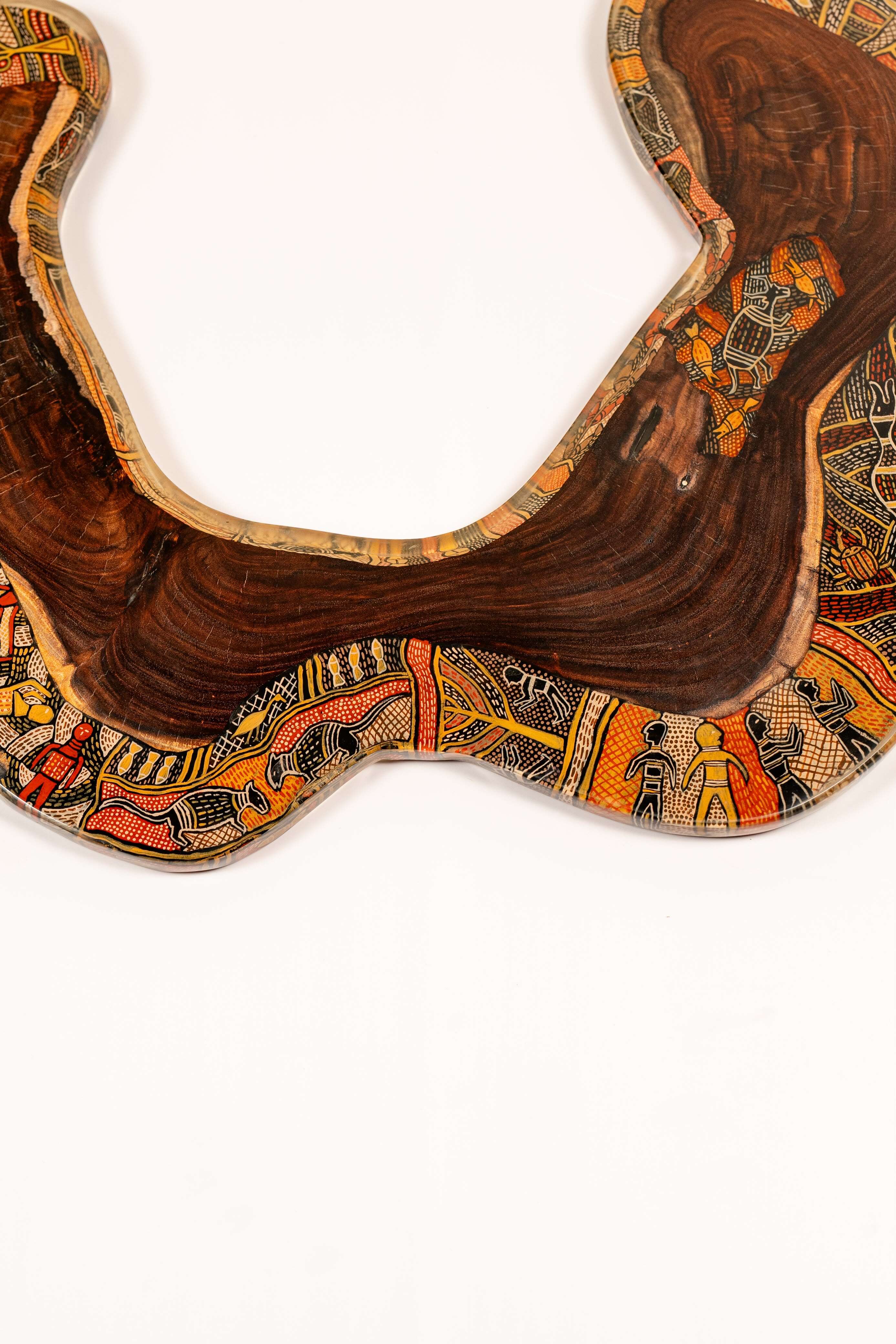
Then beings a sojourn of Gupta’s research in the lexicon of language in tribal art forms.Look at the African art and you know that tribals have always been custodians of the lands they live on before the onslaught of development.The primordial and the primitive both come into play in these elegant slabs that have been worked on in precision.He has made use of live-edge wood as his canvas of creation.Indeed looking closely you know that the artist chooses a medium that is extremely rich with its own history.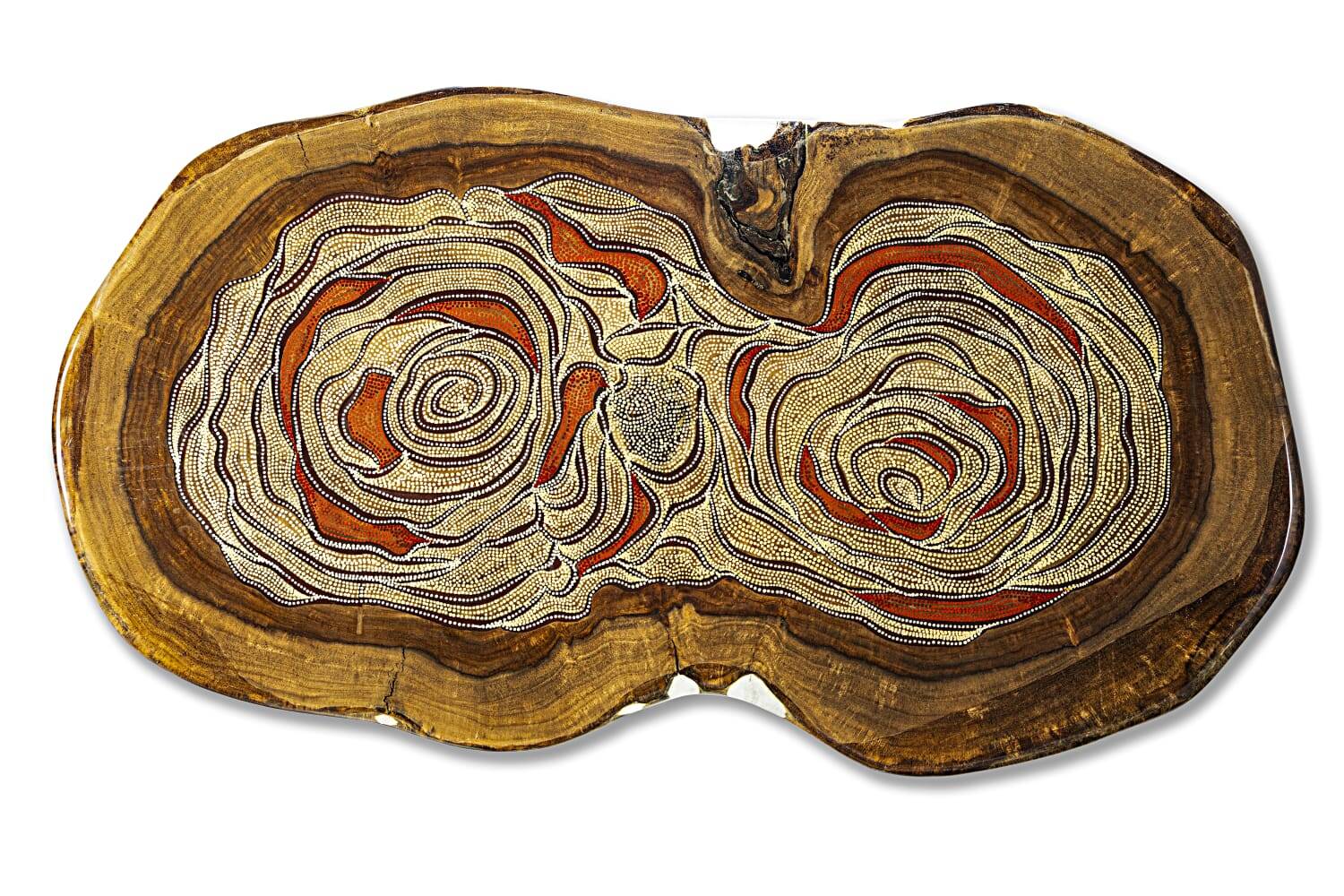
Move from African , oceanic hints and imagery to Aboriginal subtexts.We can see that for this master pedagogue who has taught and trained so many students over the years each piece acts as a dynamic co-authorship with nature, where the wood’s organic striations and anatomical contours directly dictate the final compositions.
In the silent corridor at LTC we gaze at an intentional engagement with a fluidity of imagery that is at once raw, yielding a mesmerising materiality that challenges art lovers to reconsider the boundaries between human intervention as well as the natural world.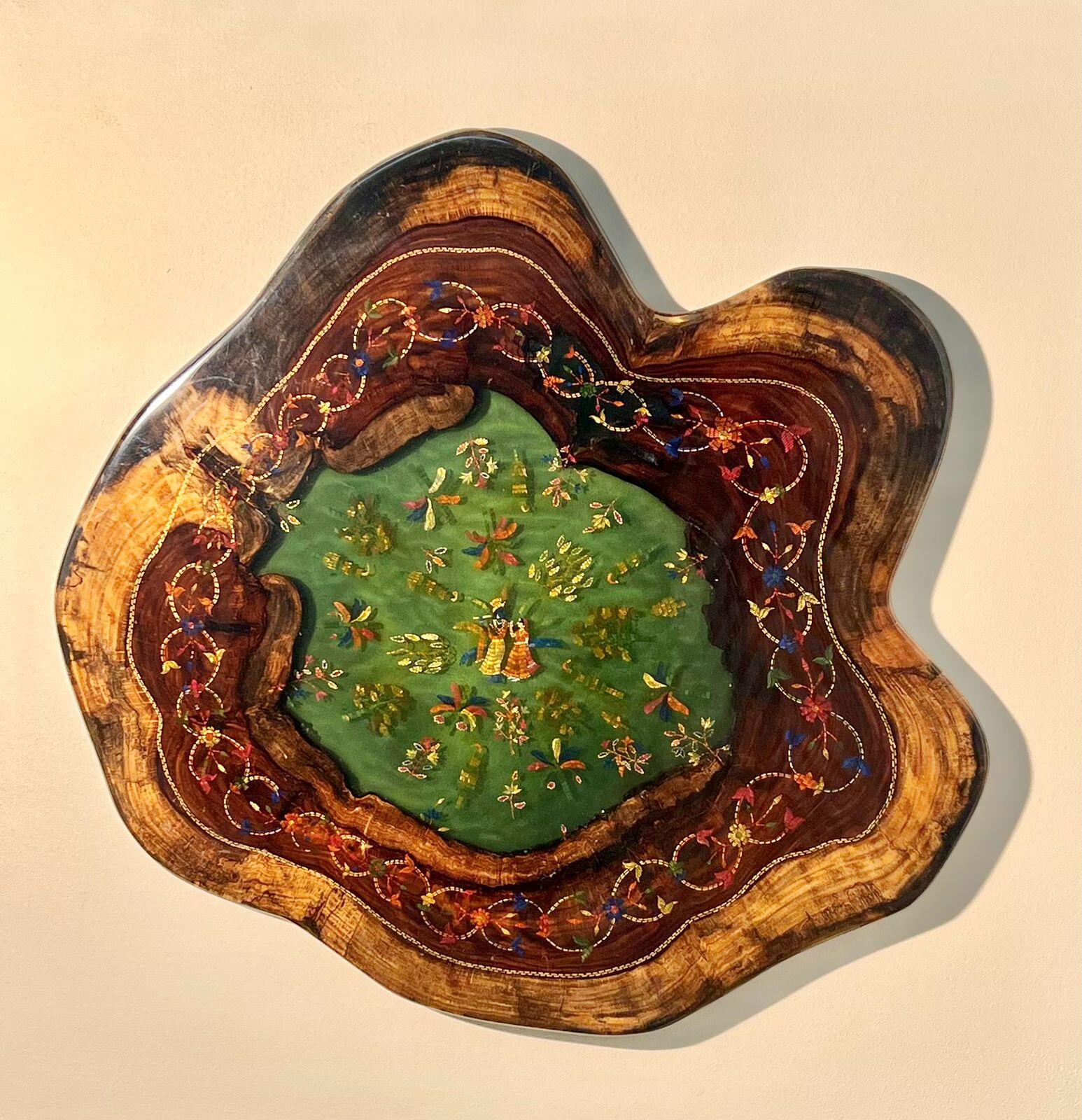
Then we are introduced to larger slabs that evoke and enchant with Gupta’s love for Pahadi as well as Phulkari traditions in textiles translated onto wooden works.The Phulkari table is an enchanting treat for tired eyes.The pahadi works on tree trunk slabs remind us of the Chamba Rumal.The Krishna Leela being the piece de resistance of the show with its delicate intricate brisk little strokes that hark back to miniature traditions.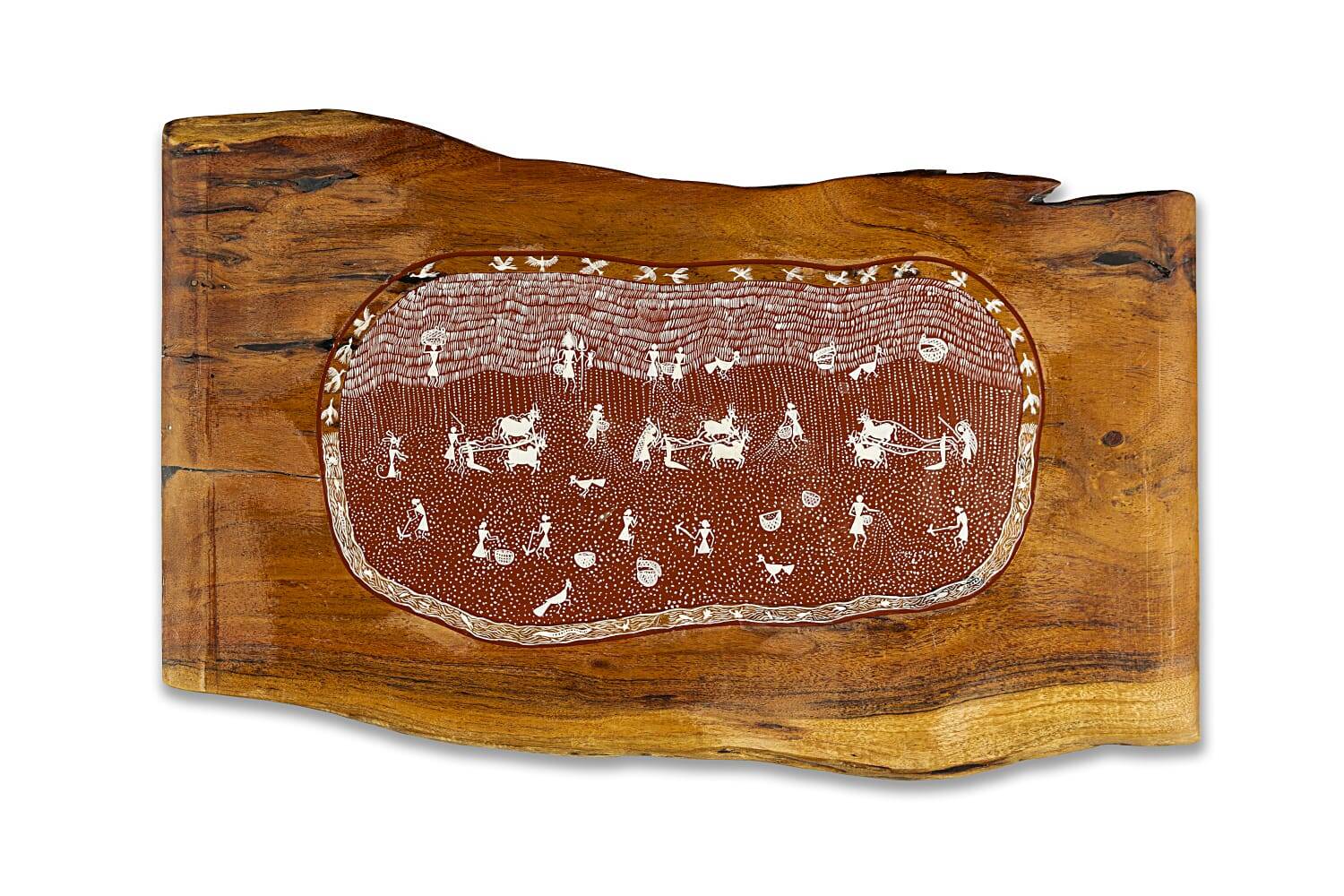
In the last room at LTC are the Warli and Gond creations that celebrate every nook and cranny of nature’s bounty.Indeed it is the Warli works on wood that hold their own place in the cultural fabric of Indian aesthetics and make us in awe of the famed Jivya Soma Mashe’s captivating journey so many years ago. Gupta says that he read about how Mashe was an incredible artist who brought Warli painting out of the walls of tribal homes and into the realm of contemporary art both in Indian and international markets.
The Gond works too have their own ethos and essence but it is the proximity of man and nature the beauty of love for stories that never grow old, relationships between man and animal that are unforgettable as well as the devotion to the Purusha Prakriti philosophy that makes this exhibition one of difference as well as distinction.
To engage with these works is to witness a profound dialogue with the arboreal form. The choice of live-edge wood as a substrate elevates the practice beyond mere image-making, transforming each piece into a sculptural exploration of time and mutability. By leaving knots, cracks, and the vestigial bark intact, this Chandigarh artist embraces a wabi-sabi aesthetic that celebrates imperfection.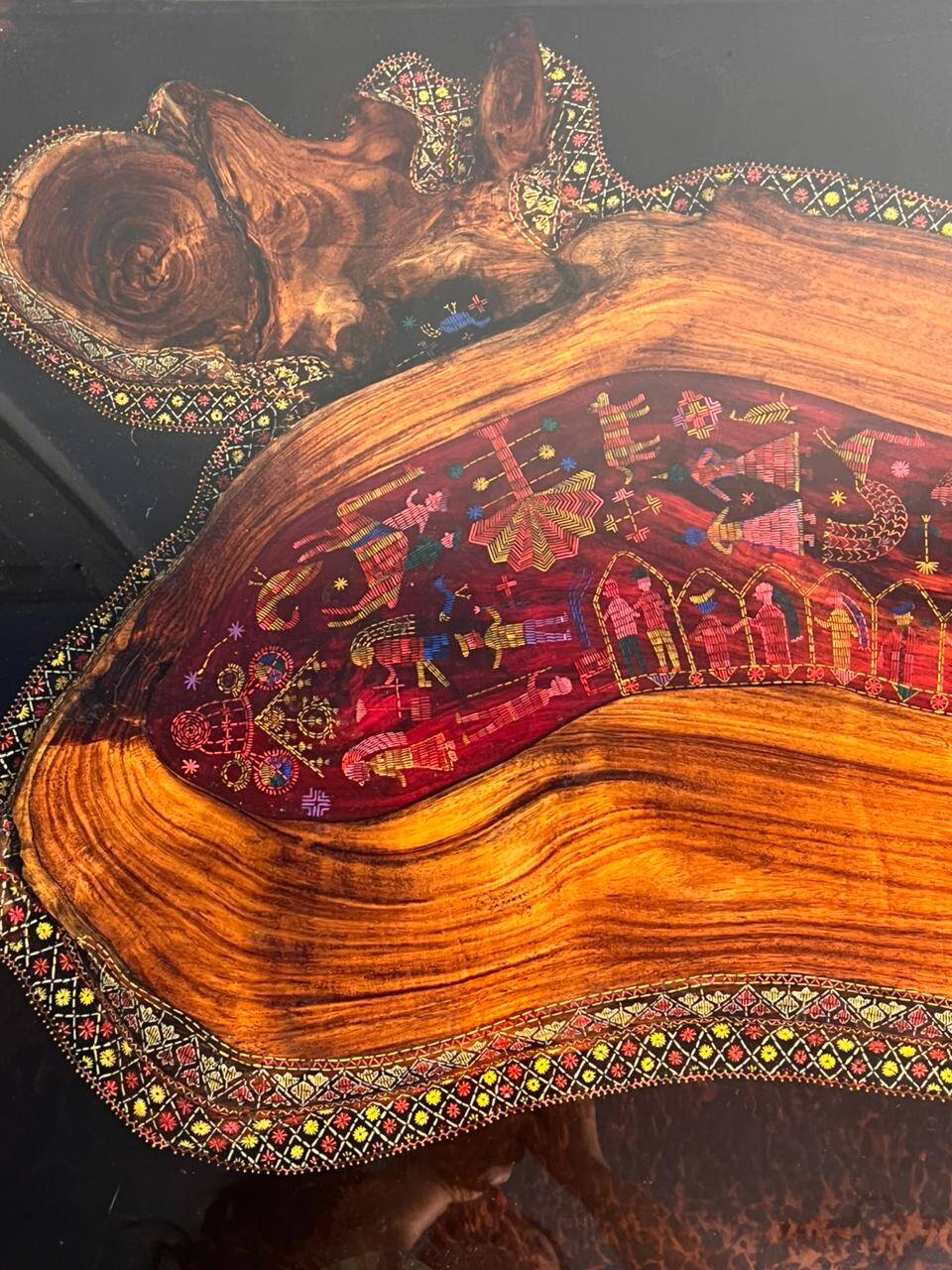
The result is a series of works suspended in a state of arrested articulations, where the beauty of human gesture as well as dendrochronological narratives collide to create a series of silent stories in the forests of the worlds even as they collide to cohesive into an intricate tapestry of time that holds the hourglass of all that is living and all that is salient.Gupta in this debut in Delhi shifts the focus of the artistic process from creation to a profound dialogue with nature.He also creates a distinction of being an artist who relinquishes absolute control, allowing the wood’s anatomical contours, striations, and inherent imperfections to dictate the compositional character of contemporary reality.
Images: RK Gupta Foundation
{{C_D}}
{{{short}}} {{#more}} {{{long}}}… Read More {{/more}}
Views expressed above are the author’s own.
High desibels
The Vance Dance
OMG! Don’t bet on bans
The 65 Lakh Question
‘Centrism isn’t nostalgia, it is survival’
So, who’s straying?
Beyond the noise
Rethinking stray dogs: From crisis to opportunity
Swadeshi Diwali
Down the drain
Interested in blogging for timesofindia.com? We will be happy to have you on board as a blogger, if you have the knack for writing. Just drop in a mail at toiblogs@timesinternet.in with a brief bio and we will get in touch with you.
TOI Edit Page,Voices
Erratica,TOI Edit Page,Tracking Indian Communities
Juggle-Bandhi,TOI Edit Page
TOI Edit Page


Leave a Reply