UPDATE: 12:00 PM CEST
These slogans are more than mere propaganda. They form the ideological backbone upon which the Islamic Republic has built its political mobilization and, to a large extent, its very survival.
The United States represents the global enemy and confrontation with the West. Israel embodies the regional enemy. The People’s Mojahedin Organization of Iran (PMOI/MEK), meanwhile, symbolizes the opposition that has challenged the regime’s legitimacy since the years immediately following the 1979 revolution.
In ideological systems, the enemy is not simply a political instrument. If it were, it could be replaced as circumstances changed. But once it becomes part of the regime’s identity and its mechanism of political mobilization, abandoning it becomes far more difficult.
For more than four decades, generations of political, military, and security officials have been shaped by the same narrative: that Iran is besieged by permanent enemies; that the United States and Israel pose an existential threat; and that domestic opponents are part of the same hostile front. This narrative serves not only to justify repression but also to preserve the cohesion of the forces loyal to the regime.
Read more
On 20 June, France found itself facing a test of its democratic principles. A major demonstration against executions in Iran, organised by the National Council of Resistance of Iran (NCRI) and expected to attract more than 100,000 participants from across Europe – as reported in Yorkshire Bylines last month – was banned at the last minute by the French authorities. The decision came after more than two months of preparation and coordination with the authorities. Tens of thousands of Iranians had already travelled to France. More than 800 buses were on their way to Paris. Yet on the eve of the event, organisers were informed that the rally would not be allowed to proceed.
The timing of the decision raised further questions. The ban came shortly after a telephone conversation between French foreign minister Jean-Noël Barrot and his Iranian counterpart Abbas Araghchi. The NCRI argued that the timing was not coincidental and pointed to it as further evidence of a policy of appeasement towards Tehran. French authorities denied any connection between the conversation and the decision to prohibit the rally.
Read more
UPDATE: 7:00 AM CEST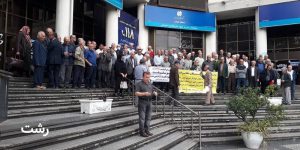
On Sunday, June 28, groups of Iranian workers and pensioners took to the streets across several cities, holding protest rallies to demand their basic rights, unpaid wages, and improved living conditions. The protesters demonstrated incredible resolve, continuing their weekly gatherings despite extreme weather and harsh economic realities. In Shush, a group of Social Security pensioners held a march and protest rally while temperatures in Khuzestan province exceeded a scorching 50 degrees Celsius. Highlighting their loss of faith in the regime’s hollow promises, they chanted, “We can only get our rights on the street,” emphasizing that relentless street protests remain their only avenue for justice.
The demonstrations on June 28 were not isolated incidents. Rather, they are part of a sustained wave of weekly trade protests taking place across various Iranian cities in recent months. Sunday’s rallies spanned multiple major urban centers, including Mashhad, Kermanshah, Rasht, Ahvaz, and Shush. In Ahvaz, groups of protesting workers and pensioners gathered in front of the Social Security Organization building located at Kargar Square in the Farhang-Shahr district to demand answers for their deteriorating livelihoods. Meanwhile, in Isfahan, retirees of the steel industry held a significant rally outside the governorate building, loudly voicing their grievances regarding dire welfare and living conditions.
At the core of the protesters’ demands is the regime’s systemic failure and deliberate mismanagement of public wealth. Participants called for the full implementation of existing laws, the payment of long-overdue wage demands, and urgent attention to critical healthcare and medical shortages. According to the protesting pensioners, the regime’s blatant disregard for exact legal execution and the deliberate, incorrect misinterpretation of certain articles of the law have left a significant portion of their legal and trade demands completely in limbo.
Read more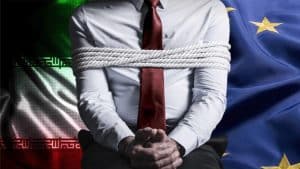
The condition of women in Iran cannot be understood solely through discriminatory laws or compulsory social restrictions. For many women who challenge the authorities—whether through political activism, civil society engagement, or participation in protests—the final stage of repression begins after arrest, behind prison walls.
Iran regime’s prisons have increasingly become places where gender discrimination intersects with political persecution. Human rights organizations have documented patterns of forced labor, prolonged solitary confinement, denial of medical care, psychological abuse, torture, and threats of execution directed at women prisoners. These practices are not isolated incidents but reflect a broader system in which prisons serve as instruments of political control and gender-based repression.
Women in Iran have long faced legal and institutional barriers affecting their participation in public life, personal freedoms, and political activity. Over recent years, particularly following nationwide protest movements, hundreds of women have been arrested for their activism or for participating in demonstrations.
Read more
Political systems often reveal their greatest vulnerabilities not through opposition criticism but through their own efforts at self-defense. That appears to be the case with a recent editorial published by the conservative Iranian newspaper Khorasan, which sought to justify Mojtaba Khamenei’s decision to pursue negotiations with the United States. Rather than projecting confidence, the article inadvertently offers a revealing account of the growing constraints facing the regime.
The newspaper’s objective was straightforward: reject claims that negotiations were imposed on the regime’s new leader and portray the decision as a calculated exercise of strategic leadership. Yet the arguments presented point in the opposite direction. They suggest that Tehran’s leadership is responding not from a position of strength but under the weight of mounting political, military, and economic pressures.
One passage is particularly revealing. Explaining why Mojtaba Khamenei authorized negotiations, Khorasan writes that the decision was made after taking into account “the realities on the ground,” confidence in government officials, and their commitments.
That phrase—”the realities on the ground”—deserves closer attention.
Read more
With the implementation of new bread prices in Tehran on Saturday, June 27, a new wave of concern has emerged over increasing economic pressure on low-income households and the working class. As bread is considered the primary staple food for a large segment of society, higher prices could have a direct impact on food security and the livelihoods of millions of Iranian citizens.
Hamidreza Rastgar, head of the Tehran Chamber of Guilds, announced the implementation of new bread prices for both subsidized bakeries and those selling bread at market prices, stating that the new rates would take effect on Saturday. However, many citizens say they have experienced higher bread prices at bakeries since late June, despite the absence of any prior official announcement from the government.
Mohammad Javad Karami, head of the Flour and Bread Working Group, announced last Tuesday that, under a decision by the Tehran Governorate, the price of bread made with government-subsidized flour had increased starting on the evening of June 22.
However, field reports indicate that at many bakeries, actual prices are even higher than the officially announced rates, forcing customers to purchase bread at prices above the approved levels.
Read more
The economy affects more than people’s income, employment, or purchasing power; it can also penetrate the deepest layers of social and ethical life. When economic pressures drive people toward choices they would never have accepted under normal circumstances, economics and ethics can no longer be treated as separate domains.
Economists such as Alvin Roth have, in recent years, sought to explain the concept of “repugnant transactions”—transactions that both parties voluntarily accept but that society views with moral disgust or ethical concern. Markets for human organs, prostitution, and certain forms of assisted death fall into this category. Iran’s experience has become one of the frequently discussed cases in the global literature on the ethics of markets.
The expansion of unconventional markets, the sale of human organs, the growth of transactions driven by economic desperation, and the decline in social capital demonstrate that the economic crisis is not merely a financial issue but one that has also affected the ethical foundations of society.
Read more
Malmö, Sweden – June 27, 2026: Supporters of the People’s Mojahedin Organization of Iran (PMOI/MEK) held a rally to condemn the execution of political prisoners in Iran, including members of the PMOI and protesters detained during the January 2026 uprising.
Participants strongly denounced the actions of Iran’s ruling clerical regime, calling the executions a clear violation of fundamental human rights. Demonstrators honored the victims by displaying their photographs and reaffirmed their determination to continue the struggle against the regime until its overthrow and the establishment of a democratic republic founded on peace, freedom, and justice.
Read more
Also, read Iran News in Brief – June 28, 2026
Copyright © 2026 NCRI National Council of Resistance of Iran All Rights Reserved.
This website uses cookies so that we can provide you with the best user experience possible. Cookie information is stored in your browser and performs functions such as recognising you when you return to our website and helping our team to understand which sections of the website you find most interesting and useful.
Strictly Necessary Cookie should be enabled at all times so that we can save your preferences for cookie settings.
Leave a Reply