UPDATE: 5:30 PM CEST
BELGRADE, June 26 (Reuters) – Montenegrin police and the U.S. Federal Bureau of Investigation arrested an Iranian national suspected of hacking attacks that damaged U.S. infrastructure to the tune of $3.4 billion, Montenegrin police said.
The 39-year-old man, with dual Iranian and Turkish citizenship, is sought by the Southern District Court in New York on charges including conspiracy to commit computer fraud, hacking, and identity theft.
He was arrested in the Adriatic coastal resort of Kotor, Montenegro’s police directorate said on Thursday.
“From 2013 onward, … he carried out massive hacking attacks … targeting more than 150 universities in the United States, causing damage estimated at over $3.4 billion,” it added in a statement.
The case will now go to a High Court judge in Montenegro’s capital of Podgorica for extradition proceedings, the police added.
Read more
An Iranian opposition rally organized by the National Council of Resistance of Iran (NCRI) was scheduled to take place in Paris on Saturday, June 20, but was ultimately banned by the French authorities. The NCRI denounced the decision as a political concession to the Iranian regime, while the French judiciary maintained that there was a genuine security risk to participants.
The Paris Administrative Court upheld the ban, finding credible intelligence warnings of a possible large-scale terrorist attack by the Iranian regime or monarchist groups. According to the ruling, an organization claiming to be the successor to the Shah’s former secret police, SAVAK, had threatened to plant a bomb if the demonstration went ahead. The organizers have appealed the decision.
Speaking at the Free Iran Summit 2026 the following day, NCRI President-elect Maryam Rajavi argued that political change in Iran can only be achieved through “the uprising of the Iranian people and their organized resistance.” Rajavi rejected both foreign military intervention and any return to monarchy, while insisting that any international agreement with Tehran must include an end to executions and the repression of protesters.
Read more
UPDATE: 8:30 AM CEST
There is a popular proverb in Farsi, one attendee of the Free Iran Summit tells me: “at some point, the knife reaches the bone”. We are sharing a glass of Sharbat, sheltering from the Paris heatwave one of the few, slim sliver of shade available in the compound of the National Council of Resistance in Iran. “That is to say, there is a point at which no more pain can be inflicted — and no more can be endured.” I tell him I like this phrase. A society, like an individual, may absorb a great deal of pain, but eventually the knife reaches the bone. But has that point yet been reached in Iran?
In December, before the war with America, Iran was gripped by a severe economic crisis and the collapse of its currency, which placed immense pressure on ordinary citizens and left merchants struggling to price their goods. Protests first erupted in Tehran’s labyrinthine Grand Bazaar before quickly spreading to other cities and all of Iran’s 31 provinces, where they took on an increasingly anti-government character.
Read more
UPDATE: 7:30 AM CEST
As the future of Iran returns to the center of global attention amid debates over nuclear negotiations, the Free Iran 2026 gathering in Paris and Auvers-sur-Oise on June 20–21 highlighted the growing momentum for democratic change and the vital role of organized Iranian opposition. The timing could not have been more significant. While Washington explores a possible new nuclear agreement with Tehran, hundreds of lawmakers, former ministers, senior military leaders, and human rights advocates from Europe and North America gathered to call for a secular, democratic, and non-nuclear Iran — one defined by the Iranian people themselves.
What stood out was the sharp contrast between the event’s international weight and the French authorities’ last-minute ban on a large outdoor rally. Organizers had expected tens of thousands of participants. The scale of mobilization was remarkable: more than 800 buses carrying Iranians from across Europe began arriving the previous day and continued streaming in from early morning until late afternoon on June 20.
Read more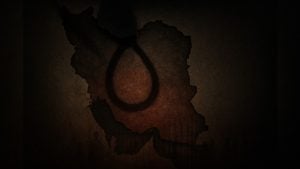
Fearing the eruption of another nationwide uprising, Iran’s ruling religious dictatorship has drastically accelerated its machinery of execution and death. Rather than a display of power, this relentless wave of state-sanctioned killings exposes a fractured regime deeply terrified of the people, particularly a rebellious generation determined to overthrow it. The daily acceleration of these killings is a desperate attempt to prevent the explosion of public anger.
The sheer volume of recent hangings reveals the regime’s desperation. In the Iranian month of Khordad (May 22 – June 21, 2026), the regime executed at least 134 prisoners. The killing spree reached horrific peaks: over a four-day span from Saturday, June 13 to Tuesday, June 16, at least 31 prisoners were sent to the gallows, averaging one execution every three hours. Among those executed during this four-day period were several compatriots from the Baluch people, who are suffering extra suppression and violence from the regime.
The state’s killing machine did not stop there. Over just two days—Wednesday, June 17, and Sunday, June 21—another 20 prisoners were hanged by the regime’s henchmen. These executions were systematically carried out in prisons across the country in cities such as Zahedan, Shiraz, Zabol, Yazd, Shirvan, Maragheh, Borujerd, Gorgan, Hamedan, Sanandaj, Isfahan, Tabriz, Amol, Kashan, Ahvaz, Sari, Birjand, and the notorious Qezelhessar prison.
Read more
One of the questions that has been raised repeatedly for more than four decades regarding Iran is this: Is there a genuine alternative to the Islamic Republic?
In democratic systems, the credibility of a political movement is measured through elections, the number of parliamentary seats it holds, or the results of independent opinion polls. But under an authoritarian regime, there are no free elections, no independent media, and no way to assess public opinion freely.
In such a context, the credibility of a political alternative must be evaluated using different criteria: the price paid by its supporters, its continuity across generations, the intensity of the repression it faces, the existence of a clear political program, and its ability to unite different segments of society.
In many countries, genuine resistance movements have been distinguished by the heavy price paid by their members. In Nazi-occupied France, belonging to a resistance network could lead to imprisonment, torture, or execution by firing squad. The same was true in apartheid South Africa and within the Solidarity movement in Poland.
Read more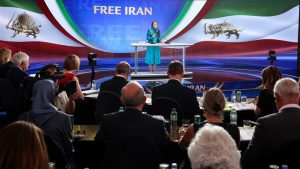
Throughout the Free Iran 2026 conference in Paris, participants discussed a wide range of issues, from human rights and political prisoners to international policy and democratic transition. Yet beneath these discussions lay a broader political question: what kind of government should replace the current regime if democratic change occurs in Iran?
For many speakers, the answer was clear. The conference repeatedly emphasized the idea of a democratic republic founded on free elections, political pluralism, and popular sovereignty. Participants argued that Iran’s future should not be defined by a choice between competing forms of authoritarian rule, but by the establishment of democratic institutions accountable to the people.
This vision emerged as one of the most consistent and unifying themes of the gathering.
Several speakers argued that debates about Iran’s future are often framed too narrowly.
According to this view, discussions frequently assume that opposition to the current theocratic system must lead either to political chaos or to the restoration of a previous form of rule.
Conference participants challenged that assumption.
Read more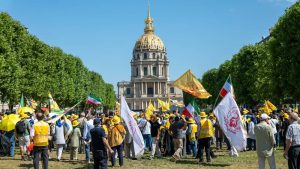
The Free Iran 2026 conference was intended to focus on Iran’s future, democratic change, and support for the Iranian people. Yet one of the most discussed topics throughout the event was not developments inside Iran, but a decision taken in France.
In the days leading up to the conference, authorities prevented a large gathering of Iranian opposition supporters that had been planned near Place Vauban in Paris. The decision transformed what was initially a logistical and security issue into a political controversy that resonated throughout the conference hall.
Speakers from across Europe and North America repeatedly returned to the subject, arguing that the restrictions raised broader questions about freedom of assembly, democratic rights, and the ability of political dissidents to make their voices heard in democratic societies.
For many participants, the controversy became inseparable from the conference itself.
Organizers had expected tens of thousands of supporters of the Iranian Resistance and democratic change in Iran to gather in Paris on June 20.
Instead, the planned public demonstration was prevented from taking place.
Read more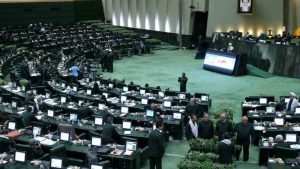
With the start of negotiations and the signing of the Iran–US memorandum, divisions among Iran’s parliamentary factions have reached a breaking point, exposing deepening political rifts within Parliament.
According to the current schedule, the chamber of Iran’s Parliament is set to reopen on Sunday, June 28. Yet the physical reopening of the building has done little to calm the political storm sweeping Tehran. For weeks, the parliamentary floor remained closed under strict administrative and security directives. That prolonged shutdown triggered an unprecedented political deadlock, exposing a deep rift between hardline radical lawmakers and the consolidated ruling coalition led by President Masoud Pezeshkian and Parliament Speaker Mohammad Bagher Ghalibaf.
The confrontation came fully into public view when Kamran Ghazanfari, the hardline Tehran lawmaker and member of Parliament’s Internal Affairs and Councils Committee, issued an ultimatum. Ghazanfari announced that nearly 40 lawmakers had signed a statement pledging to march toward the Parliament building. If they are denied entry, he said, they will begin an open-ended Parliament sit-in outside the entrance until the legislature officially reopens.
Read more
Gothenburg, Sweden — June 23, 2026: Supporters of the People’s Mojahedin Organization of Iran (PMOI/MEK) held a rally to mark the 126th consecutive week of the “No to Execution Tuesdays” campaign, a movement protesting the Iranian regime’s escalating executions and systemic repression. Protesters condemned the recent execution of political prisoners and demonstrators arrested during the January 2026 uprising.
Participants also highlighted the regime’s intensifying crackdown, the rising number of executions, and broader repressive measures, including nationwide internet shutdowns. They chanted slogans such as “Down with the executioner regime” and called for the immediate release of all political prisoners.
Read more
Also, read Iran News in Brief – June 25, 2026
Copyright © 2026 NCRI National Council of Resistance of Iran All Rights Reserved.
This website uses cookies so that we can provide you with the best user experience possible. Cookie information is stored in your browser and performs functions such as recognising you when you return to our website and helping our team to understand which sections of the website you find most interesting and useful.
Strictly Necessary Cookie should be enabled at all times so that we can save your preferences for cookie settings.
Leave a Reply