NAICOM Warns Public Over Fake Recruitment Scam as Job Fraud Spreads Online
BOI, EIB Deepen Support for Local Drug Manufacturers
Manufacturers’ Tax Payments Drop 68% as Cost Pressures Weigh on Production
NCC, CAC Tighten Rules on Telecom Ownership Changes
Access Bank Launches Vehicle Financing Scheme to Support SMEs
Call For Applications: Child Creative Studio 2026/27 Internship Academy Bootcamp | Remote
Call For Applications: Women-Led Business Grant 2026 (Up to $750,000 in Non-Dilutive Funding for Women Entrepreneurs Worldwide)
Call for Applications: FG Skill-Up Artisans (SUPA) Training Program for Nigerians
Call for Applications: Lagos Agrithon For Agriprenuer 2026 (Up To ₦200 Million Grant)
Call For Applications: Shell Daystar Women in Power Training (WIPT) Program 2026 (Monthly Stipend with Hands-on Training)
NAICOM Warns Public Over Fake Recruitment Scam as Job Fraud Spreads Online
Manufacturers’ Tax Payments Drop 68% as Cost Pressures Weigh on Production
NCC, CAC Tighten Rules on Telecom Ownership Changes
Access Bank Launches Vehicle Financing Scheme to Support SMEs
Gov. Radda Warns Against Diversion of FG Free Fertilizer in North-West
Airtel Africa Foundation Empowers 100 Students with N50million Tech Scholarships
Meta Launches AI Tools to Help SMEs, Creators Produce Content and Reach Customers Faster
Meta Unveils New AI Features on Facebook to Improve Search, Content Creation
Stanbic IBTC, National Theatre Empower 180 Children Through Animation and Digital Skills Programme
Digital Equity Africa Launches Shenzhen Innovation Camp to Expose Young Africans to AI and Emerging Technologies
Anambra Invests N80m in 80 Startups to Drive Innovation and Job Creation
ITF Launches Business Incubation Initiative to Empower Artisans and Grow MSMEs
CBN Offers N450bn Treasury Bills for June 17 Auction
EU Backs Kannywood as a Driver of Jobs, Skills and Economic Opportunities in Northern Nigeria
ILO Launches Africa-Wide Skills Development Initiative to Strengthen Apprenticeships and Job Opportunities
Published
on
By
Applications are now open for the Child Creative Studio 2026/27 Internship Academy Bootcamp, a remote internship and training programme designed to equip aspiring creatives with practical, industry-relevant skills and hands-on experience in the creative industry.
The programme offers participants the opportunity to learn from experienced professionals, work on real-world projects, and develop a portfolio that can enhance their career prospects in the creative and digital economy.
Delivered remotely, the bootcamp enables participants from different locations to access quality training and collaborate with fellow creatives in a flexible learning environment.
Programme Benefits
Selected participants will receive:
- Remote, hands-on internship experience
- Practical training from industry professionals
- Exposure to real-world creative projects
- Opportunity to build a professional portfolio
- Mentorship and career guidance
- Networking opportunities with other creatives
- Industry-relevant skills development
- Flexible remote learning experience
Who Can Apply?
The programme is open to:
- Students and recent graduates
- Aspiring creatives and digital professionals
- Individuals interested in building careers in the creative industry
- Young professionals seeking practical experience
- Individuals willing to commit to the duration of the bootcamp
Areas of Learning
Depending on the track selected, participants may receive training in areas such as:
- Graphic Design
- Content Creation
- Digital Marketing
- Brand Strategy
- Social Media Management
- Video Editing
- UI/UX Design
- Creative Writing
- Motion Design
- Web Development
- Creative Project Management
Applicants are encouraged to review the official programme page for detailed information on available tracks.
Why This Matters
As the digital and creative economy continues to expand, practical skills and portfolio development are becoming increasingly important for career success. Internship programmes such as the Child Creative Studio Internship Academy Bootcamp provide aspiring professionals with valuable hands-on experience, mentorship, and industry exposure needed to thrive in today’s competitive job market.
How To Apply
Interested applicants can learn more and submit their applications through the official programme portal:
Apply Here:
Child Creative Studio Internship Academy Bootcamp Application Portal
Related Posts:

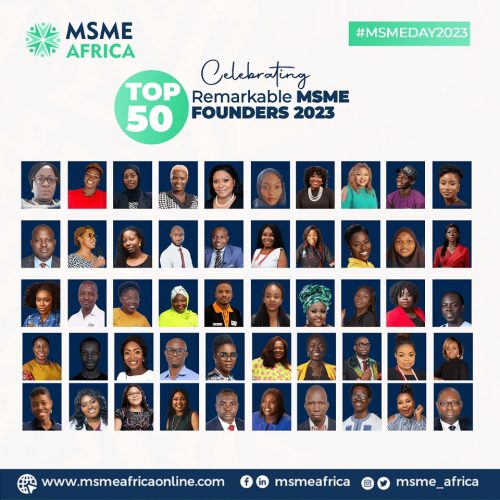
MSME Africa Unveils Top 50 Remarkable MSME Founders…

Ultimate 2026 Guide to the Top Business Enabling…

Overcoming Binding Constraints to Competitive…

15 Social Media Management Tools That Will Make Life…
#IWD2023: Celebrating Outstanding Women in Micro…
Mallpai Foundation: A Beacon of Hope for the Vulnerable





Gov. Radda Warns Against Diversion of FG Free Fertilizer in North-West
Call For Applications: Women-Led Business Grant 2026 (Up to $750,000 in Non-Dilutive Funding for Women Entrepreneurs Worldwide)
Call For Applications: Shell Daystar Women in Power Training (WIPT) Program 2026 (Monthly Stipend with Hands-on Training)
Call For Applications: UNDP Africa Create4Peace Youth Online Innovation Challenge 2026 for Young African Creatives
Call For Applications: Free Digital Commerce Training and Certification for SMEs
MTN Nigeria Brings Youth Entrepreneurship and Skills Platform “The Gathering on 100” to Aba
Ecobank Adire Fair Expands Opportunities for Small Businesses
Meta Unveils New AI Features on Facebook to Improve Search, Content Creation
Your email address will not be published.
Published
on
By
The National Insurance Commission (NAICOM) has alerted members of the public to a fake recruitment advertisement being circulated online by fraudsters claiming to represent the commission.
In a statement, the insurance regulator clarified that it has not launched any recruitment exercise and has not authorised any individual, platform or agent to conduct employment screening or collect personal information on its behalf.
The commission described the circulating advert as false, misleading and deliberately designed to exploit job seekers, warning that unsuspecting applicants risk losing money or exposing sensitive personal data if they engage with the scheme.
NAICOM stressed that all legitimate recruitment processes within the commission follow approved public service procedures and are only announced through verified government communication channels and recognised traditional media outlets.
The regulator further cautioned the public against responding to any message requesting payment, processing fees or unofficial data submission in exchange for job placement, noting that such requests are clear indicators of fraud.
Reiterating its position, the commission said it does not conduct recruitment through unverified links or unofficial online platforms, adding that genuine opportunities are always published through authorised channels.
The warning also highlighted growing concerns over cyber fraud targeting job seekers in Nigeria, where scammers frequently use the names of government agencies and regulatory bodies to deceive applicants.
National Insurance Commission urged the public to exercise caution and rely only on its official communication platforms for accurate information on recruitment and other regulatory updates.
The commission added that it is working with relevant security and cybercrime agencies to trace and prosecute those behind the fraudulent advertisement, warning that individuals involved in such activities will face legal consequences.
Members of the public have also been encouraged to report suspicious recruitment messages or extortion attempts using the commission’s name to the appropriate official channels for swift action.
NAICOM restated its commitment to protecting the public from fraud while ensuring transparency in all its official operations and communications.
Published
on
By
Fidson Healthcare Plc has praised the Bank of Industry (BoI) for its continued support in strengthening Nigeria’s pharmaceutical manufacturing sector through concessionary financing, as international development partners deepen investment in local healthcare production.
The commendation followed a joint visit by delegations from the European Investment Bank (EIB) and the Bank of Industry to Fidson’s manufacturing facility in Sango-Ota, Ogun State, under a €50 million healthcare financing partnership aimed at boosting local production of medicines, vaccines, diagnostics and other essential health products.
The financing arrangement, implemented under EIB Global and BoI collaboration, is designed to expand access to long-term funding for pharmaceutical manufacturers and improve healthcare manufacturing capacity across Nigeria.
Speaking on behalf of the Managing Director of the Bank of Industry, the Executive Director for Corporate Finance and Sustainability, Rotimi Akinde, said the bank has maintained a long-standing relationship with Fidson since 2010, providing concessionary funding to support its expansion.
He noted that the partnership reflects BoI’s broader development finance mandate, particularly in sectors considered critical to industrial growth and national development, such as healthcare manufacturing.
The European Investment Bank Vice-President, Ambroise Fayolle, described Fidson as one of the early beneficiaries of the financing programme, noting that the facility aligns with the European Union’s Global Gateway initiative, which seeks to strengthen healthcare systems and manufacturing capacity across Africa.
He said the partnership demonstrates a shared commitment to improving healthcare resilience, reducing dependence on imported medical products and expanding access to essential medicines across the continent.
For Fidson, the collaboration marks another milestone in a financing relationship with the Bank of Industry that has spanned over a decade and supported its steady expansion.
The Managing Director of Fidson Healthcare Plc, Biola Adebayo, said the company’s growth trajectory has been significantly shaped by BoI’s intervention since 2010, when the company first accessed concessionary funding.
According to him, Fidson has grown from about 250 employees to approximately 1,800 workers, while also expanding its production capacity and investing in more sustainable and environmentally friendly manufacturing processes.
He added that the company now operates one of the most advanced pharmaceutical manufacturing facilities in Sub-Saharan Africa, producing multiple dosage forms and undergoing several medicine prequalification processes simultaneously.
The EIB–BoI healthcare financing programme is expected to provide long-term capital to pharmaceutical companies and other healthcare businesses, enabling expansion, job creation, improved quality standards and stronger local supply chains.
The initiative also aligns with Nigeria’s industrialisation goals, the African Union’s target of producing 60 per cent of vaccines and essential medicines locally by 2040, and broader efforts to position Nigeria as a regional hub for pharmaceutical manufacturing in West Africa.
As funding support deepens, stakeholders say the partnership between local manufacturers and development finance institutions could play a key role in strengthening Nigeria’s health security and reducing reliance on imported medical products.
Published
on
By
Company Income Tax (CIT) payments from Nigeria’s manufacturing sector fell sharply in the first quarter of 2026, highlighting the mounting challenges facing producers despite recent tax reforms aimed at supporting businesses.
Data released by the National Bureau of Statistics (NBS) showed that manufacturers paid N74.48 billion in Company Income Tax during the quarter, representing a 68.25 per cent decline from N234.59 billion recorded in the same period of 2025.
The sector also recorded a significant quarter-on-quarter decline. Tax payments dropped by 47.49 per cent from N141.84 billion in the fourth quarter of 2025, reflecting a reduction of N67.36 billion within three months.
According to the NBS, total Company Income Tax collections stood at N1.37 trillion in the first quarter of 2026, down by 8.08 per cent from N1.49 trillion recorded in the preceding quarter. On a year-on-year basis, overall tax collections declined by 31.05 per cent.
While the fall in company tax receipts affected multiple sectors, the manufacturing industry experienced one of the most significant declines, raising concerns about profitability and business sustainability across the productive sector.
Despite the drop, manufacturing remained one of the largest contributors to domestic Company Income Tax during the quarter. The sector accounted for 13.82 per cent of domestic CIT collections, ranking behind financial and insurance activities, which contributed 24.73 per cent, and mining and quarrying, which accounted for 16.06 per cent.
In actual value terms, financial and insurance companies paid N133.27 billion, mining and quarrying contributed N86.55 billion, while manufacturing firms remitted N74.48 billion.
However, when compared with total CIT collections of N1.37 trillion, including foreign tax payments, manufacturing contributed only about 5.45 per cent of total revenue.
The report further revealed that domestic tax payments accounted for N538.91 billion, while foreign-related CIT payments contributed N828.82 billion, representing approximately 60.6 per cent of total collections during the period.
The sharp decline in manufacturing tax payments may point to weaker profitability among producers as businesses continue to grapple with rising energy costs, exchange rate volatility, expensive borrowing, logistics challenges and weaker consumer spending.
For many manufacturers and MSMEs operating within supply chains, these pressures have significantly increased production costs while limiting sales growth, making it harder for businesses to expand or improve profitability.
The first quarter of 2026 also marked the implementation of Nigeria’s new tax framework, which came into effect in January. Analysts say the transition may have influenced tax remittances through changes in compliance processes, payment schedules or company earnings.
Beyond manufacturing, other productive sectors also recorded declines. Agriculture, forestry and fishing posted the steepest quarter-on-quarter drop in tax payments at 73.52 per cent, while construction recorded a decline of 63.15 per cent.
In contrast, water supply, sewerage, waste management and remediation activities recorded the highest quarter-on-quarter growth of 485.71 per cent. Activities of households as employers followed with growth of 197.04 per cent.
The figures suggest that Nigeria’s tax revenue is becoming increasingly dependent on financial services, mining activities and foreign tax contributions, while sectors directly involved in production and value creation are contributing less than they did a year ago.
Company Income Tax is charged on the profits of businesses operating in Nigeria after allowable expenses and reliefs have been deducted. Under the recently enacted tax reforms, the CIT rate was reduced from 30 per cent to 25 per cent.
The reforms also introduced a zero per cent Company Income Tax rate for businesses with annual turnover of N100 million or less. Government officials have argued that the changes are intended to ease the tax burden on Small and Medium Enterprises (SMEs), encourage business growth and improve the overall investment climate.
However, the latest tax data suggests that manufacturers continue to face significant operational challenges, with many businesses still struggling to translate policy reforms into stronger profitability and growth.
BREAKING: CBN announces New Withdrawal Policies, Pegs ATM Withdrawals Limit at N20,000 daily, N100,000 weekly
First Bank Nigeria Joins SME Finance Forum
FG Opens Application Portal for N75 Billion MSME Survival Fund 10pm Today, Releases Time-table for Payroll Support Scheme for different sectors
Call for Applications: MTN ICT and Business Skills Training (N90 Million Grant for 300 Participants)
Call for Applications: Rural Youth Skill Acquisition Programme for Nigerian Youths (receive N50,000 monthly stipend)
How to apply and benefit from free CAC Business Name Registration for 250,000 MSMEs
How to put your house in order for tax purposes
Call for Applications: Tony Elumelu Foundation Entrepreneurship Programme 2023 for African Entrepreneurs (get $5,000 seed funding)
Copyright © 2026 Msme Africa | All rights reserved
Leave a Reply