UPDATE: 8:00 AM CEST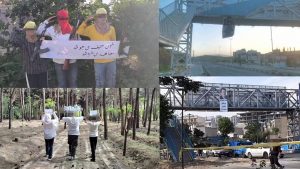
On June 16, 2026, ahead of a monumental international gathering of the Iranian Resistance, PMOI/MEK Resistance Units launched a widespread campaign across Iran. Spanning major cities from the north to the south, these activists took to the streets to commemorate the 45th anniversary of the June 20, 1981, uprising and to declare their unwavering solidarity with the upcoming Free Iran rally in France. In highly organized displays of defiance, Resistance Units carried out visible activities in Astara, Tehran, Mashhad, Tabriz, Isfahan, Shiraz, Ahvaz, and Urmia. In Tehran and Isfahan, groups of PMOI Resistance Units bravely marched in the streets holding placards that read “Commemorating June 20th.”
Activists hung large placards from pedestrian bridges, including a prominent display in Tehran featuring the photo of Massoud Rajavi alongside the emblem of the National Liberation Army (NLA) with the message: “June 20, 1981, marked the dawn of the most magnificent and monumental resistance in the history of Iran.” The overarching message of these campaigns emphasized a rejection of all dictatorships.
Read more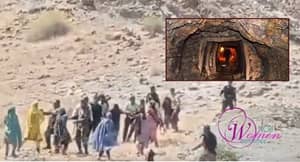
KERMAN, Iran _ Baluch Protest — On Wednesday, June 17, 2026, the Iranian regime’s repressive military forces violently attacked a peaceful protest by Baluch residents in Pashmoki village, located in the Faryab region of Kerman province. The forces brutally beat the protesters, specifically targeting women, and arrested several individuals.
During this violent crackdown, at least seven Baluch women were injured. Furthermore, regime forces arrested six local citizens, including three women, and transferred them to an unknown location.
Local residents were protesting for the second consecutive day against the unjust allocation of the Pashmoki chromite mine, which deprives the indigenous population of the mine’s economic benefits and opportunities. The local population is demanding their basic rights to profit from the natural resources and wealth of their own region. Women played a courageous and active role in this gathering. According to eyewitnesses, instead of addressing the people’s legitimate demands, the regime’s security forces used blatant violence and physical assault to break up the protest and disperse the crowd.
Read more
For decades, discussions about wages and inflation in Iran have been treated as technical debates among economists and policymakers. Yet the numbers tell a far more consequential story. The historical relationship between wages and inflation is not merely an economic indicator—it is a measure of the regime’s structural failure to provide even the most basic economic security for its citizens.
Every year, the regime’s Supreme Labor Council announces a new minimum wage increase amid extensive media coverage and official claims of support for workers. On paper, wages rise. In reality, workers become poorer. The widening gap between nominal wage growth and the actual cost of living has become one of the clearest indicators of Iran’s economic decline.
As the state-run newspaper Jahan-e Sanat recently observed in its analysis, minimum wage levels have evolved from a simple labor policy metric into a thermometer measuring the failure of economic governance. Despite annual wage negotiations and headline-grabbing increases, workers repeatedly confront the same question: why does the family table become smaller every year despite higher salaries?
Read more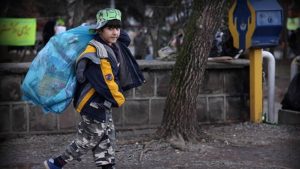
On June 15, the state-run Shargh newspaper published a report on child labor titled “Childhood on a Work Shift,” highlighting the painful conditions faced by child laborers in Iran. At the same time, on the occasion of the World Day Against Child Labour, a conference titled “Red Card to Child Labor” was held in Tehran. Unlike many official ceremonies, the event presented a bleak and alarming picture of the situation of child laborers in Iran. Statistics and remarks by experts attending the conference indicate that child labor is not merely a limited social problem but one of the most widespread manifestations of poverty, inequality, and the failure of support structures under Iran’s regime.
According to estimates presented at the conference, approximately 2 million children in Iran are engaged in labor. Even the speakers described this figure as a conservative estimate. The lack of transparent and reliable statistics has left the true scale of the child labor crisis shrouded in uncertainty. While a report by the Statistical Center of Iran in 2017 estimated that about 410,000 children between the ages of 10 and 17 were employed, social activists argue that this figure represents only a small fraction of reality, as many working children—especially those without identity documents or those who are migrants—are not recorded in any official statistics.
Read more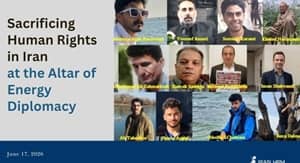
While the world remains engrossed in the peace accord between Iran and the United States, counting down the moments for the reopening of the Strait of Hormuz to restore the global flow of oil and energy, the reality of sacrificing human rights remains glaringly obvious in this deal. There is no demand for the cessation of executions, no appeal for the release of political prisoners, and no accountability for the massacres, slaughters, and war crimes that have swallowed over 30,000 lives—predominantly Iran’s youth. Merely reading the headlines of human rights violations in Iran requires immense emotional fortitude, let alone diving into their details; yet, from the “civilized” world, nothing is heard but a deafening silence of inaction.
June 16: On 16 June, Mizan News Agency reported the execution of Javad Zamani and Abolfazl Saedi, two individuals arrested during the nationwide protests of December 2025 in Semnan Province. Although authorities have published a list of security‑related charges against these political prisoners, no transparent information has been made available regarding the interrogation process, the judicial proceedings, the fairness and quality of the trial, or their access to legal defense rights.
Read more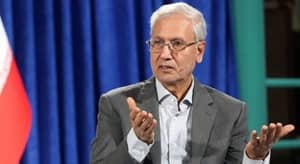
New data and field reports from the capital suggest that accumulated domestic grievances have turned into a Gordian knot rooted in severe economic challenges.
Rabii, a veteran security figure who now serves as the government’s social affairs assistant, recently conceded in remarks to domestic media that public opinion has undergone a major shift. Citing undisclosed statistical assessments, he stated that more than 60 percent of the population — and by some indicators nearly three-quarters of society — seek change in the current structure. According to him, this segment encompasses a significant share of the country’s social dynamics, and the authorities can no longer afford to ignore it.
The Achilles’ heel of Rabii’s remarks is the silence surrounding the reasons behind this situation. While official platforms consistently focus on external factors, major economic and civil indicators suggest that the principal driver of public disillusionment is severe mismanagement and restrictions on basic freedoms.
Read more
Bern, Switzerland – June 2026: In the lead-up to the major June 20 rally in Paris, supporters of the People’s Mojahedin Organization of Iran (PMOI/MEK) have launched activities across Switzerland to promote the event. Meanwhile, supporters gathered outside the Iranian regime’s embassy in Bern, urging freedom-loving Iranians to join the June 20 Free Iran Rally, where 100,000 participants are expected to assemble at Place Vauban in Paris’s 7th arrondissement, calling for an end to executions and expressing support for a democratic republic in Iran.
The June 20 Free Iran rally in Paris, to be held under the slogan “A Democratic Republic for Iran,” will reject both monarchical and theocratic dictatorships, emphasizing a third alternative based on democracy and popular sovereignty.
Read more
Also, read Iran News in Brief – June 17, 2026
Copyright © 2026 NCRI National Council of Resistance of Iran All Rights Reserved.
This website uses cookies so that we can provide you with the best user experience possible. Cookie information is stored in your browser and performs functions such as recognising you when you return to our website and helping our team to understand which sections of the website you find most interesting and useful.
Strictly Necessary Cookie should be enabled at all times so that we can save your preferences for cookie settings.
Leave a Reply