The world of 3D printing is constantly changing and the development of artificial intelligence (AI) is playing an increasingly important role. In particular, the generation of 3D models using AI is opening up new possibilities and potential. In this article, we present 14 innovative services that are doing pioneering work in this field.
We have compiled an overview of the current services that offer text-to-3D AI models. We have revised the list for the year 2026 and removed research projects (including OpenAI’s Shap-E) and AI companies that have focused their work elsewhere (e.g. LumaAI).
(Last update: March 13, 2026)
Table of contents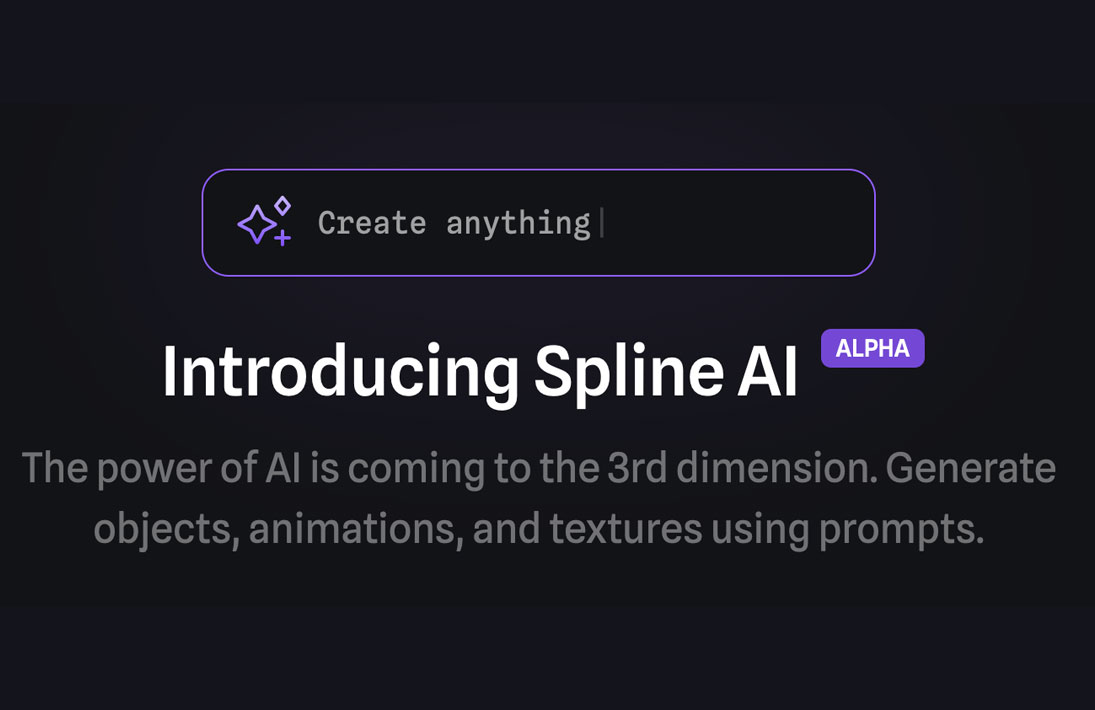
With Spline AI, users can easily create 3D objects, animations and textures by providing AI prompts that describe their desired designs. The basic package is free of charge. Advanced features such as team collaboration are available for a fee.
Kaedim can create 3D models from 2D images, which can be downloaded in glb, gitf, obj, fbx and other formats. However, it is also possible to create 2D images via text. There is a demo option. Prices start at around 120 US dollars per month. 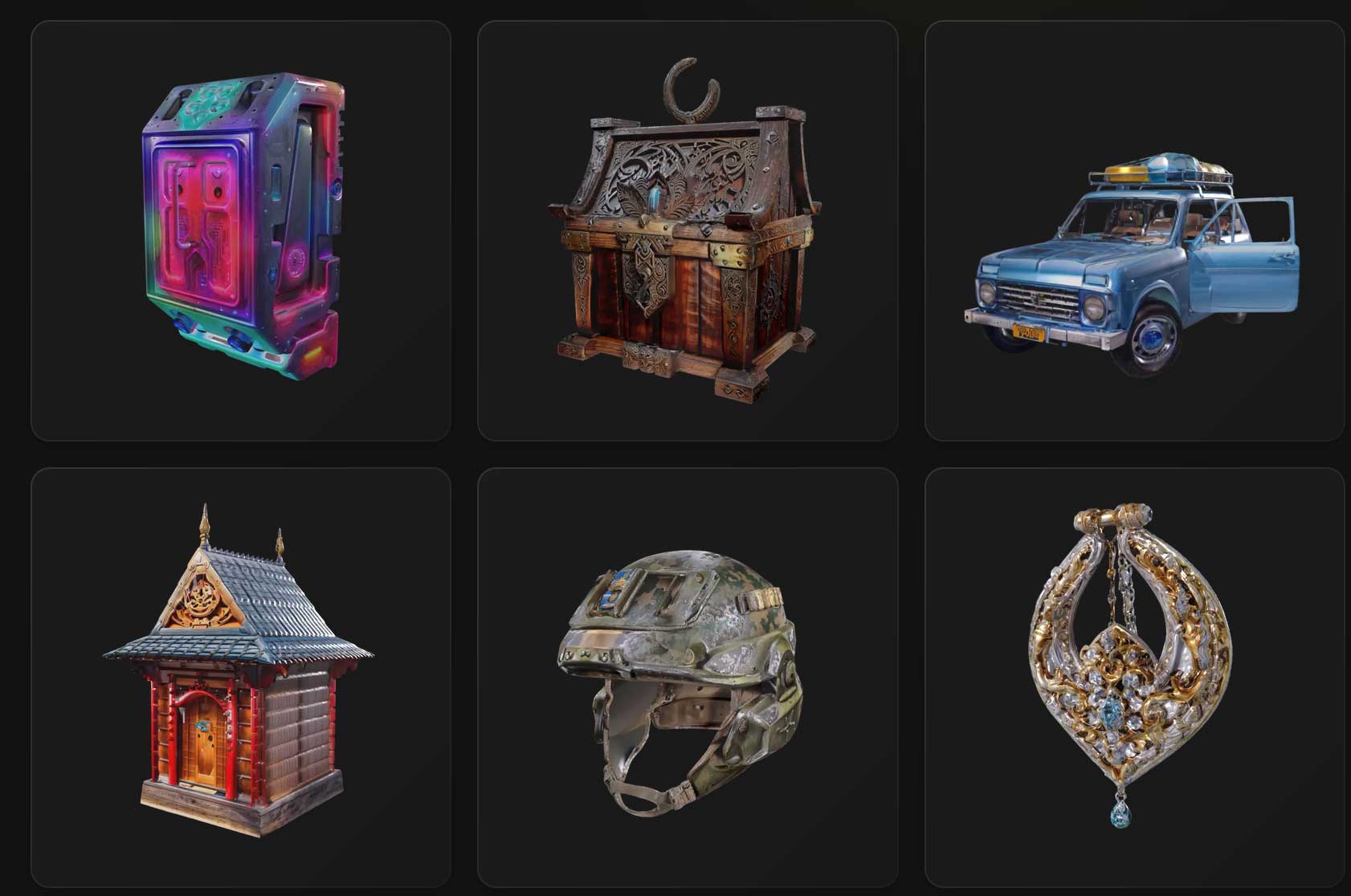
The startup Meshy.AI has presented an AI solution for the rapid generation of 3D models. Using text and image specifications, detailed 3D models can be created in under a minute. There is a free basic package.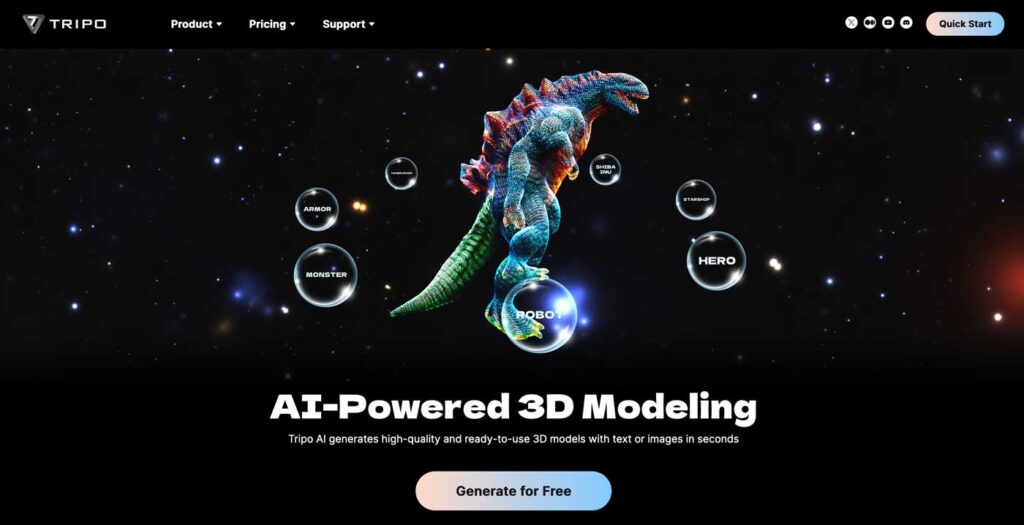
Tripo AI was presented for the first time at the end of 2023. The tool generates 3D models from photos or text commands in just a few seconds. There is currently a free package that allows the creation of 10 3D models per month.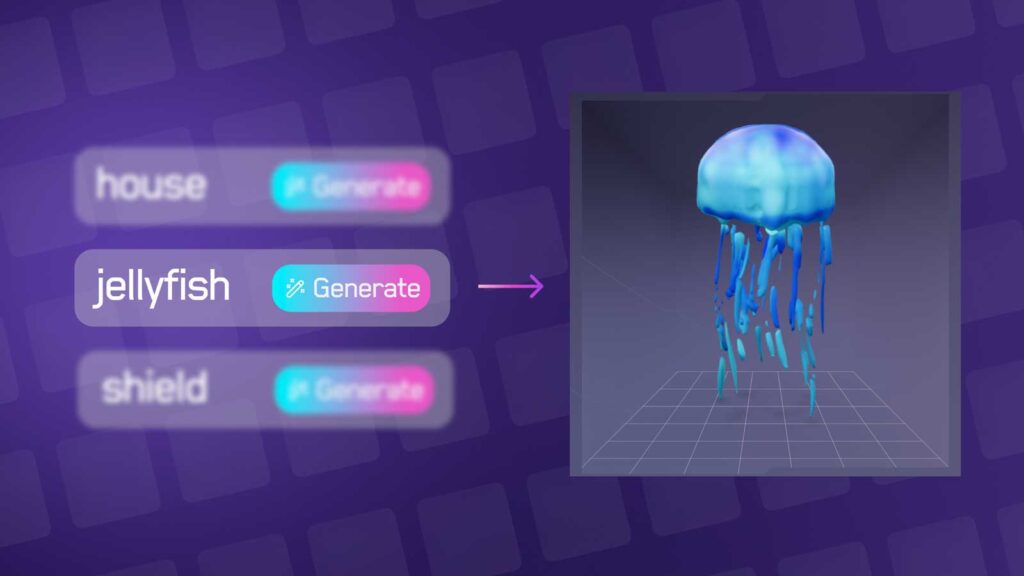
The Alpha3D platform from Estonia promises to improve 3D modeling with AI technology. With the help of generative algorithms, users can quickly create 3D models from text descriptions or 2D images.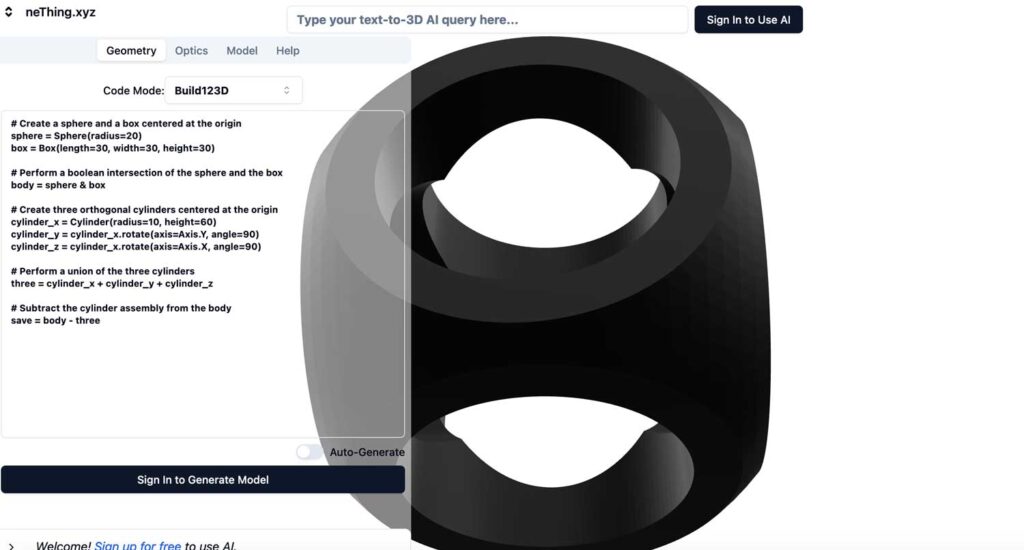
The neThing.xyz platform was developed by 3D printing specialist polySpectra. You can currently generate 3D models with a free account. The files can be saved in the STL– or GLTF format.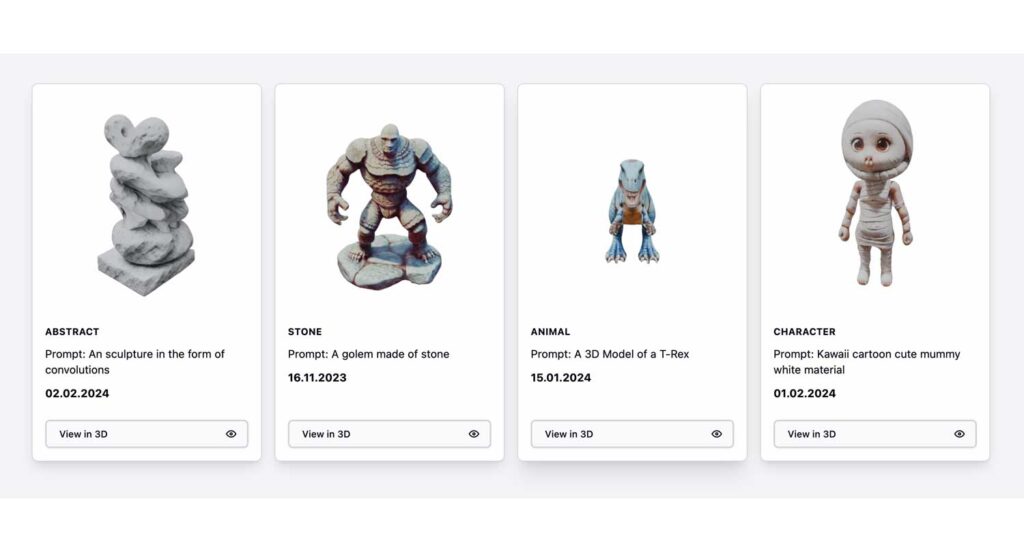
The German start-up 3D AI Studio promises to generate 3D models from text descriptions or reference images in just a few seconds. The tool supports common 3D file formats such as .glb, .fbx, .obj, .stl and .usdz. The first 5 models are free of charge. After that, there are one-off prices or monthly subscriptions for the creation of more models. 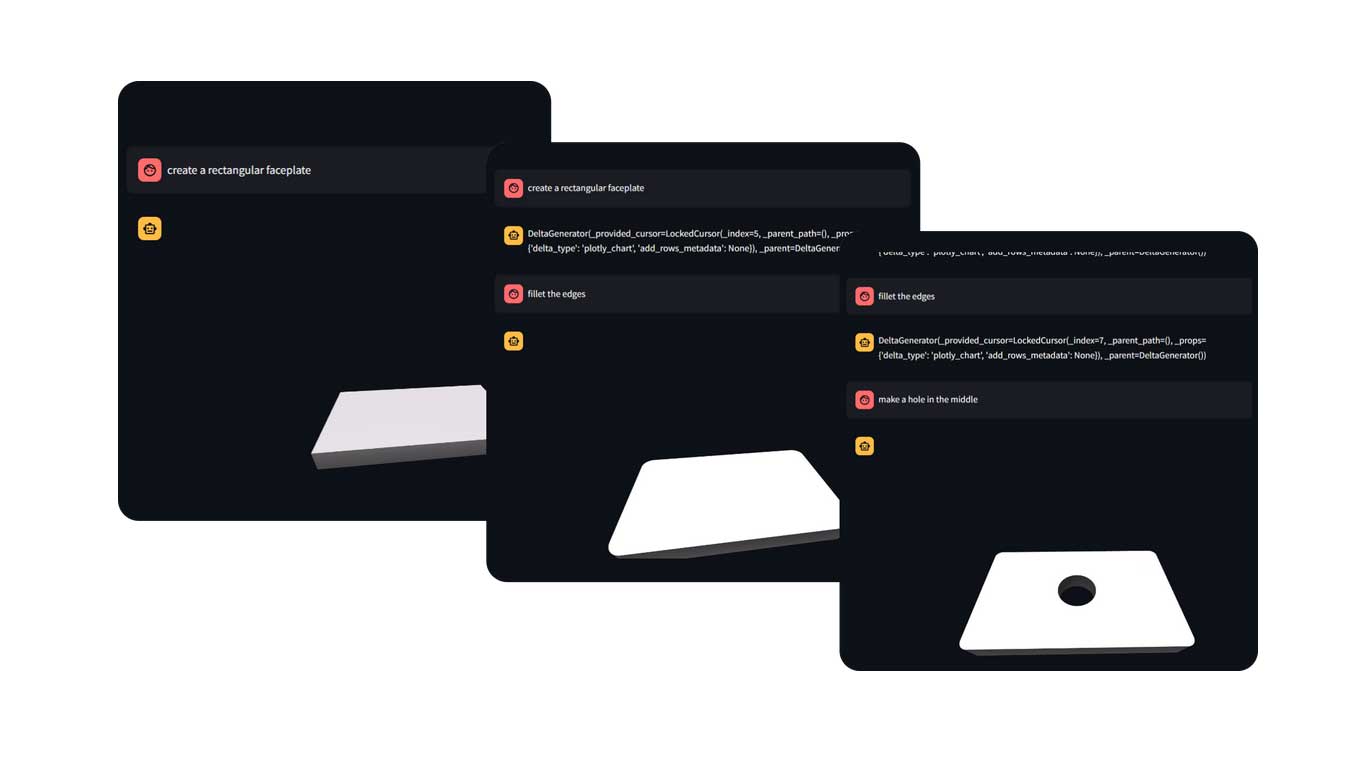
The CADScribe software promises to generate 3D models from text descriptions – and is currently free of charge. The tool concentrates on the creation of technical CAD-components. 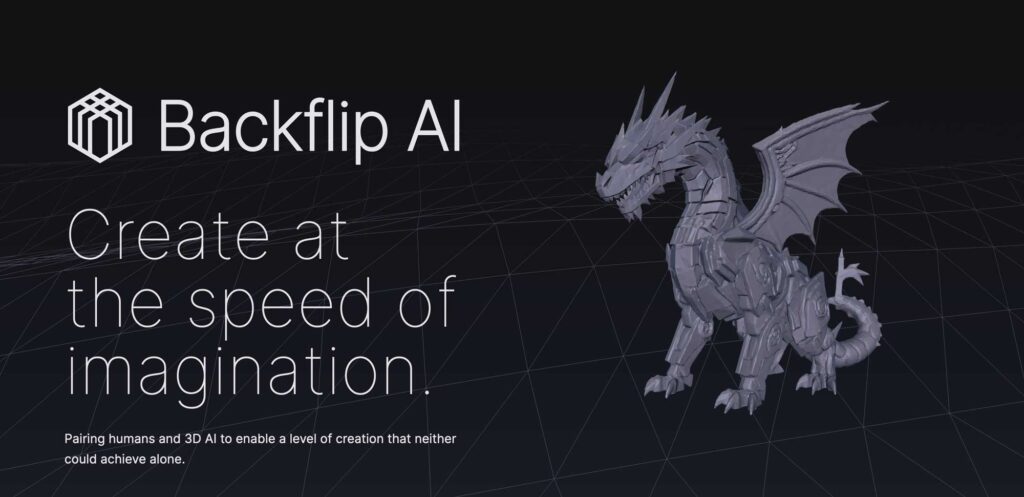
Backflip is an app co-founded by Greg Mark, the former CEO of Markforged. The startup has millions in funding and offers the possibility to generate 3D models with text commands or photo specifications.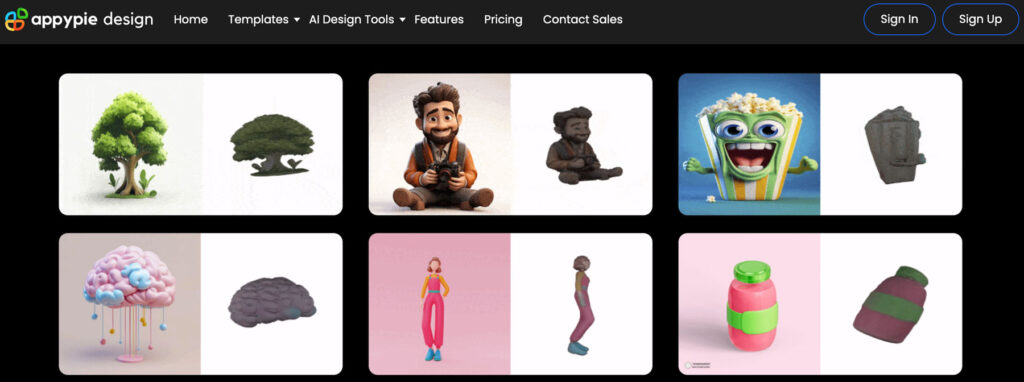
Appy Pie is an AI generator that generates 3D models from 2D images. The platform has a simple drag-and-drop interface and the models can be loaded in GLB, OBJ and MP4 formats. There is a free trial version for 7 days.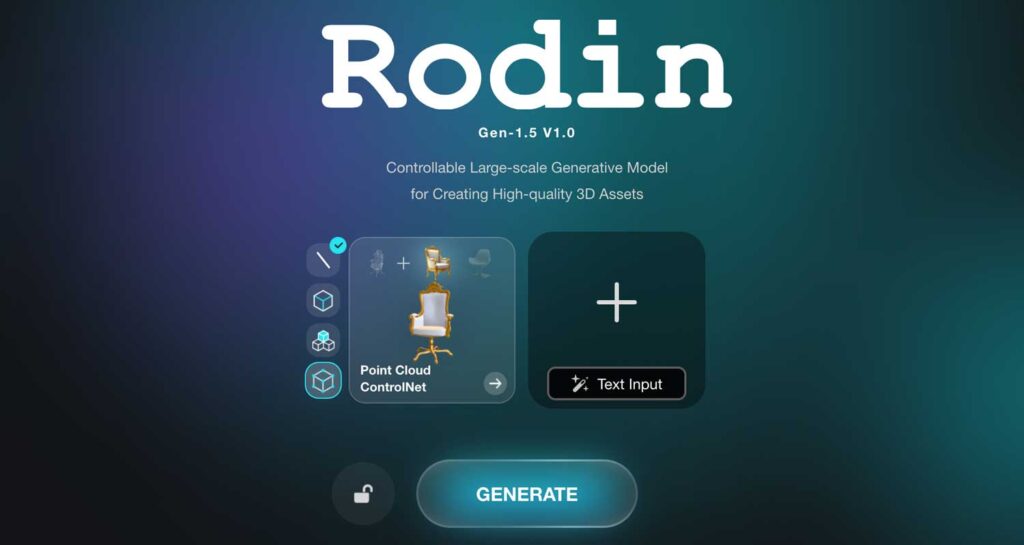
Hyper3D is a Chinese app that enables the creation of 3D models. The start-up offers various paid packages as well as a 7-day free trial.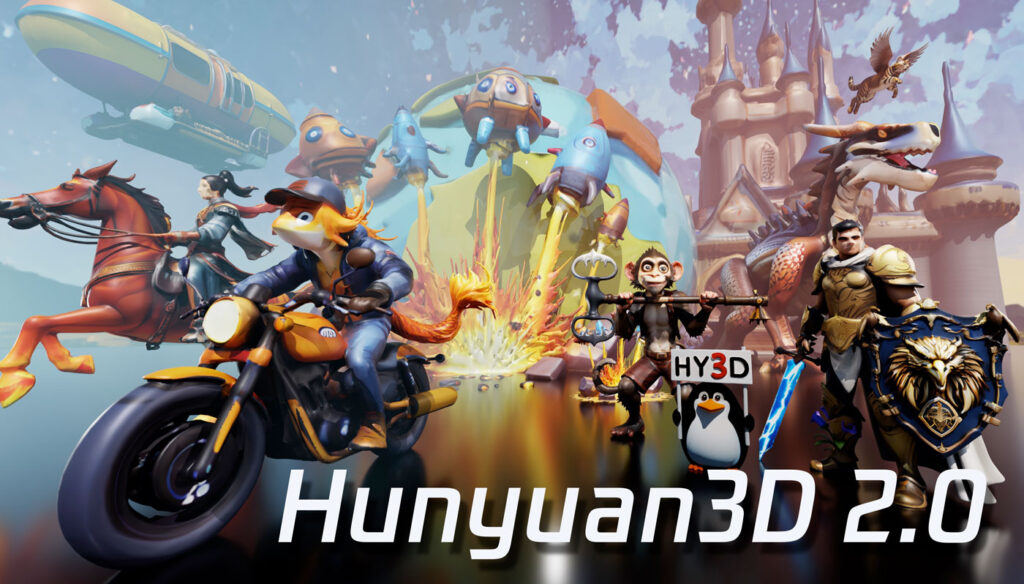
Hunyuan3D is a 3D model from the Chinese company Tencent. The technology company, which is behind the WeChat app, provides the AI model free of charge. It can also be installed locally on a computer or used online free of charge.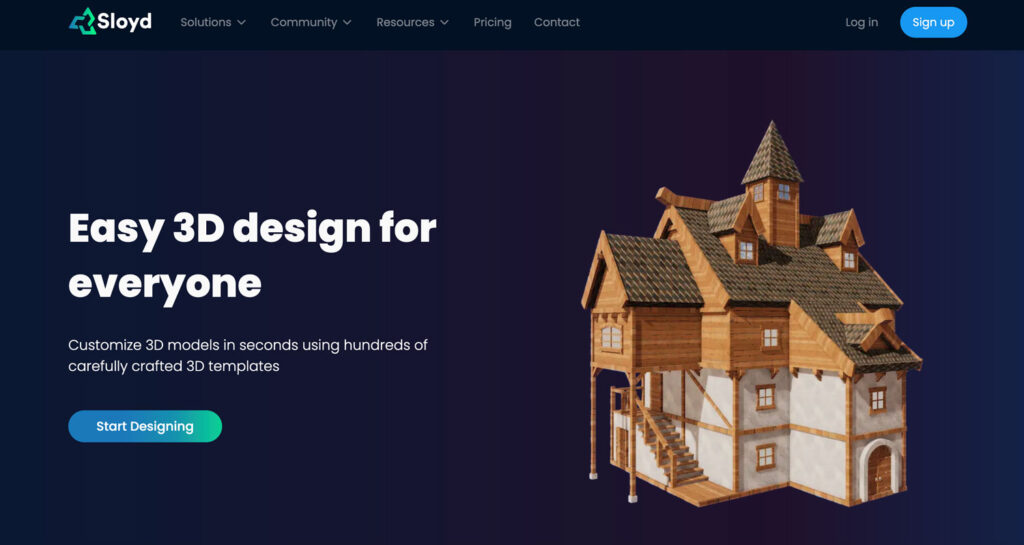
Sloyd is a web-based 3D design platform with AI-supported model generation and STL export. Users create customizable, print-ready models directly in the browser. An image-to-3D tool and a free starter tariff make it particularly easy to get started.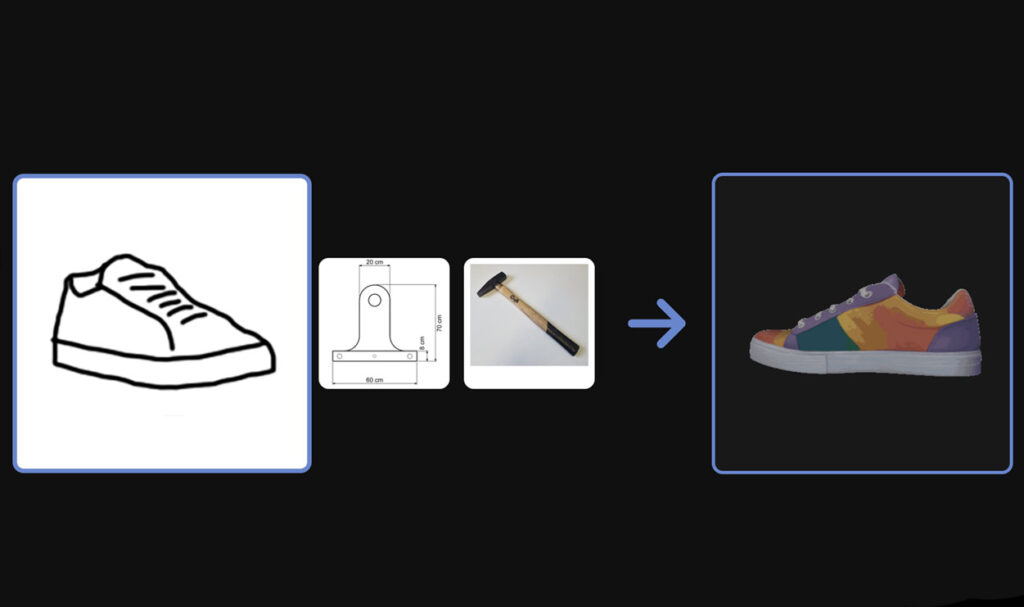
With Sketchurizer, the Essen-based start-up GenerIO is providing a new tool that aims to simplify the creation of 3D models through the use of generative AI. The tool combines freehand sketches with voice input and generates three-dimensional designs based on your own AI models. 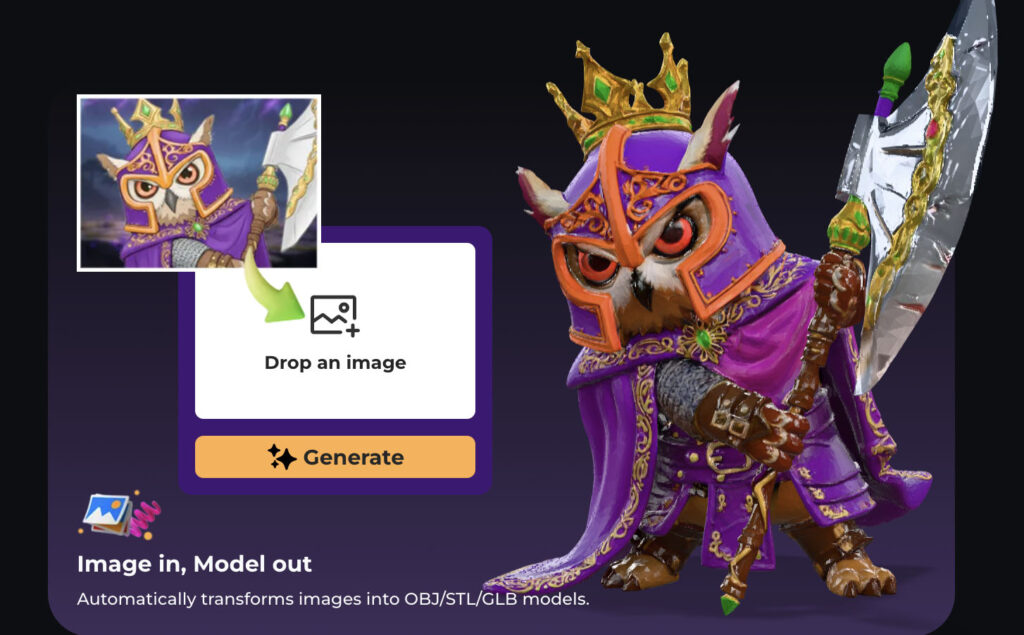
AI3DGen enables the creation of 3D models from 2D photos. The basic package is free of charge. However, there are also paid packages. 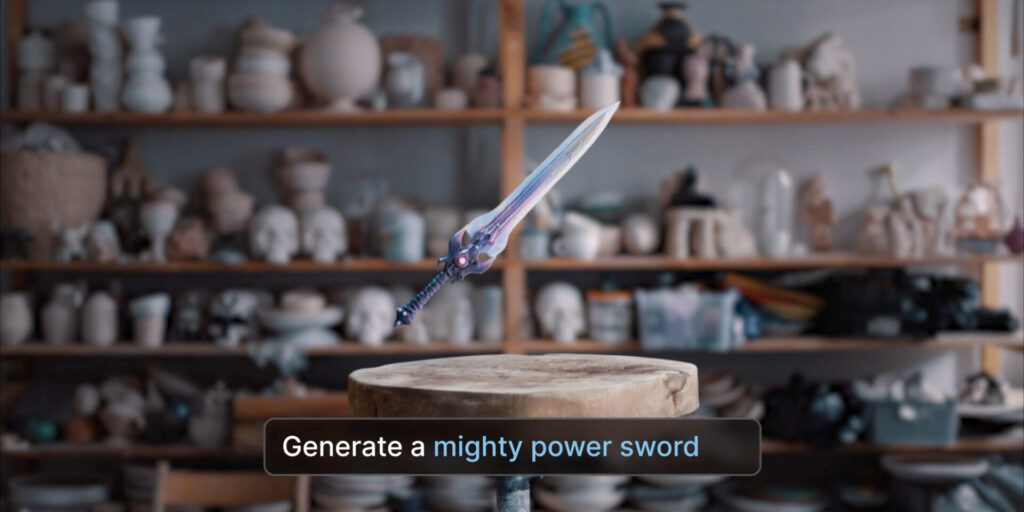
Autodesk has integrated Wonder 3D into its Flow Studio platform. The AI tool generates editable 3D models from text and images and is designed to shorten the path from idea to prototype or 3D printed model.
In addition to usable 3D model applications, there are also a number of research projects. For example, the ChatGPT makers OpenAI have launched the project Shap-E, MeshGPT by researchers from the Technical University of Munich and the Politecnico di Torino together with Audi, Stable 3D from Stability AI and LATTE3D from NVIDIA.
Leave a Reply