As global beauty competition intensifies, particularly from Korea and Western brands, IFING is positioning Japanese beauty around craftsmanship, technical education, and science-backed innovation through its TOKIO INKARAMI treatment technology and salon-centered ecosystem.
To begin, we would like to step back and look at the broader landscape of the Japanese beauty industry. Japan has long been recognized globally for its high quality products, precision, and functional approach to beauty. At the same time, the industry is facing increasing competition from Korean creators and Western brands, particularly in terms of creativity, branding, and global reach. In this evolving and competitive environment, how do you define the core strengths of the Japanese beauty industry today, and what continues to make it distinctive and appealing on a global level
I believe that Japan is not a place where the mindset is simply about whether something sells or not. There is a deeper cultural foundation where people think carefully about others and approach their work with sincerity and attention. This way of thinking exists not only in beauty, but also in many other industries such as food, automobiles, and electronics. Beauty is no exception.
When it comes to products, the level of quality, safety, and attention to detail is extremely high. Having seen many countries around the world, I feel that Japan stands out in this regard. There is a strong focus on small details, and also a kind of care that goes into making products better for the end user. This accumulation of detail and care allows Japanese products to reach a very high standard.
Another important point is that Japanese industries, including beauty, tend to focus on substance rather than short term trends or overly flashy marketing. The value is placed on what the product truly is, rather than how it is presented on the surface. Because of this, I think Japanese beauty already has a very strong foundation and high potential. If the way it is communicated globally continues to evolve, there is still significant room for growth.
There is also a strong sense of trust from overseas consumers. People around the world often say they want Japanese products, not because of aggressive marketing, but because they believe in the quality itself. That trust is built over time and is one of the key strengths of Japanese beauty.
While Japan is widely respected for its product quality, technical expertise, and structured salon education systems, there is also a perception that the global conversation around creativity and beauty culture is advancing rapidly in other regions, particularly in Korea and Western markets. From your perspective, how should Japan respond to this shift, and what role does learning from overseas play in shaping the future of Japanese beauty
Japan has very strong capabilities in terms of product development, the technical level of hairstylists, and education systems. I believe these are already at the top level globally. However, when we look at broader concepts such as creative beauty or how beauty is expressed and communicated, there is a sense that overseas markets are progressing more quickly in those areas.
Because of that, I think it is important not to see this as competition alone, but as an opportunity to learn. There are many good ideas, concepts, and approaches coming from outside Japan. By bringing those into Japan and combining them with the strengths that already exist here, such as product quality and technical skill, it becomes possible to create something even better.
My goal is to create a cycle where ideas are brought into Japan, refined and enhanced through Japanese craftsmanship and thinking, and then shared again with the global market. At this stage, I feel that I am still learning from overseas in certain aspects, but I see that process as something positive and necessary for future development.
TOKIO INKARAMI products (Left: Salon care / Right: Home care)
The world's best system treatment from Japan
Your brand is positioned within the premium segment, yet you have chosen to avoid excessive packaging and instead present your products in a very simple and minimal way. In a category where luxury is often associated with elaborate design and visual impact, could you explain the thinking behind this approach, particularly in relation to sustainability and long term brand values
Even though our brand is positioned as a high quality brand, we intentionally avoid excessive packaging, such as putting products into elaborate boxes. We try to keep the presentation as simple as possible. One of the main reasons for this is to reduce waste. We are conscious of the environmental impact and want to avoid creating unnecessary garbage.
In addition to that, we have attempted to build a system where used containers can be collected and returned to the container manufacturers for recycling. However, in reality, this system has not yet functioned as effectively as we would like. The level of awareness among users is still not very high, so the collection process has been difficult to implement at scale.
That said, the system itself does exist, and we believe it has the potential to become something meaningful over time. Our intention is to continue improving it and to move toward a more sustainable model, even if progress is gradual.
Before establishing your own brand, you were deeply involved in Japan’s professional beauty distribution system, which operates differently from many international markets. For readers who may not be familiar with this structure, could you explain how the distributor model works in Japan and how your experience within that system led you to create your own brand
In Japan, manufacturers typically do not sell products directly to salons. Instead, there are distributors who act as intermediaries between manufacturers and salons. These distributors purchase products from manufacturers and then sell them to salons. This structure is standard across the industry.
There are thousands of distributors in Japan, including many very small companies. As a result, many distributors are selling similar products from similar manufacturers, which makes it very difficult to differentiate.
At one point, I had the opportunity to visit the United States, where I spoke with a distributor who told me that Japanese products were excellent and that there was strong demand for them. When I looked at the market there, I felt that Japanese products, education systems, and techniques could absolutely succeed internationally.
However, as long as I remained only a distributor, I was limited to operating within Japan. I did not have the ability to expand globally. That experience made me realize that if I wanted to bring Japanese beauty to the wider world, I needed to create my own brand as a manufacturer.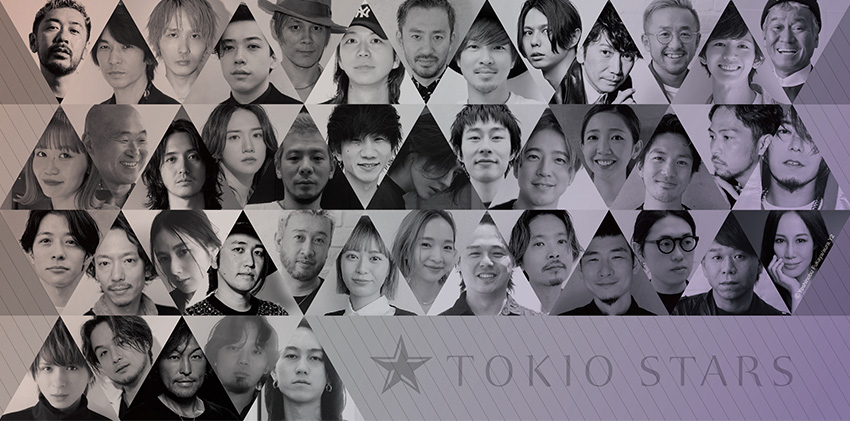
The ambassador for TOKIO brand
TOKIO STARS is a team made up of top level hairstylists in Japan.
Moving from a distributor to a manufacturer is a significant and uncommon shift, particularly within the Japanese beauty industry where these roles are traditionally separated. Could you elaborate on the challenges and risks involved in making that transition, and what gave you the conviction to proceed despite those risks
It was a very challenging decision. By creating our own manufacturing business, we were effectively entering into competition with the manufacturers we had previously worked with as a distributor. This created structural difficulties, which is one of the reasons why very few companies had attempted this before.
Even today, we continue to operate as a distributor, so there was always a risk that developing our own brand could negatively impact our existing relationships and business. There was a real possibility that the foundation of our distributor business could be weakened.
However, at the same time, I had a strong desire to take Japanese beauty beyond the domestic market. I felt that we had valuable knowledge, high quality products, and strong technical expertise that should be shared globally. That motivation outweighed the risks, and it led me to move forward with building our own brand.
In the early stages of building your brand, you chose to focus on a specific type of salon rather than pursuing broad distribution. Could you explain how that selective approach influenced your growth, and how your relationships with those salons contributed to the brand’s expansion
From the beginning, our approach was to focus on salons that were highly motivated, ambitious, and aiming to grow. Rather than trying to work with all salons, we chose to support those that had a strong desire to improve and succeed.
There are many salons that may purchase products but do not have a strong sense of ambition. We did not focus on those. Instead, we built relationships with salons and stylists who wanted to develop their skills and grow their businesses.
As a result, many of our early clients were young stylists who later became leading figures in the Japanese beauty industry. When we launched our products, these salons supported us, not only because of the product quality, but also as a way of supporting our company.
Because the products themselves were strong, this support quickly turned into word of mouth, and that reputation spread rapidly across Japan.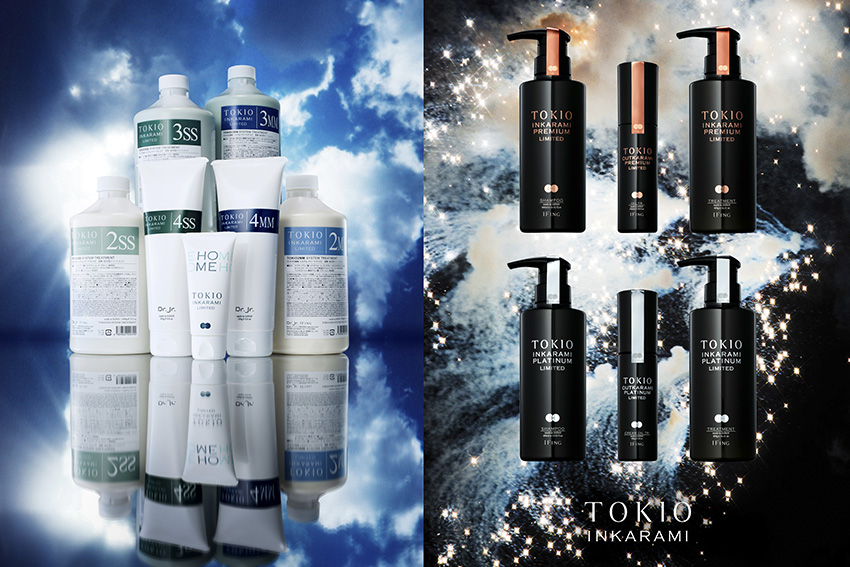
TOKIO INKARAMI LIMITED products (Left: Salon care / Right: Home care)
An upgraded version of TOKIO INKARAMI with enhanced texture
Beyond product development, you have also created a broader ecosystem around the brand, including initiatives such as TOKIO STARS and your supporting in recognition systems like KAMI CHARISMA. Could you explain the purpose behind these initiatives and how they contribute both to your brand and to the wider beauty industry
TOKIO STARS is a team made up of top level hairstylists in Japan. From the early stages, we collaborated with leading stylists on promotions and creative projects. Over time, this group has grown into something that many salons aspire to join.
Members of TOKIO STARS are involved in various activities, including advertising campaigns and creative productions such as filming hair shows in artistic environments. These initiatives help to showcase not only the product, but also the creativity and skill of the stylists.
KAMI CHARISMA is an award system that evaluates individual hairstylists. It is similar in concept to the Michelin Guide, but instead of evaluating hair salons, it focuses on people. Stylists are rated based on their level, and receiving recognition has become a major goal within the industry.
I felt this kind of system was important because, in the beauty industry, there was not enough structured evaluation or competition. In other industries, such as cuisine, there are clear systems that encourage continuous improvement. I wanted to bring a similar sense of motivation and seriousness to the beauty industry.
Turning to your core innovation, TOKIO INKARAMI has become widely recognized for its unique technology. For those who may not be familiar with the science behind it, could you explain the fundamental mechanism and how it differs from conventional treatment approaches
The core technology behind TOKIO INKARAMI is a patented mechanism based on keratin. Hair is primarily made of keratin protein, and when hair is damaged, that keratin is gradually lost, which weakens the hair.
Our approach is to introduce small keratin molecules into the hair and then, through a reaction, enlarge those molecules so that they remain inside the hair structure. This prevents them from being washed out and strengthens the hair from within.
The key difference is that this process allows the hair to become both strong and soft at the same time. Traditional treatments often focused on coating the surface of the hair, which could improve texture temporarily but often resulted in heaviness or reduced manageability.
With our approach, the internal structure of the hair is improved, leading to better durability, longer lasting results, and a more natural feel.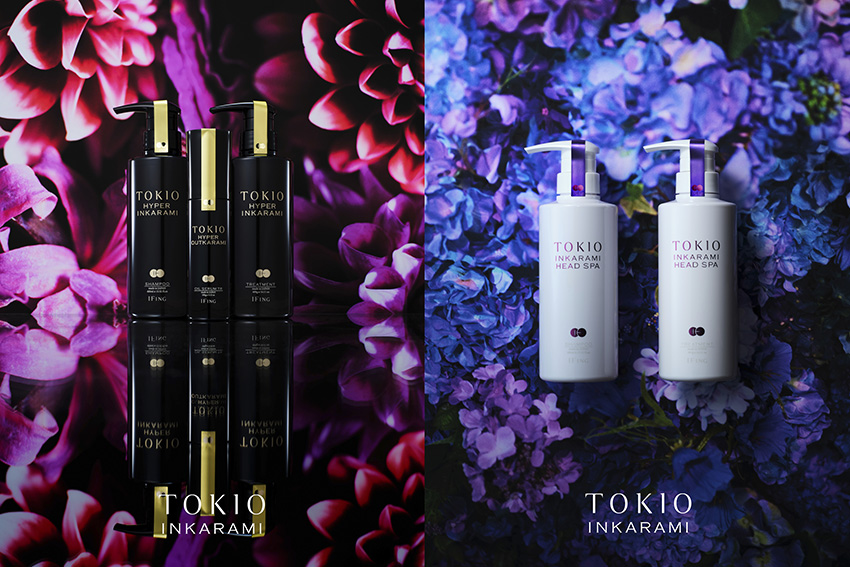
Left: TOKIO HYPER INKARAMI Home care
TOKIO INKARAMI's masterpiece, available only at select hair salons. Special limited edtion in Japan.
Right: TOKIO INKARAMI HEAD SPA
Head spa series that cares for both the scalp and hair with TOKIO INKARAMI technology
Even with a strong product, you emphasize that results depend heavily on how it is applied. Why do you consider treatment to be a technical service, and how does education play a role in ensuring consistent outcomes across salons
Treatments are often perceived as simple because they involve applying products, unlike cutting, which is clearly technical. However, I see treatment as a highly technical service.
Each step in the process has a specific purpose, and the way it is applied can significantly affect the final result. For example, certain steps require techniques that push the product deeper into the hair, while others require a smoother and more controlled application.
If these techniques are not performed correctly, the results can vary greatly. That is why we place a strong emphasis on education. We make sure that stylists understand not only the product, but also the correct methods of application, so that they can achieve consistent and high quality results.
Finally, as your company continues to expand internationally and integrate both product development and education, how would you summarize your long term vision and mission in a single statement
Our mission is to elevate Japanese beauty and make it the best in the world.
For more information, visit their website at: https://www.ifing.com/en/
The Worldfolio provides business, industrial and financial news about global economies, with a focus on understanding them from within.
PUBLICATIONS
DATABASE
ABOUT
SOCIAL MEDIA
IFING Elevates Japanese Beauty Through Technology, Education and Global Craftsmanship – The Worldfolio
Home
Technology
IFING Elevates Japanese Beauty Through Technology, Education and Global Craftsmanship – The Worldfolio
Leave a Reply