Gasgoo Munich- The pace of listings across the embodied AI supply chain has accelerated sharply in the first half of this year.
Among robot makers, DeepRobotics and Leju Robotics recently saw their IPO applications accepted, while Unitree’s STAR Market listing has already been approved. Meanwhile, Pudu Robotics and PaXiniTech are reportedly planning Hong Kong listings.
As robot makers rush to market, core component suppliers like LinkerBot and Laifual Drive are also actively advancing their listing processes.
Roland Berger forecasts that as the robotics sector heats up, more than 30 robot and core component makers will go public by 2026, potentially driving up the industry’s overall valuation significantly.
But behind the buzz, a critical question looms: Is this IPO wave a milestone where top players prove their worth, or is it a rush to secure a spot in the public markets amid intensifying industry competition?
From Robot Makers to Supply Chain, a Collective IPO Sprint
The list of IPO hopefuls in the embodied AI sector keeps growing.
Pudu Robotics founder Zhang Tao recently revealed that the company is preparing for a Hong Kong listing.
Founded in 2016, Pudu focuses on R&D, production, and sales of commercial service robots. It has laid out a full product matrix covering specialized, quasi-humanoid, and humanoid forms, with four product lines for delivery, cleaning, industrial, and general embodied intelligence. Cumulative shipments have surpassed 130,000 units across over 85 countries and regions.
Around the same time, PaXiniTech was reported to be considering a Hong Kong IPO and is in talks with investment banks, potentially filing an application with the HKEX in the coming months.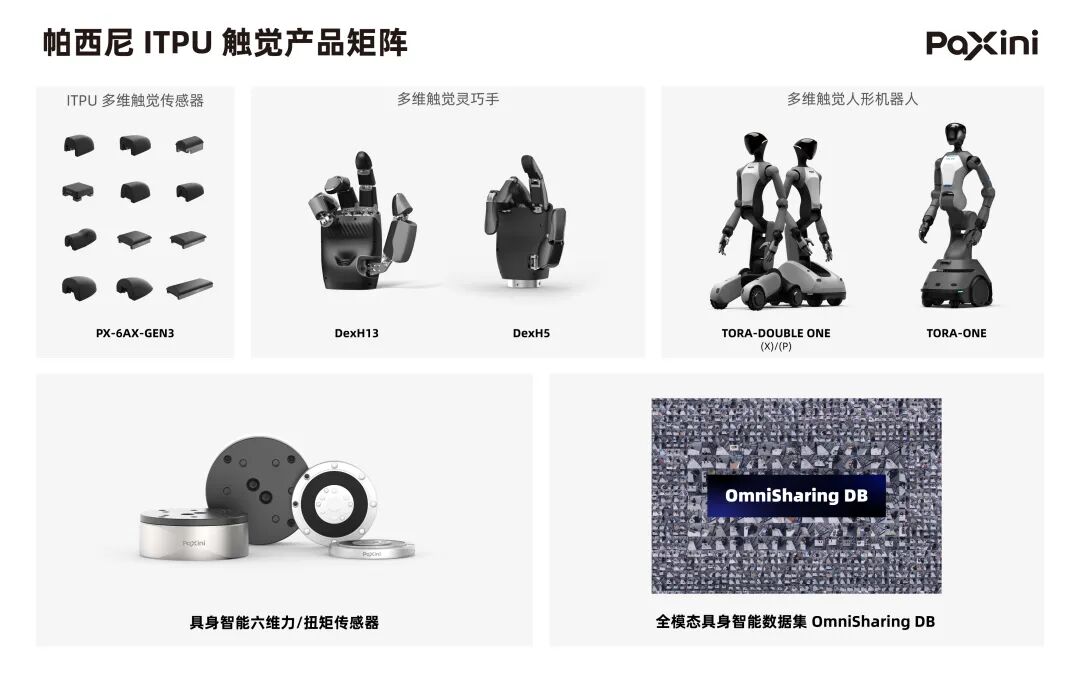
Image Source: PaXiniTech
PaXiniTech’s technological foundation is multidimensional tactile perception—a “hard nut” that most humanoid robot companies are still struggling to crack.
Building on this, PaXiniTech has constructed a full-link, high-precision tactile hardware matrix spanning “tactile sensors-dexterous hands-humanoid robots.” Its core products include the PX series tactile sensors, DexH series dexterous hands, TORA series humanoid robots, and the OmniSharing DB multimodal dataset.
This highlights PaXiniTech’s unique strategy: establishing an absolute advantage in a high-barrier core component before extending downstream to complete robots.
Currently, PaXiniTech ranks first globally in shipments for the tactile sensor niche, commanding an 80% market share. Its TORA robot is also undergoing pilot deployments in relevant scenarios.
Unitree, DeepRobotics, and Leju Robotics, meanwhile, have all set their sights on China’s A-share market.
Unitree’s STAR Market IPO was approved on June 1. Taking just 73 days from acceptance to the meeting, it set the fastest record since the STAR Market’s “pre-review mechanism” was implemented.
That speed is backed by hard numbers. From 2023 to 2025, Unitree’s revenue surged from 159 million yuan to 1.699 billion yuan, while gross margins for its main business climbed from 44.22% to 60.13%. In 2025 alone, Unitree generated about 868 million yuan from humanoid robots, shipping over 5,500 units—the most globally. Meanwhile, cumulative revenue from quadruped robots reached around 700 million yuan, corresponding to sales of 23,000 units.
DeepRobotics also chose the STAR Market, with its application accepted on May 18.
Unlike Unitree, DeepRobotics’ competitive edge lies in deep cultivation of “industry-level solutions” rather than just the quadruped products themselves. According to Frost & Sullivan, DeepRobotics ranked first globally in 2025 revenue from quadruped robot industry applications. The depth of its deployment in inspection, security, and emergency scenarios forms a solid business foundation.
This proves from another angle that beyond humanoid robots, embodied intelligence has a more pragmatic commercial path—one that capital markets also recognize.
Of course, DeepRobotics is actively laying out its humanoid robot business, which is currently in the early stages of commercialization.
Image Source: Leju Robotics
Leju Robotics opted for the ChiNext board on the Shenzhen Stock Exchange. Its application was accepted on May 19, making it the first company to apply under ChiNext’s fourth listing standard.
Leju’s main products are humanoid robots, covering full-size, medium, and small series. These include the Kuavo, Roban, and Aelos series. The full-size Kuavo series is the sales driver.
This shows that while embodied intelligence shares characteristics with autonomous driving—high R&D spend and low initial returns—domestic leaders in this space prefer A-shares, unlike smart driving firms that flocked to Hong Kong in the past two years.
As robot makers fight for IPO lanes, upstream core component suppliers are racing to secure their positions.
On May 29, Laifual Drive formally filed with the HKEX, aiming to become the “first harmonic reducer stock” in Hong Kong.
According to CIC data, Laifual Drive ranked second in China’s robot harmonic reducer market by 2025 shipments, with a 21.4% share, trailing only Leader Harmonious. By revenue, it also holds the second spot. It is one of only two domestic manufacturers to have achieved delivery and mass production of harmonic reducers for humanoid robots.
However, despite its success in the niche, Laifual Drive previously failed twice in its attempts to list on the STAR Market.
Its prospectus reveals that in 2022 and 2024, it signed sponsorship agreements for STAR Market listings with two financial institutions, but neither was completed. The company cited market conditions and failure to meet certain STAR Market listing rules as reasons for termination.
Now, with the humanoid robot sector heating up and embodied intelligence drawing intense capital interest, all eyes are on whether Laifual Drive can succeed on its third attempt.
Why 2026?
This IPO wave in embodied AI stems from a convergence of forces.
First, embodied intelligence has achieved initial commercial validation, moving from “0 to 1.”
Data from multiple authorities shows global humanoid robot shipments ranged between 16,000 and 20,000 units in 2025. Several leading players have achieved small-scale mass delivery, initially proving commercial viability and showing capital a path from concept to reality.
Image Source: Unitree Prospectus
Unitree, the fastest IPO runner, generated 1.699 billion yuan in revenue in 2025, a 333.08% surge year-over-year. Net profit hit 278 million yuan, up 194.40%. Notably, Unitree sold over 5,500 humanoid robots last year, bringing in 868 million yuan—surpassing quadruped robots for the first time as its largest revenue source.
It is worth noting that Unitree is also one of the few embodied robotics companies globally to achieve scaled sales and profitability.
DeepRobotics also turned a profit in 2025. Revenue climbed from 50.11 million yuan in 2023 to 337 million yuan, while net profit swung from a loss of 28.55 million yuan to a gain of 15.12 million yuan. Though modest, the profit proves the commercial model works.
Leju’s revenue compounded at 118.68% over the past three years. In 2025, its full-size Kuavo series generated 178 million yuan in sales—a roughly 12-fold jump—accounting for 68.86% of total revenue. Accordingly, Leju sold 577 units of the Kuavo series cumulatively in 2025, ranking among the top globally.
Second, a clear policy “window” has opened.
The state’s emphasis on “new quality productive forces” has placed embodied intelligence at the center of policy and capital flows. Since 2025, embodied intelligence has been written into the government work report for two consecutive years, backed by supportive policies from various ministries and local governments.
Meanwhile, both the A-share and Hong Kong markets are showing substantially greater tolerance for hard-tech listings.
Unitree’s 73-day approval directly benefited from the STAR Market’s “pre-review mechanism.”
Piloted by the Shanghai Stock Exchange in July 2025, this mechanism uses pre-listing communication to help tech firms avoid leaking core trade secrets and strategies during preparation. For companies, technical specs and R&D roadmaps are vital; this mechanism solves the pain point of “exposing secrets to go public” while buying time in the race against competitors.
The ChiNext board’s fourth listing standard, activated in April 2026, opened the door for Leju.
This standard offers two paths: a high-growth track requiring an expected value of no less than 3 billion yuan, annual revenue of at least 200 million yuan, and a three-year CAGR of over 30%; and a high-R&D track requiring an expected value of no less than 4 billion yuan, annual revenue of at least 200 million yuan, and cumulative R&D investment of at least 100 million yuan over three years—accounting for no less than 15% of revenue.
Leju fits neatly into this—with 258 million yuan in revenue in 2025, a three-year CAGR of 118.68%, and a post-money valuation of 4.327 billion yuan from its last funding round.
Taken together, these systems send a clear signal: capital markets are shifting from “judging by the past” to “pricing by the future.”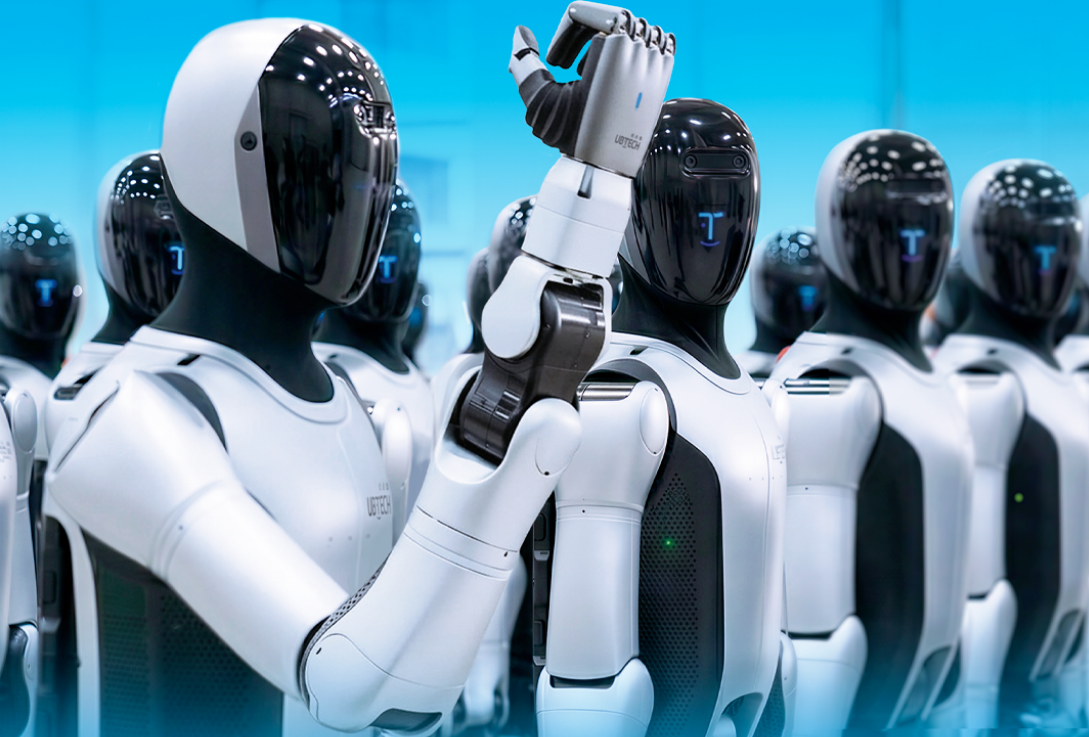
Image Source: UBTECH
Third, an arms race is forcing companies to hoard resources.
Embodied intelligence is a notoriously capital-intensive track. As the sector enters the critical push for mass production in 2026, expanding capacity, hoarding talent, iterating technology, and expanding scenarios all require massive funding. Primary market financing alone can no longer sustain the brutal competition ahead.
Moreover, early investors urgently need an exit via IPO.
But the flip side cannot be ignored: the industry is still in the early “burn cash for growth” stage.
Aside from a few like Unitree and DeepRobotics that have achieved profitability, the vast majority of embodied intelligence players remain deep in the red, stuck in a phase of high-intensity investment.
This means that while the possibility of commercialization has been proven, the inevitability of profit has not. Rising revenue alongside widening losses creates a “scissors gap”—a warning sign for this IPO wave.
How the Money Is Spent Will Decide the Second Half
Going public is not the finish line; how the proceeds are spent will determine the future landscape.
The fundraising plans of Unitree, DeepRobotics, and Leju offer a glimpse into the next phase of competition.
First, algorithms determine the upper limit of an embodied robot’s intelligence.
Unitree is allocating 48% of its raised capital to intelligent robot model R&D, while DeepRobotics is dedicating 46.7%. Leju is putting nearly a quarter of its funds into high-quality, large-scale dataset construction. It is a collective bet.
Why such unanimity? Because most embodied robots remain stuck in the demo phase, limited to fixed scenarios and commands. A slight change in lighting, an obstacle moved, or a shuffled task sequence can drastically degrade performance.
The true commercial value lies in generalization: enabling robots to understand and actively adapt to dynamic environments without pre-programming.
Image Source: PaXiniTech
The foundation of generalization is twofold: massive, high-quality data, and model architectures capable of digesting it.
According to Pudu CEO Zhang Tao, achieving a “ChatGPT moment” for embodied robots requires at least tens of millions, perhaps hundreds of millions, of hours of real-world data.
Still, while the importance of algorithms is recognized, Zhang Tao doubts pure “robot brain” companies can survive. “The survivors will be strong in hardware, models, agents, and commercialization—no weak links allowed.” This means that while joining the algorithm race, hardware iteration and scenario deployment cannot pause.
Second, manufacturing capability is becoming a new competitive barrier.
DeepRobotics is pouring 22.1% of its IPO proceeds into building a manufacturing base, Unitree 15%, and Leju 8.22%—reflecting a shared consensus.
Leju’s humanoid robot manufacturing base, once built, will have an annual capacity of 30,000 units. Notably, Leju is using a joint venture model for production, partnering with Dongfang Precision on automated lines and with H&T and Dongfang Precision on smart controllers.
Just two years ago, many embodied robots were still “hand-crafted.” Now, leading players are crossing the 10,000-unit production threshold and sprinting for higher capacity and delivery volumes.
Why the sudden acceleration? The simplest answer: orders won’t wait.
Downstream hunger for embodied intelligence is shifting from “expectation” to hard contracts. In this early phase where capacity equals market share, no one dares to bet on waiting.
Tendering data offers the clearest temperature check. According to the Humanoid Robot Scenario Application Alliance, 292 humanoid robot bidding projects were publicly disclosed in China in 2025, totaling over 1.81 billion yuan. In 2026, the pace is quickening: just the first four months saw nearly 100 disclosed projects with a combined value exceeding 200 million yuan.
Moreover, mass production is itself a brutal “stress test.” It spreads R&D and manufacturing costs, pushing prices closer to market acceptance, while exposing flaws that allow for product iteration—preparing for even larger-scale competition.
Because of this, not just robot makers but upstream suppliers are also ramping up capacity to secure a spot for the industry’s explosion.
Yet, rising demand and new production lines don’t mean the “singularity moment” for embodied intelligence is imminent.
Zhang Tao offers two clear criteria: first, a “ChatGPT moment” is essentially a qualitative leap in intelligence—robots must possess strong generalization; second, customers must be able to use and perceive the intelligence. If a robot product suddenly explodes in sales, that’s the true signal of singularity. The robots dancing on stage today clearly don’t make the cut.
So, how long to wait? The industry consensus is three to five years.
Capital, however, won’t wait that long. IDC predicts global humanoid robot shipments will exceed 510,000 units by 2030, with a CAGR of nearly 95% from 2025 to 2030. Facing that scale, raising capital isn’t a luxury—it’s a survival key to staying at the table.
Conclusion
This IPO wave marks embodied intelligence’s transition from “lab demos” to a “capital-driven industrialization” phase.
But listing is just the starting gun. As secondary markets scrutinize every earnings report, revenue growth fueled by burning cash, shipment numbers propped up by research demos, and high valuations discounted from dreams will all face the test of valuation correction.
After all, capital is willing to pay for dreams, but it won’t keep renewing the subscription for losses forever.
Gasgoo not only offers timely news and profound insight about China auto industry, but also help with business connection and expansion for suppliers and purchasers via multiple channels and methods. Buyer service: buyer-support@gasgoo.com Seller Service: seller-support@gasgoo.com
All Rights Reserved. Do not reproduce, copy and use the editorial content without permission. Contact us: autonews@gasgoo.com
Leave a Reply