While AI news might be getting all of the headlines, we’re delighted to share these updates coming to Adobe’s Substance 3D.
Adobe Substance 3D
The big news of the day, and most days these days, has to do with new AI models, technologies, and partnerships. For example, we learned today that Google has introduced a new Gemini Omni AI model that can “ create anything” with video. We also learned that Adobe has expanded its partnership with Google to allow its Gemini AI agentic access to its popular creative apps like Photoshop and Premiere.
But, alas, it’s not only AI news for all of us today, as we’ve also gotten word from Adobe that the company is mercifully rolling out new releases and updates for Substance 3D.
The goal with these new releases is simply to help designers and creatives move faster with updates coming to Substance 3D Designer, Substance 3D Sampler, ZBrush, and Substance 3D Painter, ready to streamline your workflows.
Here’s everything you need to know.
Adobe Substance 3D Updates
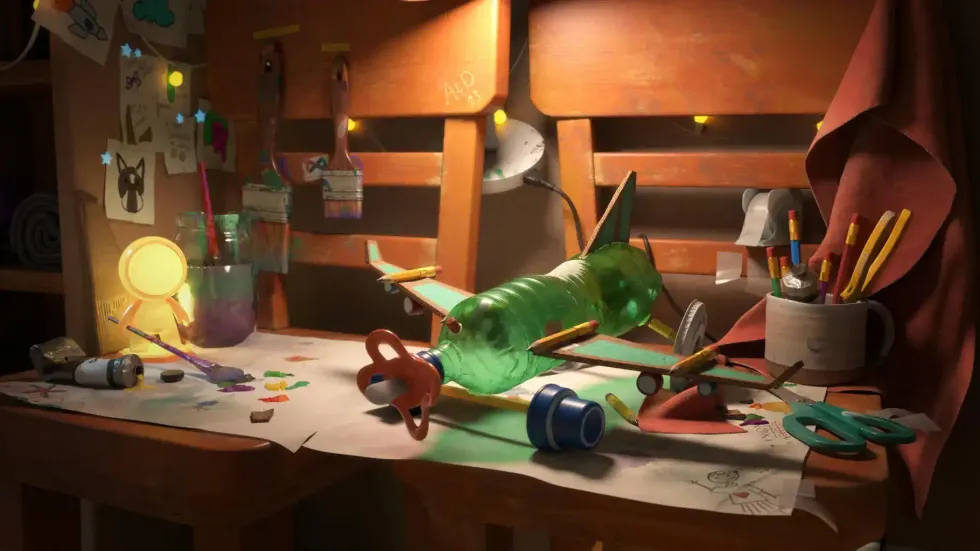
Starting with the recent release of Substance 3D Designer version 16, one of the major highlights is the new Shape Splatter v2 node, a substantive evolution of one of Designer’s most powerful nodes that now allows users to scatter ray-traced 3D shapes with far greater precision.
Designers and editors can now control shape, orientation, and scale per instance, introduce more natural variation, and use atlas inputs to distribute a wider range of shapes from a single source.
The goal here is to give users a more direct way to build complex, detailed surfaces without relying on silly or convoluted workarounds—which, again, should help save time and streamline workflows.
More Updates for Substance 3D
Credit: Adobe
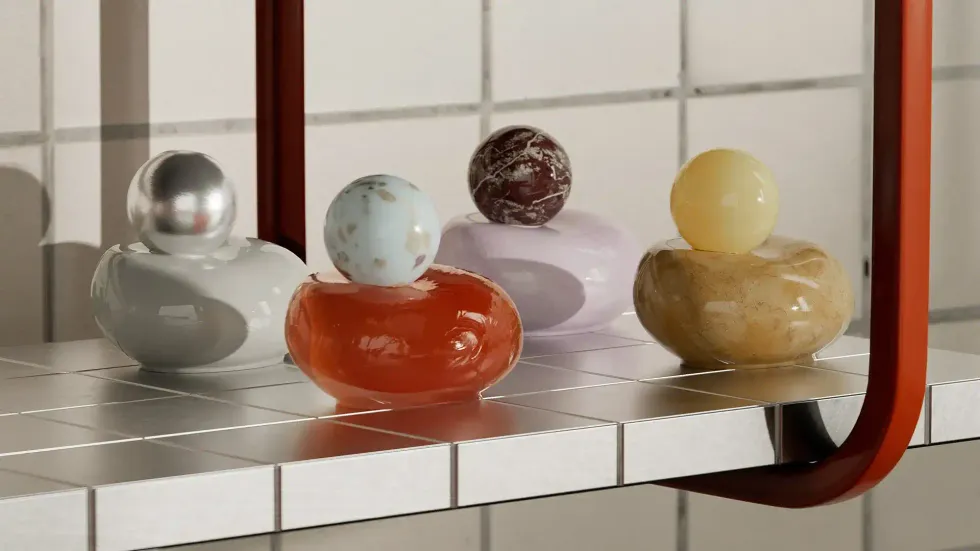
The other major news here for Substance 3D is that OpenPBR materials have arrived to help ensure that materials behave consistently across tools and renderers. Adobe also reports that OpenPBR will be integrated in Substance 3D Painter 12.1.0 Beta and that these updated material models, templates, and shaders will make it easier to create assets that integrate smoothly into modern pipelines.
Substance 3D Sampler 6 will also receive improvements with OpenPBR, which will help it align with the unified material model used across the Substance 3D ecosystem and beyond.
There are also new material templates for reporting on fuzz, coatings, and subsurface effects, which should make it even easier to build complex, physically accurate materials in less time.
Find Out More
Credit: Adobe
Hopefully, all of the above is good news for 3D designers, modelers, and other creatives and a nice breath of non-AI fresh air. For more info, you can find out further details on Adobe’s page here.
Starting with the recent release of Substance 3D Designer version 16, one of the major highlights is the new Shape Splatter v2 node, a substantive evolution of one of Designer’s most powerful nodes that now allows users to scatter ray-traced 3D shapes with far greater precision.
Designers and editors can now control shape, orientation, and scale per instance, introduce more natural variation, and use atlas inputs to distribute a wider range of shapes from a single source.
The goal here is to give users a more direct way to build complex, detailed surfaces without relying on silly or convoluted workarounds—which, again, should help save time and streamline workflows.
Credit: Adobe
The other major news here for Substance 3D is that OpenPBR materials have arrived to help ensure that materials behave consistently across tools and renderers. Adobe also reports that OpenPBR will be integrated in Substance 3D Painter 12.1.0 Beta and that these updated material models, templates, and shaders will make it easier to create assets that integrate smoothly into modern pipelines.
Substance 3D Sampler 6 will also receive improvements with OpenPBR, which will help it align with the unified material model used across the Substance 3D ecosystem and beyond.
There are also new material templates for reporting on fuzz, coatings, and subsurface effects, which should make it even easier to build complex, physically accurate materials in less time.
Credit: Adobe
Hopefully, all of the above is good news for 3D designers, modelers, and other creatives and a nice breath of non-AI fresh air. For more info, you can find out further details on Adobe’s page here.
Leave a Reply