On May 31 2026, New Delhi will host the Fourth India-Africa Forum Summit (IAFS-IV).
Audio By Vocalize
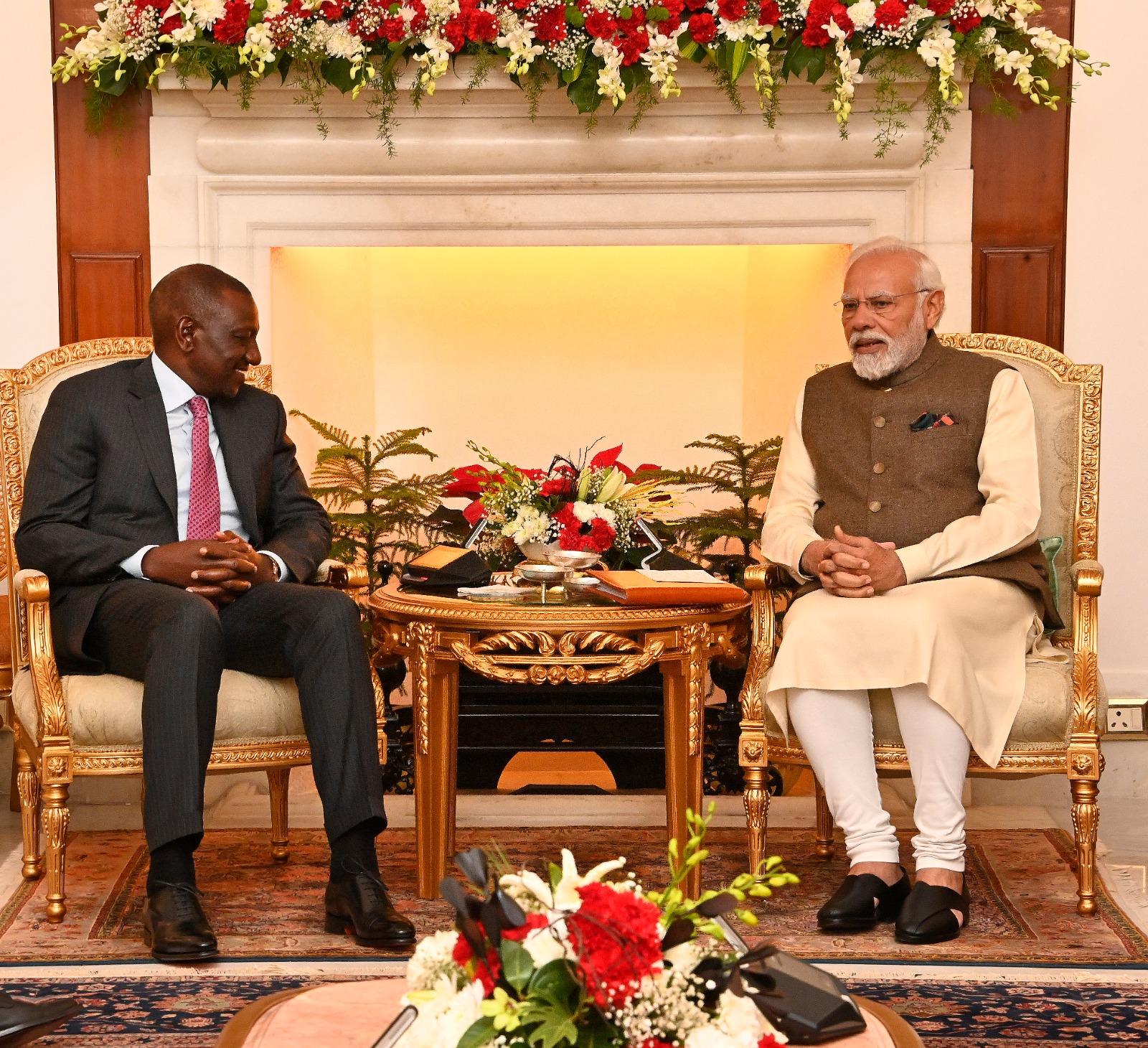
After an eleven-year hiatus, India and Africa converge in New Delhi to redefine the terms of a partnership that now spans trade, technology, defence, and the architecture of the Global South.
On May 31 2026, New Delhi will host the Fourth India-Africa Forum Summit (IAFS-IV) under the banner of “IA SPIRIT: India-Africa Strategic Partnership for Innovation, Resilience, and Inclusive Transformation”.
The Summit comes amid a world remade by the COVID-19 pandemic, by shifting geopolitical poles, and by Africa’s own increasing assertion of agency in global affairs. For Kenya and its continental peers, the question is what kind of partnership New Delhi and Africa’s capitals are now prepared to build.
Launched in New Delhi in 2008, the India-Africa Forum Summit created the first formal apex mechanism for India’s comprehensive engagement with Africa.
The inaugural edition established academic fellowships, announced Lines of Credit (LOCs), and signalled that India’s Africa policy had graduated to purposeful engagement. The 2011 summit in Addis Ababa deepened the financial architecture with USD five billion in new credit lines.
The 2015 Delhi Summit was the real inflection point. For the first time, all 54 African heads of state were invited, the restrictive Banjul Formula was dropped, and India pledged USD 10 billion in fresh LOCs alongside grant assistance.
The 2015 declaration aligned with the African Union’s (AU) Agenda 2063 and the Sustainable Development Goals, narrowing cooperation into six actionable pillars from energy to peace and security. India would hence engage Africa not as a benefactor but as a fellow rising power.
During the pandemic, India’s Vaccine Maitri initiative dispatched vaccines and medicines to more than 40 African countries. India opened 17 new diplomatic missions across the continent, taking its resident presence from 29 to 46 missions.
Bilateral trade surged from roughly USD five billion at the millennium’s turn to over USD 100 billion in 2024-25, growing at approximately 17 percent annually. Indian cumulative investments in the continent now exceed USD 80 billion.
Over 70,000 scholarships and skill development slots have been extended to African professionals since 2015 under Indian Technical and Economic Cooperation, Indian Council for Cultural Relations, and related programmes. Indian institutions now operate in Zanzibar, Uganda and Rwanda.
IAFS-IV arrives with a significantly expanded agenda. Defence and maritime security, historically marginal in this forum, have moved to the centre, reflecting both India’s growing naval capacity and the shared vulnerability of the Indian Ocean commons. Digital public infrastructure is the arena where India’s comparative advantage is most distinctive.
The ‘India Stack’ of Aadhaar identity, Unified Payments Interface (UPI), and open data platforms has processed over 172 billion transactions worth more than USD two trillion in a single year, and India is now offering this architecture to African partners as an open standard for financial inclusion, not a proprietary product.
Critical minerals complete the strategic triangle. Africa’s lithium, cobalt and copper are essential to India’s green industrial ambitions, and a partnership built on equitable downstream processing, rather than extraction, could set a new standard for what South-South cooperation actually means.
None of this is separable from the broader geopolitical canvas. India’s 2023 G20 Presidency secured AU’s permanent membership in that body, a quiet revolution in global governance achieved by Indian diplomatic championing at a moment when Western powers hesitated.
As 2026 BRICS+ Chair, India now leads a bloc whose membership includes three African nations — South Africa, Egypt, and Ethiopia — and 13 African partner states.
BRICS+ accounts for roughly 40 percent of global energy resources and 30 percent of world GDP. India’s stated ‘Humanity First’ presidency agenda maps directly onto Africa’s development priorities including climate finance, poverty alleviation, infrastructure and reform of the international financial architecture.
Critics will note India’s structural balancing act — maintaining Global South solidarity while preserving ties with Washington and Brussels — produces inevitable tensions. But this ambiguity is precisely India’s comparative advantage in Africa.
The continent is seeking partners who do not demand geopolitical fealty as the price of engagement. India’s non-prescriptive, demand-driven model with no political conditions attached to credit lines, emphasis on training and capacity over dependency, resonates in capitals that have spent decades navigating Western conditionalities and the debt arithmetic of development aid deals.
India builds institutions, trains professionals, and shares digital systems, then leaves Africans to run them. What Kenya and Africa need from IAFS-IV is credible delivery mechanisms with genuine accountability frameworks, transparent project tracking and a committed summit cycle.
When India’s External Affairs Minister Dr Subrahmanyam Jaishankar launched the IAFS-IV theme in April, he echoed a truth that underpins this entire relationship; “India’s rise will only be full and firm when we also see the rise of Africa”.
Development partnerships should be responsive to local needs, says Indian High Commissioner Dr Adarsh Swaika
The India-Africa summit was set to be held next week in Delhi after more than a decade.
Leave a Reply